India's Energy Whiplash: LPG Easing, IPO Revival, and a Monsoon That Won't Cooperate
New Delhi is unwinding fuel restrictions as a tentative US-Iran detente eases crude pressure, even as a delayed monsoon threatens rural demand and a six-month IPO drought finally shows cracks.
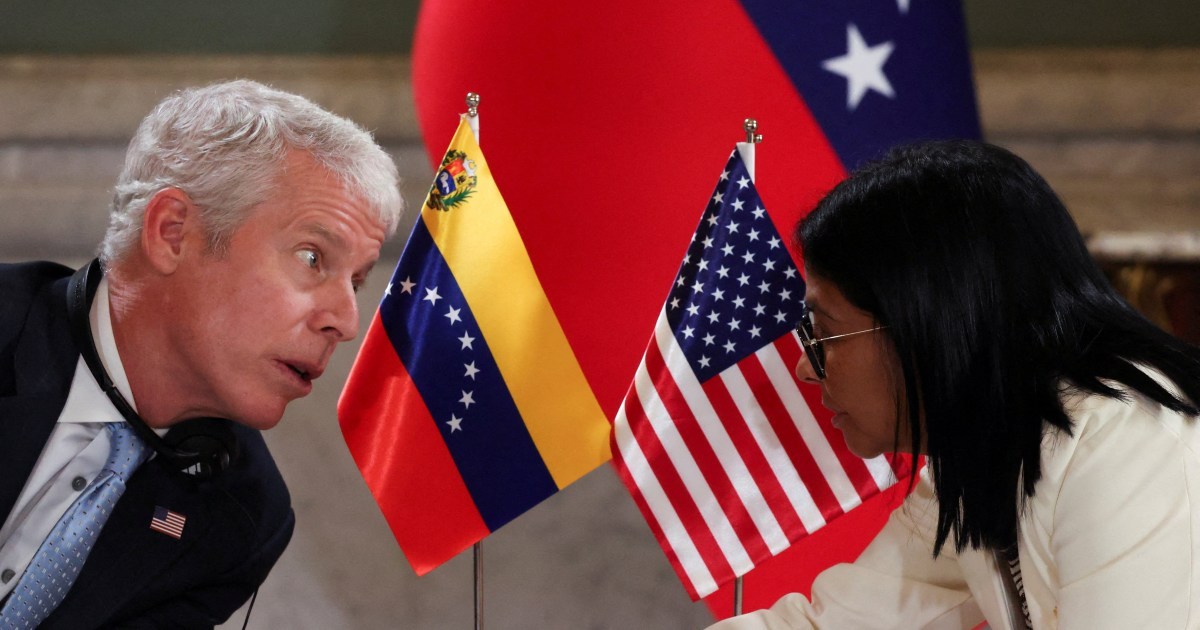
On 26 June 2026, the Government of India moved to lift restrictions on commercial liquefied petroleum gas supplies, a quiet administrative reversal that markets, refineries, and hotel chains have spent months waiting for. The timing is not coincidental. Scroll.in reported the decision the same morning, framing it as a direct response to thawing relations between Washington and Tehran and the resulting pullback in crude-linked pressure on Asian importers. The signal in the policy is plain: a tentative US-Iran detente is already being priced into New Delhi's downstream-fuel calculus, and Indian industry is being given room to breathe.
This is not a single story. It is a cluster of stories, all running in parallel, each reinforcing the others. A six-month IPO drought is showing its first real cracks, with blockbuster listings drawing retail and institutional money back into Indian equities. A delayed monsoon is squeezing water supply across the country's cities and farmland, raising the prospect of food-price pressure on a population already adjusting to global energy volatility. And in the background sits the country's small- and mid-cap segment, where active investors have been quietly rotating in search of growth that the large-cap indices no longer offer. Read together, these threads describe a large emerging economy absorbing an external shock, recalibrating domestic demand, and trying to position itself for the next leg of capital flows.
The LPG pivot and what it signals
Commercial LPG is the workhorse fuel of Indian hotels, restaurants, catering operations, and a long tail of small manufacturers. When the government restricts supply, it does so through state-owned oil marketing companies — Indian Oil, Bharat Petroleum, Hindustan Petroleum — by cutting allocation to non-priority, non-domestic users. The mechanism is blunt, the consequences immediate: kitchens switch off, bakeries ration, factory lines slow. The 26 June 2026 lifting, reported by Scroll.in, is a partial reversal of that rationing regime and an acknowledgment that the supply side has eased.
The easing is tied, explicitly, to diplomatic movement between the United States and Iran. The Scroll.in dispatch frames the decision as a response to "US-Iran peace talks," implying that Indian planners now believe the worst-case Brent scenario has receded enough to justify freeing up downstream fuel. India imports the bulk of its crude requirement, and Indian LPG pricing has historically tracked global benchmarks with a lag. When the imported barrel looks manageable, the political cost of subsidising commercial users falls; when it spikes, rationing returns. The 26 June decision is, in this sense, a confidence vote in the durability of the diplomatic opening — or at least in its near-term durability.
A monsoon the books did not budget for
While fuel policy loosens, the weather tightens its grip. According to a Telegram-syndicated brief from the Our Wars Today channel, dated 26 June 2026, poor rains and a weak monsoon system are pushing India's cities and rural regions toward water shortages. The monsoon typically delivers the bulk of India's annual rainfall between June and September; a delayed start and a weak first month ripple through kharif sowing, reservoir levels, urban drinking-water supply, and hydropower output. The implications for food prices, rural wages, and headline inflation are mechanical.
This is the counter-lyrical beat against the IPO revival and the LPG easing. Cheaper fuel improves the input cost for urban services and logistics, but it does not put rain in the fields. If the monsoon remains weak into late July, the drag on rural consumption — which still anchors a large share of Indian demand for two-wheelers, fast-moving consumer goods, and small-ticket credit — could undercut the equity-market optimism now rebuilding after a six-month lull. Policymakers will face the familiar Indian policy dilemma: support growth with subsidies while tolerating the fiscal slippage, or hold the line and watch demand soften.
The IPO market comes off the floor
The other signal worth weighing comes from the equity capital markets. According to Nikkei Asia reporting on 26 June 2026, India's IPO market is showing signs of revival after six tepid months, with the improvement attributed to blockbuster listings and — once again — to the Iran-related easing of the energy crisis that had weighed on sentiment earlier in the cycle. Indian primary markets had cooled sharply through late 2025 and into the first half of 2026 as global risk appetite thinned, energy prices pressured importers' margins, and a stream of mid-sized listings met with indifferent books.
A revival premised on a few high-profile deals is fragile, and the sources do not specify the names or issue sizes of the listings driving the rebound. But the directional message is clear: institutional allocators are willing to underwrite Indian growth again, and retail investors, whose participation has been the structural feature of Indian markets over the past decade, are responding to marquee names. The macro logic the Nikkei piece implies is straightforward — energy stability plus domestic liquidity plus a benign external backdrop equals a window for primary issuance. Whether that window stays open through the October-December quarter depends heavily on the monsoon.
The small- and mid-cap rotation underneath
Beneath the headline-grabbing IPO noise sits a quieter, more durable story. Nikkei Asia's 25 June 2026 dispatch on India's small- and mid-cap segment describes retail and active investors rotating into smaller companies in search of growth that the large-cap indices are no longer delivering. The pattern is familiar from past Indian cycles: when the Nifty 50's earnings momentum slows and a few high-profile listings absorb liquidity at the top, domestic money rotates down the cap table.
This rotation is structurally significant. It tells you that Indian household savings are still moving into equities, that active fund managers are not capitulating, and that the post-pandemic expansion of India's listed universe is being put to work. The same dynamic also raises familiar risks: small- and mid-cap valuations in India have, at various points in recent memory, run well ahead of fundamentals, and a bad monsoon or an external shock can compress those multiples quickly. The Nikkei reporting does not claim the rotation is overheated; it simply documents that money is moving.
Counterpoint: a single geopolitical bet, on both ends
The dominant frame across all four source items is that US-Iran diplomacy is improving India's near-term outlook. The opposite read deserves space. If the diplomatic opening collapses — a familiar pattern in the long history of US-Iran negotiations — crude prices can move sharply higher on a short time-horizon. India, as one of the largest crude importers in Asia, would absorb that shock through both the trade balance and domestic fuel prices. The LPG easing would then reverse, the IPO window would close, and the small-cap rotation would compress.
The Indian policy response is structurally different from China's or the Gulf states'. New Delhi does not have a strategic petroleum reserve measured in months of consumption on the scale of Beijing or Riyadh, and it does not have the domestic crude buffer of a producer. Its adjustment mechanism runs through state-owned oil marketing companies, through diplomatic management of supplier relationships, and through episodic demand-side rationing. The 26 June LPG decision is, in this sense, a bet that the diplomatic window will hold long enough for the market to clear at acceptable prices.
Stakes: who wins and who loses if the trajectory holds
If the US-Iran detente holds, the monsoon normalises by mid-July, and the IPO pipeline continues to deliver marquee names, India enters the second half of 2026 with cheaper commercial fuel, deeper primary-market activity, and a robust retail bid in small- and mid-cap equities. Domestic oil marketing companies benefit first, followed by refining and marketing adjacencies, hospitality, aviation, and small manufacturers dependent on LPG. Foreign portfolio investors who stayed underweight through the tepid six months capture the re-rating. Indian households with exposure to diversified equity funds see paper wealth recover.
If the trajectory breaks — and the principal break-risk identified by the sources is a weak monsoon compounded by a diplomatic reversal — the equity-market gains reverse, rural consumption softens, and the LPG rationing regime returns. State-owned oil marketing companies face the politically uncomfortable task of raising domestic prices while absorbing the demand hit. The small-cap segment, which has done the work of absorbing retail flows during a soft market, would be the first to compress in a risk-off rotation.
What remains uncertain
The sources do not specify the scale of the LPG allocation increase, the names and sizes of the blockbuster IPOs driving the revival, the geographic distribution of the monsoon shortfall, or the magnitude of the small-cap flows. Each of these gaps is a place where the picture could sharpen or shift in the coming weeks. The reporting is consistent in its directional claims — easing fuel pressure, reviving primary issuance, weak monsoon, rotation into smaller caps — but each of those claims sits inside a still-thin evidentiary base. Readers should treat the directional read as informed and the magnitudes as provisional.
The honest summary is that India is being given a window by a combination of diplomatic movement and a still-active domestic capital pool, and the next eight weeks of monsoon rainfall will determine whether the country walks through it.
— Desk note: Monexus framed this cluster as a single Indian macro story — external diplomatic easing, internal fuel policy response, capital-market reaction, and monsoon risk — rather than as four disconnected news items. The wire coverage treats each thread in isolation; the editorial interest is in the interaction.
Wire provenance
This editorial synthesis draws on the following public wire/social posts:
- https://t.me/ourwarsto
- https://t.me/s/ourwarstoday