Tehran's Hormuz Toll Booth and the Limits of a US-Iran Détente
In one 24-hour window, Iran announced a thirty-day administrative grip on the Strait of Hormuz, struck Bahrain and Kuwait, and agreed to technical talks in Doha. The two tracks point to a single strategy: managed escalation as negotiating leverage.
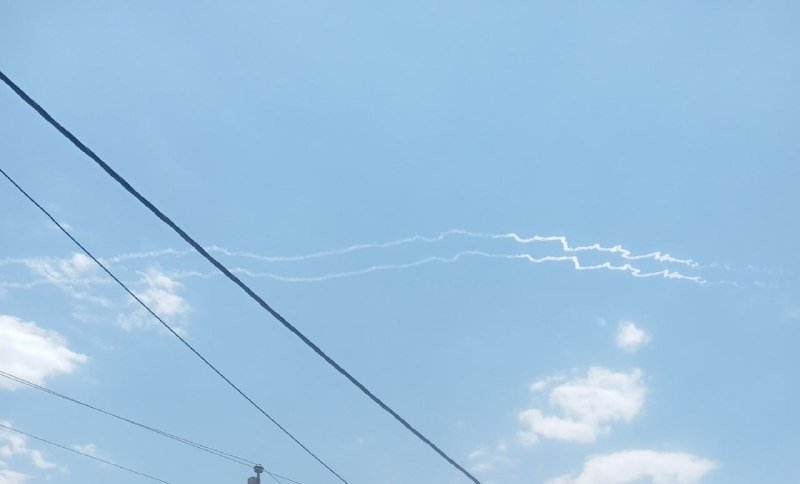
Iranian Foreign Minister Abbas Araghchi told his Iraqi counterpart on 28 June that Tehran will "act decisively" against America and Israel over what Iranian state media described as a breach of promise. Hours later, Iranian drones and missiles struck Bahrain and Kuwait for the first time in the current escalatory cycle, and Tehran warned it would halt negotiations entirely and close the Strait of Hormuz if US airstrikes continued. The same 24-hour window produced a contradictory signal: Axios, citing a senior American official, reported that Washington and Tehran had agreed to halt attacks against each other and would meet in Doha on Tuesday for technical talks on the strait dispute.
Two narratives, one negotiating room. Read together, the day's wire traffic does not describe a collapsing détente so much as a managed negotiation conducted in maximalist register. Tehran is signalling, simultaneously, that it controls the waterway, that it can extend that control to neighbouring Gulf states, and that it remains willing to talk. The carrot and the cudgel are being deployed by the same ministry.
The Hormuz toll booth
The most precise claim came from Araghchi himself, who told reporters that Iran alone controls the Strait of Hormuz "over the next 30 days." That formulation matters. It is not a threat of closure; closure would be a hostile act against China, India, Japan and South Korea, all of which depend on the strait for the bulk of their seaborne oil imports. It is an assertion of administrative reach: who transits, who pays, who inspects. Iran's naval and Revolutionary Guard posture in the waterway has long given it the de facto capacity to dictate the tempo of shipping. Stating it as a thirty-day window converts that latent capacity into a negotiating instrument.
France 24's report on the Bahrain and Kuwait strikes framed the same message in a different register. By extending retaliation to two Gulf Cooperation Council states that host US Fifth Fleet and expeditionary infrastructure, Tehran demonstrated that the geography of any escalation is wider than the strait itself. The choice of targets also carried a strategic logic: both countries sit on the Arabian side of the Gulf, downstream of the chokepoint, and both have been courted by Washington as potential normalisation partners for Israel.
Confidence-building or theatre
The Axios-sourced agreement to halt attacks and meet in Doha on Tuesday looks, on its face, like a confidence-building measure. Technical talks on the strait dispute are exactly the format that has worked in past US-Iran episodes: narrow agenda, mid-ranking officials, neutral host. The venue has been used before. The framing as a "dispute over the Strait of Hormuz," rather than over nuclear enrichment or regional proxies, narrows the table deliberately.
But OSINTdefender's reading of Iranian state outlets noted that the Iranian team did not attend scheduled technical talks the same day, citing recent US retaliatory strikes as the reason. If confirmed, that walkout would suggest Doha has not yet been agreed in operational terms. Tasnim, Fars, and al-Alam carried the Axios report, which is notable in itself: Iranian state media tends to amplify American reporting only when it suits the official line. The amplification here signals acceptance that talking and striking can coexist, not a retraction.
The Polymarket shadow
The prediction market that flagged a sharp move toward confrontation over the past week registered a parallel move in the opposite direction once Doha was reported. Polymarket traders priced the probability of a US-Iran agreement before year-end at its highest level in weeks within hours of the Axios bulletin, even as Iranian drones were still landing in Bahrain. A market that properly absorbs news should not move on a single Axios sourcing; the move suggests traders were treating the talks report as confirming a base rate they had been discounting.
This is the contradiction that Polymarket exposed most cleanly: the underlying probability of negotiation is high, but the realised path is volatile. Each new strike resets the conversation, each new conversation restarts the strike cycle.
What Ankara and Baghdad are watching
Araghchi's meetings on 28 June with Iraqi leaders produced two concrete outcomes. The foreign ministers agreed to strengthen "common security" and pursue full implementation of the existing security memorandum, language that matters because Iraq sits on the overland corridor Iran has used to arm Lebanese proxies and because Iraqi Shia militias have previously opened a second front against US assets when Tehran wanted pressure applied elsewhere. Separately, Araghchi emphasised "measures related to the Strait" in a separate readout, signalling that the Baghdad channel is being used to communicate what the Doha channel will formalise.
The Iraqi mediation track is older than the current crisis and outlasts most of its predecessors. It is also the channel through which Iran has historically communicated red lines to Washington without formally acknowledging that it is doing so. The fact that Araghchi activated it on the same day he announced the thirty-day Hormuz window is not coincidence.
The thirty-day horizon
If Tehran's window is taken seriously, three dates will define the next phase. Technical talks in Doha on 30 June will determine whether the halt-attacks agreement holds for even a week. The thirty-day Iranian control claim expires in late July, by which point either a transit regime will have been negotiated or a closing argument will have been rehearsed. And the Iraqi security memorandum, if implemented, will alter the land corridor faster than any naval posture can.
The US-Iran relationship has rarely looked more like a two-track negotiation conducted at high volume. The question is whether the volume is the point or whether the two tracks will, at some point, collapse into one.
Sources
- Axios, via al-Alam (Telegram), 28 June 2026: https://t.me/alalamfa/
- France 24 (English), 28 June 2026: https://t.me/france24_en/
- Fars News International (Telegram), 28 June 2026: https://t.me/FarsNewsInt/
- OSINTdefender (Telegram), 28 June 2026: https://t.me/osintlive/
- Press TV (Telegram), 28 June 2026: https://t.me/presstv/
- Jahan Tasnim (Telegram), 28 June 2026: https://t.me/JahanTasnim/
- DD Geopolitics (Telegram), 28 June 2026: https://t.me/DDGeopolitics/
- Tasnim News English (Telegram), 28 June 2026: https://t.me/tasnimnews_en/
- RN Intel (Telegram), 28 June 2026: https://t.me/rnintel/
- Tasnim Plus (Telegram), 28 June 2026: https://t.me/tasnimplus/
- Polymarket (X / Twitter), 28 June 2026: https://x.com/polymarket/status/
Desk note: Monexus paired the Iranian state-media announcement of a thirty-day Hormuz control window with the Polymarket-flagged projection that a US-Iran deal was moving closer, carrying them together rather than separately. The two pieces of reporting illuminate each other: a confidence-building measure and a maximalist revenue claim, both surfacing in the same 24-hour window, point to a single negotiating posture rather than two unrelated stories.
Follow the event.
These dated source records provide context. They do not retrospectively verify this archive article.
Separate what the nuclear watchdog reported from what it could not determine after the June 2025 strikes.