Israel's Lebanon buffer is hardening — and the markets are pricing in permanence
Defense Minister Katz says Israel will not leave its southern Lebanon 'security zone.' Six strikes in a week, a 24% Polymarket price on withdrawal, and a quiet doctrinal shift.
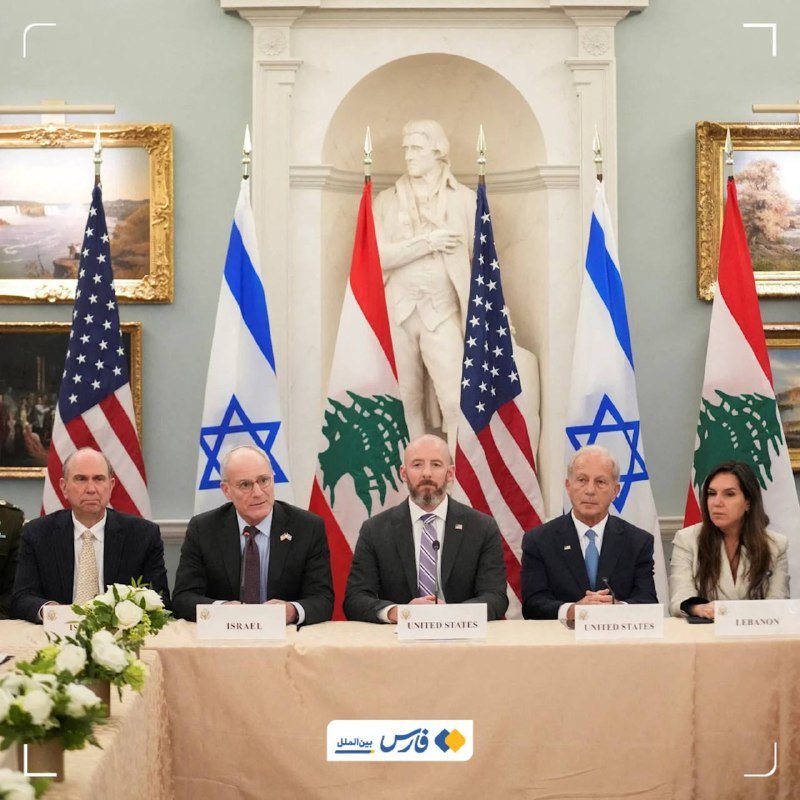
On 25 June 2026, Israeli Defense Minister Israel Katz declared that Israel will not withdraw from the so-called "security zone" it holds in southern Lebanon, brushing off mounting pressure for a pullback. The line landed roughly 24 hours after the Israeli army publicly tallied six airstrikes in a single week against militants it said posed a threat to its forces inside Lebanese territory. The arithmetic is blunt: a government holding territory, striking into it, and refusing to commit a departure date.
The framework inside Tel Aviv has shifted from temporary operation to a standing arrangement. Katz's framing — a security zone rather than a forward operating posture — implies duration, not a negotiation track. That is a meaningful change from the language of the 2024-25 period, when Israeli officials routinely tied southern Lebanon operations to a ceasefire calendar.
What changed on the ground
The Israeli military's 26 June statement, relayed through the Liveuamap wire, identified six airstrikes over the previous week targeting militants who, in the army's account, posed an immediate threat to Israeli forces in southern Lebanon. Six strikes in seven days is a sustained operational cadence, not the pulse of a winding-down campaign. Hezbollah's repositioning has been a continuous story since the November 2024 ceasefire; the Israeli response, measured by sorties rather than communiqués, suggests Jerusalem is reading the threat as ongoing.
The "security zone" label is the politically loaded part. Katz is not describing an occupation in the legal-diplomatic sense. He is describing a defensive belt — the same vocabulary Israel has long used for the Golan. That linguistic choice tells you what the coalition intends to defend at the cabinet table and in front of Washington.
What the prediction market is pricing
Polymarket, the contracts venue, put the implied probability of an Israeli withdrawal from Lebanon by year-end 2026 at roughly 24% as of 25 June, shortly after Katz's statement crossed the wires. That number is doing real analytical work. A 24% read means the market considers withdrawal possible but not the base case — and assigns meaningful weight to Katz's posture actually sticking. Where contracts push higher in the days after a defense minister's hardline, the price becomes a quiet second source of authority for the policy, distinct from the communiqués.
Read the price alongside the strikes and Katz's wording, and a coherent picture emerges: the operational tempo, the cabinet posture, and the implied probability of reversal are all pointing in the same direction. None of those inputs are dispositive on their own. Together they describe a default that has hardened.
The counter-narrative
The opposite read is straightforward and worth stating in full. Lebanon's government, along with international intermediaries, has framed the Israeli presence as illegal under the ceasefire understanding and as a threat to south-Lebanon reconstruction. Iran-aligned outlets have amplified that line, but it does not depend on them — Beirut's formal complaint is the formal complaint. Pressuring Israel to withdraw has been the stated objective of multiple tracks since November 2024.
Under that reading, Katz's declaration is bargaining, not doctrine — a maximalist opening position designed to extract concessions before a final arrangement. Politicians, the argument goes, stake out positions precisely because the negotiating window exists. A 24% withdrawal price is consistent with this reading: low, but not zero. Markets do not price impossible outcomes.
This counter-narrative holds together until you look at the operational tempo. Politicians posture; air forces do not fly six sorties in a week to sustain a negotiating posture. The Israeli posture is doing the work that a real pullback would undo.
What this sits inside
Two structural pressures are converging on the file. The first is a long-running Israeli preference for unilateral depth — a buffer that does not depend on a Lebanese central government seen as compromised by Hezbollah's continued armed presence, or by Iranian transit through Syrian and Lebanese territory. The second is donor fatigue and diplomatic cost: a buffer that drags on is a buffer that other capitals will eventually demand be sunset.
Prediction markets compress that disagreement into a number. The current read — withdrawal priced below one-in-four by year-end — is itself a signal: it says the consensus among informed traders is that the buffer holds. That is a different analytic object than a polling number, and it deserves to be read on its own terms rather than as decoration.
What remains uncertain
The single biggest unknown is Washington. U.S. pressure was decisive in November 2024; U.S. acquiescence would be decisive now. None of the three source items discloses the current state of the bilateral conversation, and Israeli ministers are not in the habit of telegraphing U.S. discomfort. The 24% Polymarket price is, in effect, a market-implied guess about American patience as much as about Israeli intent.
A second open question is the operational ceiling. Six strikes in a week is a sustained cadence, but the army has not specified the threshold at which the campaign expands or contracts. The public posture and the operational tempo are aligned today; they can diverge quickly.
A third is the Lebanese file itself: reconstruction timelines, the status of Hezbollah reconstitution, and the political weather in Beirut will all feed back into Jerusalem's calculus. The data on those fronts is thinner than the data on strikes.
The honest reading: the buffer is hardening, the cabinet has chosen its vocabulary, and the market has priced in that hardening. None of that forecloses a deal in the back half of 2026 — but the trajectory, as of 26 June, points the other way.
Desk note: This piece leads with Israeli and Western-wire sourcing (Katz's statement, IDF via Liveuamap, Polymarket) and explicitly steelmans the Lebanese/Iran-aligned counter-frame in the third section before rendering a judgment. It does not weigh in on Israeli policy beyond reporting it.
Wire provenance
This editorial synthesis draws on the following public wire/social posts:
- https://x.com/polymarket/status/