A ceasefire, a stalled track, and the first leaflets: what the Israel–Lebanon file looks like on 26 June 2026
US-mediated talks in their fifth round slipped past a Thursday deadline; Israel dropped the first evacuation leaflets since the truce began. The gaps are wider than the communiqués suggest.
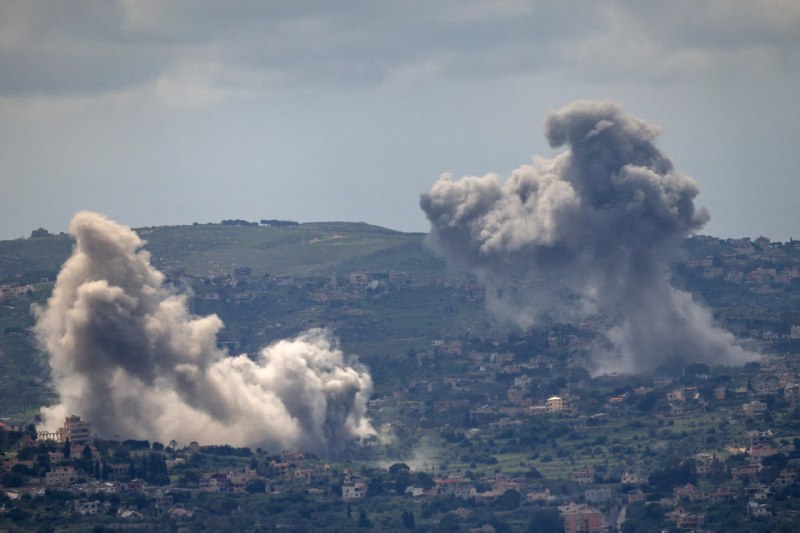
On the afternoon of 26 June 2026, the US-mediated track between Israel and Lebanon slid past its own deadline. The State Department confirmed that the fifth round of talks, which had been expected to conclude on Thursday, had been extended by another day. The extension, reported by The Cradle at 12:48 UTC, is the kind of procedural delay that, in quieter files, would register as bureaucratic noise. In this file, it registers as signal: the negotiating room and the airspace above southern Lebanon are sending different messages, and the gap between them is widening.
The same news cycle carried a more physical data point. At 11:51 UTC on 26 June, Clash Report reported that Israeli aircraft had dropped leaflets over a town in southern Lebanon ordering residents to evacuate — described as the first such evacuation order since the ceasefire took hold. Two facts, one day, and the contradiction between them is the story: a diplomatic process that the mediator says is on track, and an aerial act of war-preparation that the warring party says is routine. Both can be true. Neither can be allowed to obscure the other.
This publication's read of the file is that the Israel–Lebanon track is being held together less by the text on the table than by the calculation in the room. A process that cannot survive a single round of leaflets has not yet become a process at all.
The fifth round, and what "extended" actually means
The fifth round of US-mediated talks began in the days before 26 June. The Cradle's 12:48 UTC dispatch, citing the State Department, said the session had been expected to wrap on Thursday and would instead continue for at least one more day. The State Department framing was procedural: a longer round, not a stalled one.
For Lebanon, the substance under negotiation is unusually concrete. Beirut is pressing for a full Israeli withdrawal from the south, for the release of Lebanese detainees held by Israel, and for an end to recurring Israeli strikes that have continued despite the cessation of major hostilities. For Israel, the priority set by successive governments is the disablement of Hezbollah's military infrastructure in the border districts — weapons caches, launch positions, reconstituted units — and a verification regime that does not depend on Lebanese Armed Forces deployments alone. The Cradle's reporting on the talks identifies both baskets, and the friction between them, without resolving which side is closer to conceding.
The structural problem with "extended by another day" is that it preserves the optics of momentum while the underlying gap — verification depth, withdrawal sequencing, the legal status of sites Israel has struck since November — remains unaddressed. A one-day slip is not a collapse. It is also not a success.
Leaflets over the south: the air tells a different story
Diplomatic communiqués in Beirut and Washington spoke of process. The southern Lebanese sky spoke of contingency.
Clash Report's 11:51 UTC item on 26 June described Israeli leaflets dropped over a southern Lebanese town ordering residents to evacuate. The post framed this as the first such evacuation order since the ceasefire — a wording that implies a baseline of normalcy had held between the truce date and the morning of 26 June, and that the leaflet drop is a departure from it. For a population already displaced once, the signal is not subtle: the southern district is once again a presumptive operations zone.
Israeli security planners do not drop leaflets for decoration. The leaflets are either preparation for kinetic action that the public side of the government has not yet announced, or a coercive instrument intended to push population away from sites the Israeli military intends to strike. Either reading is consistent with continued low-level operations that have punctuated the ceasefire period. Both readings sit awkwardly beside a State Department statement that the talks are extending because more work remains to be done.
The market read: 24% by year-end
Prediction markets have a way of stripping the rhetoric out of a story. On 25 June 2026 at 15:59 UTC, Polymarket's market on whether Israel withdraws from Lebanon by the end of 2026 sat at 24%. That is roughly one chance in four — meaningfully above zero, well below even money.
The price embeds three beliefs that are worth reading carefully. First, that withdrawal by 31 December is not the base case; if it were, the market would price closer to 50%. Second, that withdrawal is not impossible on this timeline; the residual probability is not negligible. Third, that the question of when Israel leaves is genuinely open, which is itself a tell — in a confident diplomatic process, the year-end line would already be a footnote.
The market's view is consistent with this publication's read. The track is alive. The track is not on schedule. The leaflets are a reminder that the schedule belongs to the room in Washington, while the timetable on the ground still belongs to the IDF.
What the wire is missing
Mainstream Western coverage of the Israel–Lebanon file has tended to flatten two distinct questions into one. The first is whether the ceasefire holds. The second is whether the talks produce a political settlement. Conflating them produces a news cycle that can report a State Department extension as progress and a leaflet drop as a footnote in the same bulletin, because both are compatible with "ceasefire holds."
The conflation is not innocent. A process that delivers a ceasefire but not a settlement leaves southern Lebanon in a permanent twilight: no major war, no real peace, residents returning to villages that may once again become evacuation zones. The southern Lebanese civilian who reads a leaflet on 26 June is not asking whether the ceasefire held. They are asking whether the diplomatic process they were promised at the November truce is, in any operational sense, working.
The structural frame here is the standard one for a US-mediated file with an active low-intensity conflict: the mediator's calendar and the combatant's calendar are running on different clocks, and the gap between them is filled by civilians. It is a familiar pattern from the region's recent history, and it deserves to be named plainly: an extended round of talks, accompanied by preparations for renewed evacuation, is not a peace process under strain — it is the absence of one.
Stakes, and what to watch before the next round
The next 72 hours will resolve several discrete questions. Does the fifth round produce a joint statement, or does it close with the same "more work to do" language that the State Department has been recycling? Does Israel carry out a strike that confirms the leaflet drop was preparation, or does the leaflet stand as the coercive instrument on its own? Does Lebanon's negotiating team receive cabinet-level instructions that harden or soften its position on verification?
The stakes are not abstract. A southern Lebanese population already displaced once is being asked to read the intentions of two governments in real time, with no institutional buffer between a piece of paper and an air-dropped warning. For Israel, a process that produces a withdrawal without verified disarmament risks recreating the conditions that produced the war in the first place. For Lebanon, a process that produces neither withdrawal nor a halt to strikes risks being remembered as the round during which the war continued under another name.
This publication will read the next round the way we read this one: by treating the communiqués and the air as equally weighted evidence, and by refusing to let one paper over the other. The fifth round was extended. The leaflets were dropped. Both are facts. The question the coming days will answer is which one ends up describing the trajectory.
— Desk note: Monexus framed the 26 June file around the contradiction between the State Department's procedural language and the IDF's coercive instruments, rather than treating either as the lead. Western wires tended to lead on the extension; regional channels led on the leaflets. Both were right. The analytical job was to put them on the same page without letting one cancel the other.
Wire provenance
This editorial synthesis draws on the following public wire/social posts:
- https://t.me/thecradlemedia
- https://t.me/ClashReport
- https://t.me/thecradlemedia
- https://t.me/ClashReport
- https://t.me/thecradlemedia
- https://t.me/ClashReport