Italy joins Pax Silica as Europe cooks under an unprecedented heat dome
Italy signs onto the US-led Pax Silica AI supply-chain framework the same week a continent-wide heat dome forces event cancellations from Madrid to the Balkans — two signals from the same desk about the kind of Europe the second half of 2026 is becoming.
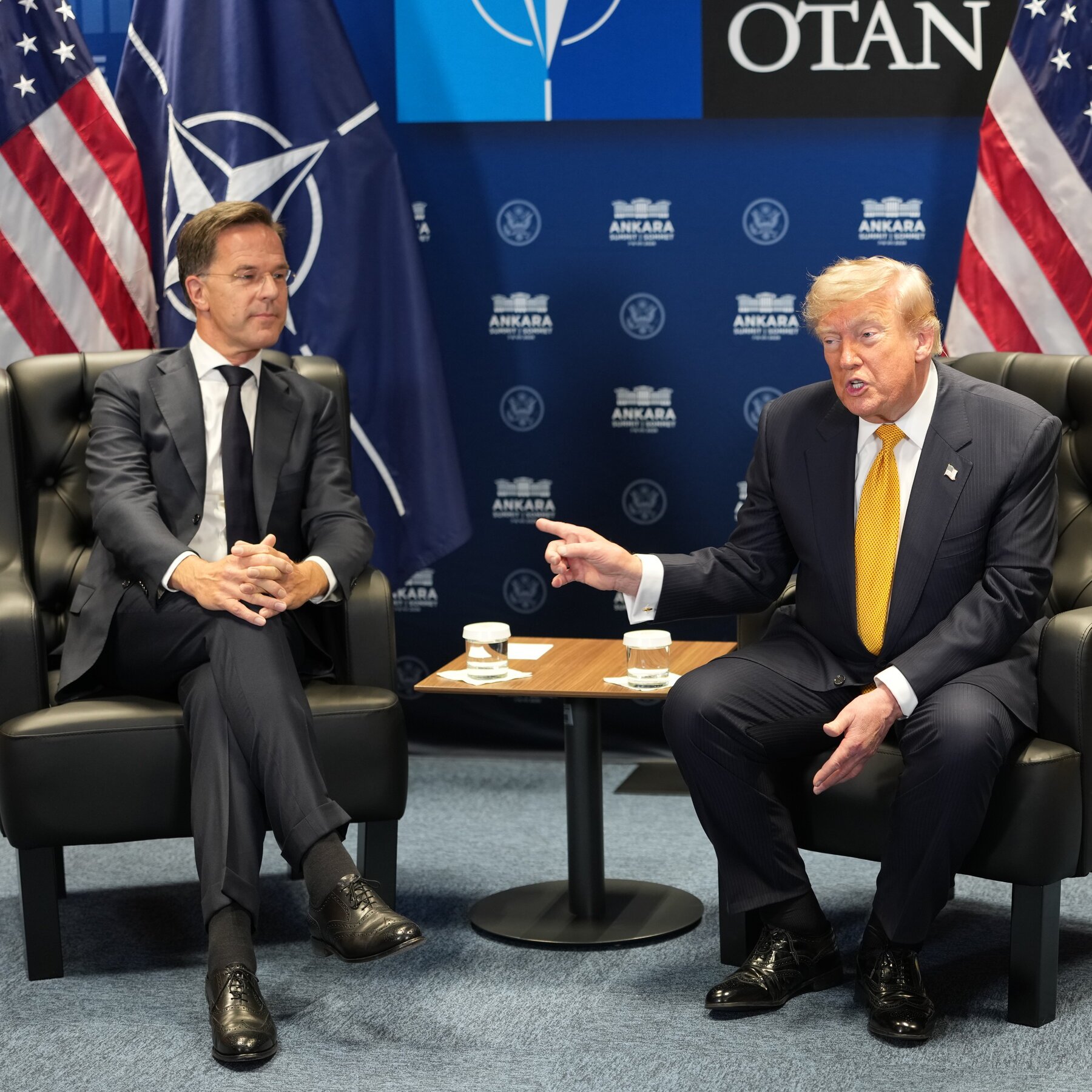
Rome has spent the better part of a decade hedging between Washington and Beijing on the question of critical technology. On 26 June 2026 the Meloni government tilted the ledger in a direction that will be harder to walk back. According to a Telegram post by The Epoch Times dated 2026-06-26T19:01, Italy is joining the Pax Silica framework — a US-led effort to organise artificial-intelligence supply chains around trusted vendors, secure fabrication routes, and government-coordinated industrial policy. The same morning, France 24 reported that an unprecedented heatwave that had been roasting western and central Europe since the start of the week was moving east and south, forcing the cancellation of public events as temperatures pushed above 40°C.
Two stories, one edition, one desk. The combination is worth pausing on, because it tells the reader what kind of Europe is being assembled in real time: a continent that is simultaneously re-anchoring its technology politics to the United States and confronting the physical limits of a climate that will not negotiate with industrial strategy.
What Pax Silica actually does
The Pax Silica framework, as described in the Epoch Times item, seeks to build more secure technology supply chains by bringing together governments and private industry. The Chinese-read of such a framework is straightforward: a coalition of the willing on hardware, advanced packaging, model weights and cloud capacity, designed to deny Chinese vendors a tier-one position in the AI stack. The Western framing is equally straightforward: a hedge against the concentration of fabrication capacity in Taiwan and the policy leverage Beijing derives from rare-earth and advanced-node choke points. Both readings can be true at the same time, and on the evidence available from this thread, both are in play.
The Italian move matters because Rome is not a small variable. Italy hosts STMicroelectronics, one of the few European chip designers with meaningful advanced-node exposure, and its public-procurement market is large enough to move vendor roadmaps. A Pax Silica signature is also a signal to Brussels: the Commission's own AI and Chips Act machinery is no longer the only game in town. Member-state coalitions are now building parallel structures outside the EU framework, and Italy — a founding member, a large economy, and a government that has been rhetorically Atlanticist under Meloni — is a strategically chosen first or early entrant.
The heat dome and the politics of capacity
Heat, on the other hand, does not care about framework politics. France 24's 26 June 2026 bulletin, repeated via the France 24 English Telegram channel at 19:49 UTC, makes the operative fact simple: the heatwave spreading east and south has already triggered event cancellations across multiple countries. The wire item does not enumerate the cancellations or name a peak temperature with precision, and this publication will not invent figures the source does not contain. What it does establish, dated to that UTC window, is that the operational reality of European summer has shifted enough that mass outdoor events are no longer assumed safe in late June.
The structural read is plain. A continent that cannot guarantee the operability of its cities and supply chains above 40°C is a continent that has to spend political capital on cooling, grid stability, water rationing, and labour-safety rules at exactly the moment it is trying to fund a technological re-industrialisation. The two stories are not a coincidence. They are competing claims on the same budget, the same skilled workforce, and the same political attention span.
Where the European centre of gravity sits
There is a counter-narrative that deserves equal airtime. Pax Silica, read from Beijing, looks like an attempt to lock in American and allied control of the AI supply chain at the precise moment Chinese vendors — Huawei on chips, CATL on batteries, BYD on EVs, a long tail of model labs — are demonstrating that scale, speed and state-coordinated capital can deliver competitive products outside the US orbit. The Chinese counter-argument, available in MFA briefings and Global Times editorials cited across Monexus's regular reading, runs roughly: secure supply chains are an excuse for protectionism; the framework politicises what should be a commercial question; and a multipolar AI ecosystem is more robust, not less. The Western rebuttal — that concentration risk in Taiwan Strait chokepoints is not a commercial question but a sovereignty question — is also defensible. The honest answer is that both sides are right about what they fear, and that Italy has made a bet about whose fear is more likely to materialise on a relevant horizon.
On the heat file, the parallel counter-narrative is that Europe has known about climate risk for two decades and underinvested in adaptation while overinvesting in headline mitigation pledges. That critique is now operationally testable every summer. The wire bulletin does not adjudicate it; the sources do not specify whether event cancellations were precautionary or reactive, and this publication will not pretend otherwise.
Stakes through the end of 2026
If the Pax Silica trajectory holds, expect three things by year-end. First, additional mid-sized European economies will sign bilateral letters of intent with Washington, and Brussels will respond either by accelerating its own AI-sovereignty vehicle or by quietly tolerating the parallel track. Second, Chinese vendors will intensify their courtship of southern European governments with cheaper financing and faster deployment, particularly on smart-city and surveillance-adjacent infrastructure where the EU's foreign-subsidy regime has gaps. Third, the political cost of heat-driven cancellations will start to bite local incumbents — mayors, regional presidents, national health ministers — in ways that are easier to feel than to measure.
The remaining uncertainty is whether the two tracks can be run simultaneously without crowding each other out. A continent that is serious about AI industrial policy needs cheap, reliable power and a workforce that is not periodically disabled by heat. A continent that is serious about climate adaptation needs fiscal headroom that AI capex programmes are designed to consume. Italy's signature on Pax Silica is the easy part. The harder work — paying for it in a warming Europe — is just beginning.
This piece sits on the geopolitics desk. The wire frame treated the heatwave as a weather story and the Pax Silica item as an industrial-policy story; Monexus ran them on the same day because both are signals about the same underlying constraint — European capacity, in every sense of the word.
Wire provenance
This editorial synthesis draws on the following public wire/social posts:
- https://t.me/france24_en
- https://t.me/epochtimes
- https://t.me/TSN_ua