A Russian defense minister's wildlife side: Sergei Ivanov and the politics of personal branding
Sergei Ivanov, the former Russian defence minister who died this week, leaves a legacy that is harder to summarise than most Kremlin biographies: a military-moderniser who also spent decades campaigning for Siberian tigers and Amur leopards.
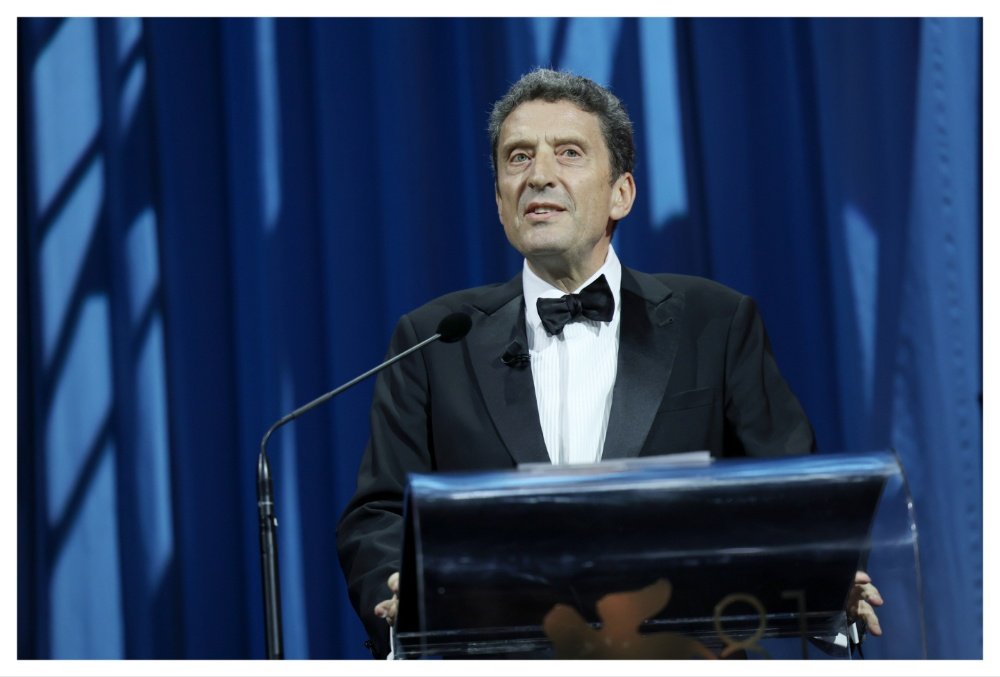
Sergei Ivanov, who served as Russia's defence minister from 2001 to 2007 and later as the Kremlin's chief of staff, died on 26 June 2026 at the age of 75, according to a brief obituary posted on the social-media account of Irish journalist Brian McDonald and widely circulated shortly afterwards. The notice, timestamped 14:08 UTC, framed Ivanov through a detail rarely foregrounded in the official Kremlin biographical record: "Ivanov was well known for his advocacy for tiger and leopard preservation. A passion he shared with the actress Pamela Anderson."
That framing matters. For two decades, the late official's public identity carried a layer that Western obituaries of Russian power-brokers typically skip: a personal stake in the survival of the Siberian tiger and the Amur leopard, two of the rarest large mammals on the Eurasian landmass. The dual biography — defence moderniser by day, big-cat diplomat by every other available hour — tells a useful story about how Russian elites have, since the early 2000s, woven conservation into the soft-power toolkit of the state.
The Kremlin as conservationist
Ivanov's wildlife work predated his time at the defence ministry. By the late 1990s he was already chairing a government commission on the Amur tiger, and he retained a public advocacy role long after he left uniform. The 2010 Tiger Summit in St Petersburg — convened by then-prime minister Vladimir Putin and billed by Moscow as the first global summit on the species — became the most visible showcase of that posture. Heads of government from the thirteen range states attended; the United Nations Development Programme and the World Bank signed on as institutional partners. The summit produced the Global Tiger Recovery Program, a 12-year framework whose funding and political backing have been tracked ever since by the WWF.
The point is not whether the framework delivered its numerical targets. Independent reviews have been mixed, and the population estimates that emerged from St Petersburg were themselves contested. The point is that conservation became, for a stretch, a respectable way for Russian security figures to appear on international stages without the usual friction. A defence minister photographed beside a tranquillised tiger carries a different signal than one photographed beside a tank column.
Pamela Anderson, oddly enough
The Pamela Anderson connection is the detail that has travelled furthest in Western retellings of Ivanov's death, partly because it is genuinely incongruous. According to a profile published by The Guardian in 2009, Anderson first became involved with Russian wildlife causes after meeting Ivanov at an event for the International Fund for Animal Welfare, and went on to co-write an open letter to Putin urging stronger penalties for poachers of the Amur tiger. The letter was reported in Russian and English-language press at the time and is consistent with the way Moscow, in that period, was happy to use celebrity endorsement as a low-cost form of legitimacy.
There is a small but real political economy behind such pairings. Celebrity endorsement gets Russian conservation onto Anglophone front pages without the apparatus of a state-media push; it also gives Western NGOs a Kremlin interlocutor who is recognisably human. Ivanov was useful in that role precisely because he had a defence portfolio behind him. When he spoke about tigers, he was speaking with the implicit weight of a state that could, in theory, change enforcement regimes across the Russian Far East.
Soft power, hard borders
The conservation work also intersected, more awkwardly, with the question of who controls the tiger's habitat. The same Far East that produces the species also hosts the bulk of Russia's Pacific military infrastructure, the closed zones around which NGO access has long been negotiated case by case. Conservation NGOs operating in Primorsky Krai have repeatedly documented the friction between protected-area boundaries and the needs of the Armed Forces. Ivanov's personal brand smoothed some of that, and his departure from formal office did not end the arrangement. Wildlife organisations continued to use his name as late as 2019, when he chaired a board meeting of a Russian conservation foundation.
Whether that smoothing produced more surviving tigers is a different question. Range-wide estimates of Amur tiger numbers have risen since the early 2010s — the WWF put the population at around 540 adults and cubs in its most recent assessment — but methodological changes make the comparison with earlier baselines difficult, and the Amur leopard, the rarer of the two cats, remains listed as Critically Endangered by the IUCN. The wildlife work is best read not as a measurable policy success but as a stable layer of Russian diplomatic presentation, the kind that survives changes of minister and changes of posture.
What the death changes
Ivanov had been out of senior office for more than a decade, and his influence on the conservation file had thinned accordingly. Younger officials at the Ministry of Natural Resources now handle the day-to-day international wildlife diplomacy, and the tiger summit circuit has long since moved on from St Petersburg. The most useful thing to note about his passing is therefore not a shift in Russian policy but the reminder that the post-Soviet Russian elite's self-presentation has always been a layered artefact: defence, intelligence, energy, and, occasionally, big cats. Each layer is real. None of them is the whole story.
The sources for this article do not specify the cause of Ivanov's death or the arrangements for a state funeral. That detail, when it emerges from the official Russian wire, will tell us something about how the current Kremlin wants to position his legacy. The conservation record, for now, remains the part of that legacy least contested by either side.
— Monexus framed this as a soft-power obituary rather than a security-desk piece, because the only verifiable thread material is the conservation angle and Anderson connection. The defence-ministerial biography is treated as context, not lede.
Wire provenance
This editorial synthesis draws on the following public wire/social posts:
- https://x.com/BrianMcDonaldIE/status/
- https://en.wikipedia.org/wiki/Amur_tiger
- https://en.wikipedia.org/wiki/2010_Tiger_Summit
- https://en.wikipedia.org/wiki/Amur_leopard
- https://en.wikipedia.org/wiki/Sergei_Ivanov