Japan's $15m Iran aid gesture lands in a week of fragile diplomacy
Tokyo's $15m emergency grant for Iran, Lebanon and the West Bank arrives the same week Washington and Tehran are due to sign a peace accord in Geneva — a humanitarian overture wrapped in awkward geopolitical timing.
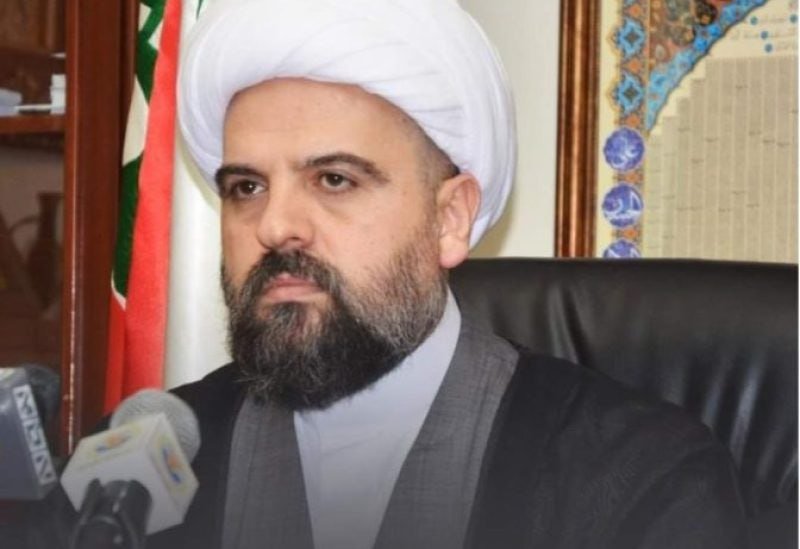
Tokyo will provide $15 million in emergency humanitarian assistance to Iran, Lebanon and the West Bank, the Japanese government announced on 26 June 2026. The package lands less than 48 hours before Washington and Tehran are due to sign a peace accord in Geneva, and it lands in a region where every act of aid is read first as a political signal and only second as relief.
The grant is small by the standards of Middle East donor flows — a rounding error next to Gulf reconstruction pledges — and that modesty is the point. Japan is signalling, without fanfare, that it intends to remain a humanitarian actor in a neighbourhood where Western capitals are now negotiating, and where Iran is simultaneously a sanctioned state, a regional power, and the co-signatory of a US-brokered deal that has not yet been inked. The package also gives Tokyo a seat at the table that does not require it to take sides in the US-Iran rapprochement.
What the package actually covers
The $15m envelope is split across three recipients: Iran, Lebanon and the West Bank. According to Middle East Eye's live coverage of 26 June 2026, the funds are framed as emergency humanitarian relief rather than reconstruction or development assistance — the language governments use when they want to keep channels open without committing to long-term engagement. The Iranian tranche is the politically delicate one. Direct humanitarian aid to a state still subject to sweeping US secondary sanctions is unusual, and Tokyo will need to structure the disbursement through neutral channels, almost certainly the United Nations, to avoid running into American enforcement.
Lebanon's slice reflects the slow-burning crisis there: a collapsed currency, a government that has not functioned at full capacity since 2019, and reconstruction needs in the south that no donor has yet met at scale. The West Bank component sits inside a separate and far more contested political environment, where aid flows are routinely scrutinised by both Israeli and Palestinian officials for what they imply about recognition, normalisation, or the future status of territories captured in 1967.
The Geneva timing
The aid announcement is not happening in a vacuum. Middle East Eye's same live feed carries confirmation that the United States and Iran have agreed to sign a peace accord in Geneva on Friday — the formal ceremony that turns months of back-channel diplomacy into a binding document, or at least into a document both sides are willing to sign. The package therefore reads as Japan's preparatory move: positioning itself as a constructive regional actor before the deal reshapes the diplomatic map.
Iran's Supreme Leader adviser made the contrary case in public the same day. According to a 26 June 2026 post on the BRICS News channel, the adviser accused the West of having brought "nothing but plunder and violence." That formulation is the rhetorical baseline of Iranian state media, and it is worth taking seriously as a domestic-audience message even as diplomats in Geneva prepare to put pen to paper. The aide's framing is a reminder that the deal Iranian negotiators sign is not the deal the Iranian street will be told about — and that any humanitarian gesture from a US ally, Japan included, will be filtered through that domestic lens.
Why Japan, and why now
Tokyo has spent two decades building a development footprint across the Middle East that is wide, quiet, and explicitly non-military. It has avoided the headline politics that consume Western donors — no Iraq invasion, no Libya intervention, no public rows over Israeli settlements — while still channelling billions into water, health and education projects through JICA, the Japan International Cooperation Agency. The $15m grant extends that posture into a humanitarian moment, and it lets Japan act as a third-party interlocutor between blocs that do not currently talk to each other in any structured way.
There is a second, harder edge. Japan depends on Gulf energy imports and on freedom of navigation through the Strait of Hormuz. A signed US-Iran accord lowers the probability of a kinetic escalation that could close the Strait; a collapsed accord raises it. Tokyo is therefore hedging: backing the diplomatic track with humanitarian money that costs it little, but that buys it standing if the track succeeds and plausible deniability if it fails.
What it doesn't fix
The package is too small to dent any of the structural crises it nominally addresses. Lebanon's economy needs tens of billions, not fifteen million. West Bank humanitarian appeals have been chronically underfunded for years. Iran's humanitarian needs are intertwined with the sanctions regime that no Japanese grant can unwind. The honest read is that the $15m is not a policy in itself; it is a down-payment on relevance.
What remains genuinely uncertain is whether the Geneva accord will actually be signed on Friday as scheduled, what its enforcement mechanism looks like, and how Tehran's domestic critics — including the adviser quoted above — will position themselves once the ink is dry. The sources do not specify the breakdown of the $15m among the three recipients, the implementing agency for the Iranian tranche, or the timetable for disbursement. Monexus will update when those details surface.
This piece sits between the humanitarian and the diplomatic, where most Iran coverage does not — and where, this publication argues, the next week's news will actually be made.
Wire provenance
This editorial synthesis draws on the following public wire/social posts:
- https://t.me/bricsnews
- https://t.me/bricsnews