Japan's naphtha pivot: Tokyo quietly rewires its petrochemical inputs as Middle East share narrows
Japanese trade data for May shows the year-on-year decline in naphtha imports from the Middle East easing, even as Tokyo diversifies away from Gulf feedstock. The shift sits inside a wider reorganisation of Asian petrochemical supply chains.
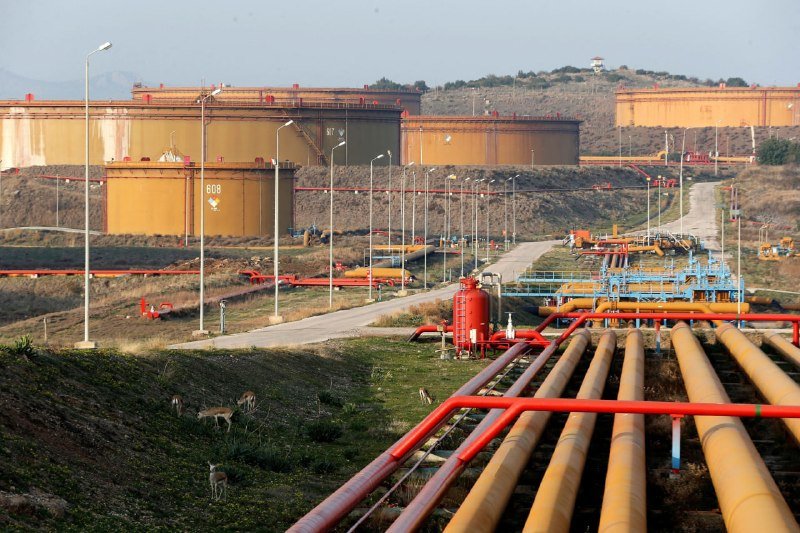
Japan's dependence on Middle Eastern naphtha, the light distillate that feeds the country's enormous petrochemical cracker complex, has been narrowing for years. The May trade data published on 26 June 2026 confirm that the narrowing continues, and that it is being driven not by a single event but by the slow accumulation of alternatives.
The year's drop in naphtha imports eased in May from the previous month, government trade data showed, as the geographic mix of Japanese feedstock purchases continued to widen away from the Gulf. For an import-dependent island economy with cracker capacity second only to China's, that mix shift is one of the more consequential, and least remarked, structural reorganisation stories in Asian energy.
What the data actually say
The figure that mattered on 26 June was a deceleration, not a reversal. The year-on-year decline in Japan's naphtha imports from the Middle East, which had been steepening through the early months of 2026, narrowed in May. Imports from other origins rose faster than imports from Gulf producers fell, producing a softer net change. That distinction matters: Tokyo is not abandoning Gulf barrels, it is adding to the menu.
Naphtha is the primary feedstock for Japan's steam crackers, which in turn produce the ethylene, propylene and aromatics that feed the country's plastics, synthetic textiles, automotive interiors and electronics chemical supply chains. Japan's petrochemical industry, concentrated around the Tokyo Bay axis and the Seto Inland Sea, is among the most naphtha-intensive in the world, a structural legacy of an era when domestic refining over-produced light distillates and crackers were calibrated to that exact slate.
When the Middle East share narrows, three things typically account for it: more LPG and ethane going into mixed-feed crackers in the Gulf itself, more US and Indian naphtha flowing into East Asia as new export terminals come online, and more domestic Japanese demand-side substitution including fuel-efficiency gains and plastic-recycling mandates that pull upstream volumes down across the board.
Why Tokyo is rewiring the menu
The narrow reading is cost. The structural reading is risk. Gulf-origin naphtha has historically been priced off a Brent-related formula and shipped through chokepoints, principally the Strait of Hormuz, that have been contested repeatedly over the last decade. Insurance, freight and political-risk premia all flow into the delivered price during those episodes, and Japanese buyers, with limited storage flexibility at the cracker level, carry most of that volatility onto their cost line.
The wider reading is industrial policy. Japan's Ministry of Economy, Trade and Industry has spent the better part of a decade pushing the country's petrochemical sector toward higher-value, lower-volume chemistry, the kind that requires less naphtha per yen of output, and toward recycling pathways that recover feedstocks from end-of-life plastics. The petroleum association's own decarbonisation roadmaps explicitly contemplate a reduced crude-and-naphtha throughput by mid-century. The narrowing of the Middle East share is, in this sense, a leading indicator of an intended outcome.
A fourth factor sits underneath the others. Asian petrochemical capacity has expanded fastest in China and South Korea, with new ethane crackers in the United States pulling US Gulf barrels eastwards, and Indian refiners adding export-oriented condensate splitters. The marginal barrel of seaborne naphtha in 2026 increasingly originates somewhere other than the Persian Gulf, and Japan's procurement desks, who buy on price and security of supply, have followed the marginal barrel.
What this changes, and what it doesn't
For Japanese refiners, the immediate effect is a more diversified pool of suppliers and a softer exposure to any single chokepoint disruption. The medium-term effect is a more demanding logistics operation: more vessels, more loading ports, more counterparties, more contracts. The country's trading houses, the sogo shosha, are built for exactly this kind of portfolio management, and they are the actors quietly absorbing the additional complexity.
For Middle Eastern exporters, the narrowing share is a warning that has been visible for some time. Saudi Aramco's push into downstream petrochemicals, including the Sadara joint venture with Dow and the ongoing integration of SABIC, is in significant part a response to the same trend: if the marginal Asian buyer is diversifying away from Gulf naphtha, the Gulf's answer is to convert more of its own hydrocarbons into higher-value products before they leave the region. The pivot Tokyo is making inside Asia and the pivot Riyadh is making inside the Gulf are two halves of the same structural shift.
What it does not change, at least not yet, is the underlying physics. Steam crackers calibrated to naphtha cannot be re-tuned to ethane without significant capital expenditure. Japan's cracker fleet remains, in the main, a naphtha fleet, and the substitution pathways from a feedstock perspective are bounded by the installed base. The shift in mix will therefore continue to be gradual.
Stakes and a forecast horizon
The narrow forecast, looking out twelve to eighteen months, is for the Middle East share of Japanese naphtha imports to keep softening, but at a decelerating pace, because the lowest-cost substitution has already been booked and the marginal new tonne is harder to bring in. The wider forecast is for the Gulf share of East Asian petrochemical feedstocks, taken across naphtha, LPG, ethane and condensate, to continue its gradual decline, with the largest gains accruing to US Gulf exporters and to Indian refiners.
The political risk, which sits on top of the commercial logic, is that any sharp escalation around the Strait of Hormuz would accelerate this reorganisation rather than reverse it. The lesson Tokyo's planners drew from previous disruptions is not that Gulf barrels are unreliable, but that the cost of being underexposed to alternatives is itself a risk. The May data point is, in that light, the visible edge of a hedge that has been under construction for years.
This article sits inside Monexus's wider Asia energy and supply-chain file. Where wire coverage frames the data point as a marginal monthly movement, the publication reads it as a continuing structural narrowing with implications for Gulf downstream strategy, US Gulf export capacity, and the cracker economics of Northeast Asia.
Wire provenance
This editorial synthesis draws on the following public wire/social posts:
- https://t.me/NikkeiAsia
- https://t.me/nikkeiasia
- https://t.me/TSN_ua
- https://t.me/france24_en