Leaflets over Baalbek: Reading an Israeli Threat Through an Iranian Lens
Tasnim's framing of an Israeli warning drop over southern Lebanon tells us more about Tehran's information posture than about the operation itself — and that's the story.
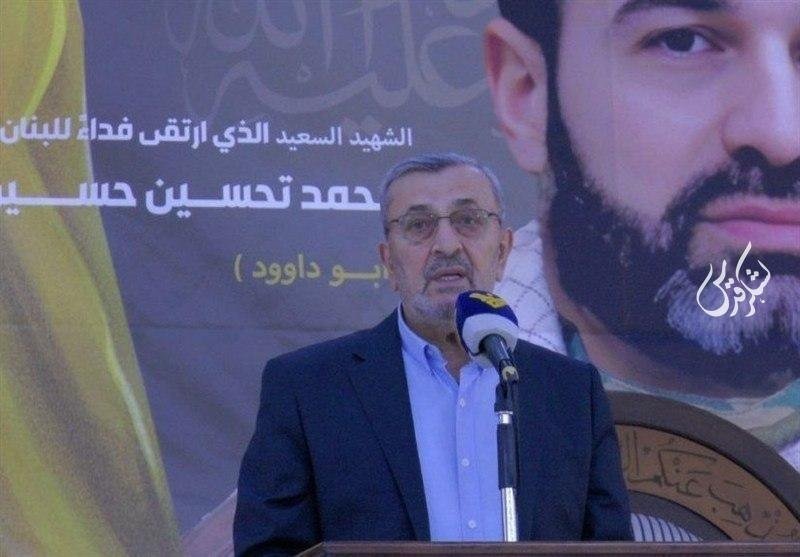
At roughly 12:21 UTC on 26 June 2026, Iran's Tasnim News Agency pushed two short items to its English-language Telegram channel describing an Israeli drone broadcast over the Al-Mansoori area of southern Lebanon. According to Tasnim's own account, the aircraft dropped leaflets threatening local residents; the agency paired the alert with images of an Ashura mourning ceremony in Baalbek earlier the same day, framing the warning inside a wider tableau of Lebanese Shia religious life under duress. The story, as Tasnim tells it, is a single coordinated news pulse: Israeli intimidation layered on top of Shia ritual observance, packaged for an audience that already reads the border through a confessional lens.
Read the items on their own and the picture is thin. A drone, a leaflet drop, a mourning gathering in a different city hours earlier, and the editorial decision to bind them into one thread. The framing, not the underlying facts, is the news. Tasnim is not a neutral wire; it is the press arm of the Iranian Revolutionary Guard Corps, and its English desk exists, in part, to render every event on the Israeli-Lebanese frontier as evidence of a campaign against Shia civilians. That institutional role does not make the report false, but it does shape which details Tasnim selects, which it omits, and which words it reaches for first.
The English desk's grammar of threat
Tasnim's English copy refers to the Israeli military as "the Zionist army" and "the aggressor of the Zionist regime," language that would be unusual in a Reuters bulletin but standard in Iranian state-aligned output. The choice matters. "Zionist" rather than "Israeli" is a political signal that the state itself — rather than its government or armed forces — is the object of contestation. "Aggressor" is a verdict, not a description. Readers who encounter the item without that context may take the framing as conventional; it isn't, and treating it as such distorts what the wire is actually saying.
The second thread item, dispatched from Tasnim's Persian-language sister channel around 12:05–12:06 UTC, is a photograph of an Ashura mourning ceremony in Baalbek. Baalbek is a Hezbollah-governed city in the eastern Bekaa Valley, roughly 110 kilometres from the Israeli border. The ceremony is a routine annual observance on the day of Ashura, the tenth of Muharram. By placing the mourning image in the same feed and within fifteen minutes of the leaflet alert, the desk constructs a narrative arc: threatened Shia civilians persist in their ritual life under pressure. The technique is not unique to Tasnim — wires everywhere use proximity in time to imply causation — but the ideological payload is heavier here than at Reuters or AP, where a leaflet drop and an Ashura ceremony would normally run as separate items.
What the wire does not say
The Tasnim items do not specify which Israeli unit operated the drone, what the leaflets actually said, how many were dropped, or whether any Lebanese civilians were physically harmed. They do not cite Israeli military spokespeople, nor do they cite UNIFIL, the Lebanese Armed Forces, or any Western wire. There is no independent corroboration inside the source thread itself. That absence is the story's second layer: a one-source claim about a kinetic event, delivered with maximal rhetorical force and minimal verifiable detail, propagated to an English-reading audience that may have no other immediate route to the underlying facts.
Israeli security concerns along the northern border are real and longstanding. Hezbollah retains a significant rocket and drone arsenal, and the period since the 2023 Gaza war has seen repeated exchanges of fire across the Blue Line, including the killing of civilians on both sides. A leaflet drop, if it occurred as described, fits a documented pattern of Israeli efforts to push residents of southern Lebanese villages away from areas the IDF uses for staging or fire-control. That context is absent from Tasnim's English feed by design: it would complicate the clean narrative of religious community under siege.
Structural frame
The pattern here is not about one drone or one set of leaflets. It is about who gets to define an event for which audience, and at what latency. Iranian-aligned English-language outlets have spent a decade building the capacity to deliver breaking-news micro-frames to a global readership faster than most Western wires can match. The frames they ship are not random; they are pre-shaped to fit an existing ideological architecture in which Israel is the perpetual aggressor, Shia civilians the perpetual subject of compassion, and Western media the perpetual accomplice. None of those propositions is self-evidently true, and each can be defended in particular cases. The structural point is that the architecture exists, that it is operated with discipline, and that it competes for the same attention economy as the Reuters and AP bulletins readers in London, Nairobi and Jakarta will see hours later.
That competition is the real story, and it is under-reported. When a reader in Europe encounters the Tasnim version first, the Israeli and Western-wire versions arrive as corrections rather than as primary accounts. The framing hierarchy is set before the facts are contested. This publication has no view on whether the leaflets were dropped or what they said; those questions require independent reporting on the ground in southern Lebanon. What can be said with confidence is that the way the incident reached an English-language audience was shaped, at the source, by an institution with a definite political project.
What remains uncertain
Three things are genuinely contested in the available material. First, the physical event itself: Tasnim is the sole source in this thread for the drone and the leaflet drop, and no Western wire or Israeli military statement is cited. Second, the precise content of the leaflets, which the thread does not reproduce — a critical omission, since the language of a threat determines whether the act is routine signalling or escalation. Third, the causal link, if any, between the Baalbek ceremony and the leaflet drop, which Tasnim implies through editorial sequencing but does not assert in so many words. Until at least one of these is independently verified, the safest reading is that an Iranian-aligned agency has reported an Israeli action in terms designed for a particular audience, and that the framing is doing significant work the underlying facts cannot yet bear.
Monexus ran this item as a media-posture story rather than a battlefield dispatch. The wire it draws on is Tasnim, an Iranian state outlet; the framing choices in the original are themselves the lead.
Wire provenance
This editorial synthesis draws on the following public wire/social posts:
- https://t.me/tasnimnews_en
- https://t.me/tasnimnews_en
- https://t.me/JahanTasnim
Follow the event.
These dated source records provide context. They do not retrospectively verify this archive article.
Separate what the nuclear watchdog reported from what it could not determine after the June 2025 strikes.