Lebanon's negotiator-in-chief, and the cabinet that won't sit still
A senior Hezbollah official has publicly rebuked Beirut's negotiating track with Israel as a sovereignty sell-out. The cabinet, already fractured, has a new problem to manage.
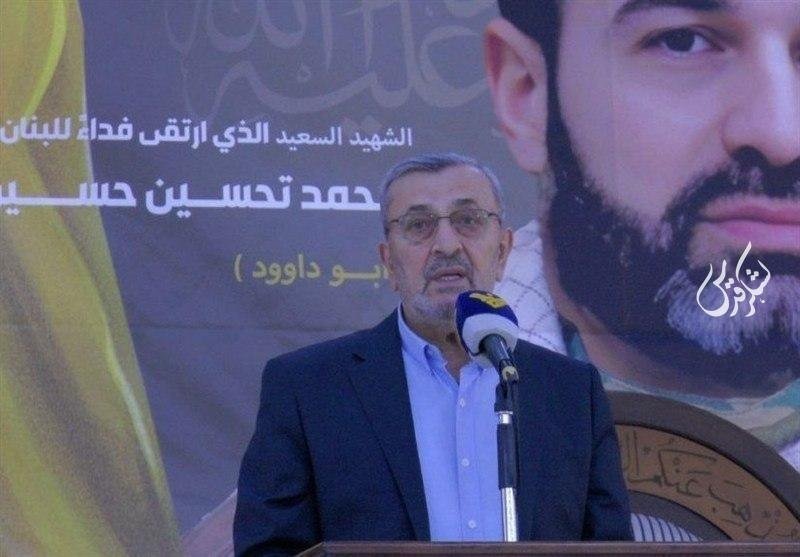
On the evening of 26 June 2026, Lebanon's already fragile negotiating posture with Israel suffered a very public rebuke from inside the Shia political establishment. In a series of statements carried between 18:16 and 18:40 UTC by Al-Alam Arabic's Telegram channel, Hezbollah official Mohammad Fadlallah warned the Beirut government against the "political and security path of negotiations," called on it to retreat from any commitments already made, and dismissed Prime Minister Benjamin Netanyahu as "negotiating with himself" because the Lebanese executive lacks, in Fadlallah's telling, "constitutional and charter legitimacy" to impose terms. The line is rhetorical, but the signal is operational: a major domestic faction is now publicly contesting the authority of the government sitting across the table from Jerusalem.
That matters because Lebanon's negotiating track is not being run by Hezbollah alone. It is being run by a cabinet, under a head of state, that Hezbollah does not control and has spent years trying to constrain. The fact that one of the movement's senior spokesmen is now arguing, on the record, that the cabinet lacks the standing to negotiate at all is a domestic political event dressed up as foreign-policy commentary. It is also a signal to every other faction watching from the sidelines: the terms, if they are ever signed, will be contested at home before they are ever implemented.
What Fadlallah actually said
Read in sequence, the five Al-Alam Arabic dispatches form a single escalating argument rather than five separate quotes. The first warns that the negotiating path "undermines Lebanon's sovereignty" and causes "serious internal divisions" (18:16 UTC). The second urges the authority to "retreat from the course of direct negotiations and from all the decisions it committed and took against its people" (18:18 UTC). The third escalates the personal attack on the Israeli prime minister, describing him as negotiating with an interlocutor that does not have the standing to commit Lebanon (18:27 UTC). The fourth and fifth harden the sovereignty framing: "we will not allow this authority to destroy Lebanon, and we will not hand over our fate and our country to it" (18:33 and 18:40 UTC).
Two things are notable. First, the language is directed at the Lebanese state, not at Israel. The Israeli prime minister is name-checked once; the Lebanese "authority" is name-checked in every dispatch. Second, the framing — that a sitting Lebanese government lacks the constitutional standing to negotiate — is a maximalist claim that, if accepted, would also strip legitimacy from any future deal the cabinet might sign. The argument is not "negotiate better." It is "stop negotiating."
Why this is a structural story, not a tactical one
Coverage of Lebanon-Israel diplomacy tends to focus on the headlines out of the negotiating room: what is on the table, what is off it, who blinked. The Fadlallah intervention is a reminder that the more durable story is the one happening around the table. Lebanon's political system is consociational by design — power is distributed across sectarian blocs precisely so that no single faction can commit the country alone. That design is also why no faction can be sidelined without the architecture buckling.
The blunt question the next 72 hours will answer is whether the cabinet treats Fadlallah's intervention as a pressure tactic to be absorbed, or as a red line that requires a recalibration of the negotiating mandate. If the government proceeds as planned and produces a draft text, it will be doing so with a major domestic faction on record calling its authority into question. If it pauses to re-consult, it will be rewarding the public veto and confirming, for future negotiations, that direct televised criticism is a workable lever.
The counter-read, and why it doesn't quite hold
The most plausible alternative reading is that this is theatre — a domestic audience play designed to reassure Hezbollah's base that the movement is not, in fact, on board with a process that has Israeli fingerprints on it. Hezbollah officials have form for sharp public criticism of Beirut's diplomatic posture, and the statements could be read as position-taking rather than position-breaking.
That reading is not wrong, but it is incomplete. The language used — "we will not allow," "we will not hand over" — is not the language of dissent. It is the language of a faction asserting a veto. Even if the statement is calibrated for a domestic microphone, the cost of the words is paid in the negotiating room: any Israeli counterpart now has to price in the possibility that the Lebanese signatory cannot deliver Lebanese politics. That is not a small discount.
Stakes
If the trajectory holds — public escalation from Hezbollah, continued direct negotiations from Beirut, and an Israeli counterpart operating against a ticking clock of its own — the most likely outcome is a negotiation that produces text but does not produce politics. A signed framework without an internal Lebanese consensus is a document with a half-life, not a treaty. The losers, in that scenario, are the Lebanese state institutions that need a deal to function and the border communities that need the deal to hold. The winners are the factions that benefit from permanent crisis as a governing condition.
What remains genuinely uncertain is whether the cabinet will treat the next 48 hours as a moment to widen the negotiating coalition, or as a moment to push through and dare the dissenters to block. The Fadlallah statements make the second path more expensive than it looked 24 hours ago. They do not, on their own, make the first path easier.
Desk note: Monexus has framed this around the domestic-Lebanese political contest that the Fadlallah intervention actually addresses. Wire coverage of Lebanon-Israel negotiations tends to foreground the Israeli and American ends of the table; the Hezbollah readout is best read as a message to Beirut first and Jerusalem second.
Wire provenance
This editorial synthesis draws on the following public wire/social posts:
- https://t.me/alalamarabic
- https://t.me/alalamarabic
- https://t.me/alalamarabic
- https://t.me/alalamarabic