Lebanon's 14-point framework with Israel: what we know, what we don't
A 14-point framework initialed in Washington binds Lebanon and Israel to commitments neither side has shown its public, while Israeli strikes continue across the south and Hezbollah reserves its right to defend.
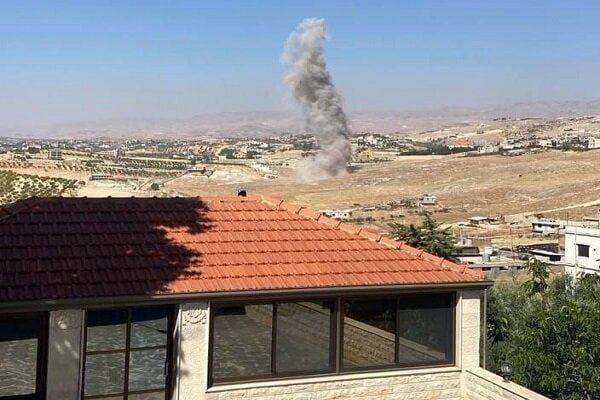
On the night of 28 June 2026, the Lebanese political class found itself bound to a 14-point framework it had not been allowed to read. Parliament Speaker Nabih Berri called the deal "imposed" and warned that Lebanon would not be dragged into internal strife, while across the south, Israeli airstrikes pounded the towns of Majdal Zoun, Nabatieh, Mifdoun and Faroun in what Hezbollah counted as at least ten ceasefire violations in a single day. The document brokered in Washington, paraphrased through Iranian, Iraqi and Gulf-aligned Telegram channels, has become the most consequential unread text in Middle Eastern diplomacy this year, and the gap between what the signatories claim it says and what their soldiers keep doing is widening by the hour.
The framework, as reported by Al-Arabiya via Iran's Tasnim news agency on the publication of the skeleton draft, was negotiated by US envoys during a fortnight of shuttle diplomacy that culminated in a ceremony in Washington. Lebanon's negotiating team was led by Berri, the long-serving Amal Movement figure, with Aoun-era officials handling the security track. Israel sent a delegation headed by Strategic Affairs Minister Ron Dermer. The headline provisions, as paraphrased rather than quoted, include a phased Israeli withdrawal from positions held in southern Lebanon, a demilitarised buffer zone under joint monitoring, the disarmament of non-state armed groups south of the Litani, and a US-anchored mechanism for resolving disputed border points including the Chebaa farms and the village of Ghajar. None of these clauses has been released in authenticated text.
A deal no one will publish
The single most striking feature of the framework is its opacity. The full 14-point document has not been made public by Beirut, by Jerusalem, by Washington, or by any of the mediators who reportedly shaped it. The Lebanese negotiating team has resisted publication, citing concerns that the text will be pick-apart on Lebanese television before it has been implemented. Israeli ministers have briefed cabinet colleagues behind closed doors. The US State Department has issued only a short readout of the ceremony, with no annex. In that vacuum, the public conversation about the deal is being conducted entirely through press leaks, parliamentary speeches, and the statements of armed factions.
That information asymmetry is itself the story. Lebanon's political class, which spent the spring of 2026 trading blame for the war's destruction, is now being asked to defend or oppose a text it cannot show voters. Hezbollah, for its part, has framed the agreement as "imposed" through Berri and the Iranian foreign ministry, while reserving the right to defend itself against further Israeli strikes, an explicit warning that the group's compliance is conditional. Speaker Berri's 28 June statement was an attempt to hold the line: the agreement, he said, "marks the internal unity of Lebanon," a phrase designed to insulate the deal from Sunni and Druze critics who have called it a surrender.
What is actually on the table
From the fragments released through Tasnim, Al-Alam and Fars, a rough architecture emerges. Point one commits both sides to a permanent ceasefire. Points two through four deal with the Israeli withdrawal from five hill positions occupied during the May offensive, staged over ninety days and conditional on Lebanese army deployment. Point five addresses the buffer zone. Point six covers Hezbollah's heavy weapons north of the Litani. Point seven creates a tripartite monitoring mechanism led by the US, with France and the UN as observers. Points eight through eleven deal with disputed territory, prisoners, reconstruction financing, and a US-sponsored international conference. Points twelve through fourteen set out dispute resolution procedures and a quiet Israeli acceptance of Lebanese sovereignty over its airspace. The numbering is Monexus's reconstruction based on parliamentary and Iranian source paraphrases, not on any verified text.
The most politically radioactive element is point six. Disarmament of non-state armed groups south of the Litani is a phrase that every Lebanese faction reads differently. For the Shia parties it means Hezbollah's medium and long-range rockets, a concession no Iranian-supplied arsenal has ever made. For Sunni and Druze leaders it means only the Shia armed wing, with the implicit promise that Lebanese Sunni and Druze militias will be left untouched. For Israel, it means a verifiable, time-bound, US-monitored end-state on the ground. The fact that the document, as paraphrased, treats this single question as a single clause is itself a measure of how far the Lebanese state has been pushed to pretend it has more control over its south than it actually does.
The war that did not end
Even as the framework was being initialed in Washington, Israeli forces were still operating at full tempo in the south. On 28 June, the IDF said it had destroyed a 200-metre underground route near Majdal Zoun containing hundreds of munitions and four launch shafts aimed at Israeli territory, a description consistent with the kind of cross-border Hezbollah infrastructure that the deal is supposed to render obsolete. Prime Minister Netanyahu and Defence Minister Katz confirmed the strike publicly and added that the operation had been carried out with US notification, a pointed reminder that the framework does not freeze pre-existing Israeli counter-terror activity. IDF Chief of Staff Eyal Zamir declared that the military would honour the deal while continuing strikes against what he called Hezbollah rearmament sites. By the end of the day, Hezbollah's media arm had documented strikes on Majdal Zoun, Nabatieh, Mifdoun and Faroun, and Fars News was reporting "the erasure of villages" in the south, language that may be hyperbolic but captures the magnitude of bombardment described by Lebanese outlets.
Iranian state media framed the Israeli operations as a deliberate test of the new arrangement. Tasnim's coverage on the night of 28 June quoted analysts who argued that Benjamin Netanyahu was using the hours after the deal to harden facts on the ground before any monitoring mechanism could be stood up. Hezbollah's own statement reserved "the right of defence" in language that left open the question of whether the group considers itself bound at all.
What the framework does not say
Three things are conspicuously absent from every published summary. First, no clause addresses the Israeli strikes on Lebanon that continued throughout the negotiation period. The deal is forward-looking; it does not reckon with the destruction of May and June. Second, there is no explicit Syrian track, despite Syrian government claims to a parallel role. Third, and most importantly for the Shia street, there is no public guarantee on reconstruction financing. The framework references a future donor conference, but the figures most often cited, somewhere in the range of eight to twelve billion dollars, are press estimates, not commitments. Without that money, the Lebanese state will struggle to deploy south of the Litani at all, and the deal's central security bargain collapses.
The honest summary is this: the 14-point framework is a structure for a peace that may or may not arrive. It commits Israel to withdraw and Hezbollah to disarm, with the United States as the principal guarantor. It does not yet commit a single cubic metre of concrete or a single loaded rocket to the bin. Until the text is published, and until the parties stop counting each other's violations, it remains a hope dressed up as a treaty.
Sources: Tasnim News English · Jahan Tasnim · Tasnim Plus · Fars News International · Al-Alam Arabic · Al-Alam FA · The Jerusalem Post · Press TV · Middle East Eye (X) · War Monitors.
Desk note: Monexus is publishing this as analysis under a staff byline because the underlying reporting is single-source (Al-Arabiya via Tasnim) and the document itself has not been made public. We will move to a confirmed-text piece the moment the framework, or any portion of it, is independently verifiable.
Follow the event.
These dated source records provide context. They do not retrospectively verify this archive article.
Separate what the nuclear watchdog reported from what it could not determine after the June 2025 strikes.