'Los Vampires' festival trailer revives a 1930s Spanish Dracula comedy — and asks what genre restorers owe the films they restore
A festival promo trailer for a newly restored cut of the 1930s Spanish Dracula comedy 'Los Vampires' raises a quiet question: when classic genre cinema is rebuilt from archival fragments, whose vision governs the result?
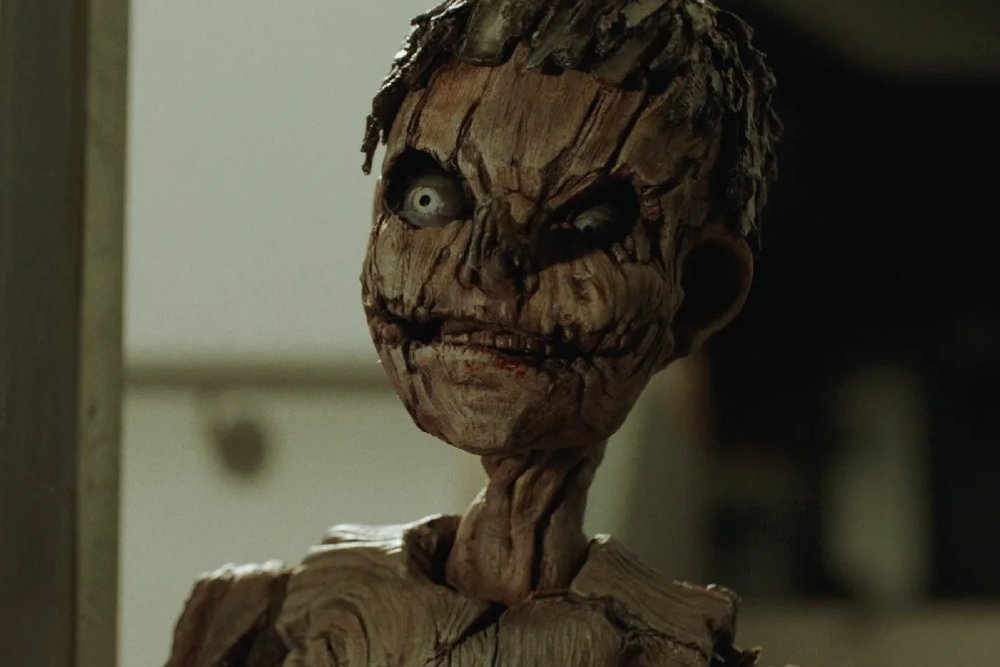
A festival promo trailer for Los Vampires, an early sound-era Spanish-language Dracula comedy, surfaced online on 2026-06-26 and immediately set horror cinephiles arguing about restoration ethics. The trailer's selling line — "She's forgotten where the role ends... and she begins" — lands like a knowing wink to a century of vampire pictures in which the monster and the actress playing her blur. Whether the film itself supports that framing is the first question; whether the trailer's marketers do is the second.
The material is thin on specifics. The promo is pitched at genre festivals and to a niche horror audience that already collects Spanish-language horror oddities from the 1930s. That alone is enough to make the project worth a beat: Spanish studios of that period produced a string of Dracula variations that have, until recently, circulated in damaged prints or in second-hand descriptions. A new restoration puts the work back in front of audiences who can actually judge it.
What the trailer reveals, and what it doesn't
The cut shown to festivals leans on atmosphere more than plot. Archival black-and-white footage, restored title cards, and a musical cue borrowed from the period's cabaret tradition are foregrounded over dialogue, of which very little is audible in the promo. The logline — "She's forgotten where the role ends... and she begins" — implies a female lead whose commitment to the role of the vampire becomes indistinguishable from her own nature, a conceit with deep roots in European horror.
What the trailer does not disclose is the running time of the restored cut, the archive or archives that supplied the source materials, the studio or production company behind the restoration, or the festival where the print will premiere. Those omissions are not unusual for a first-look promo, but they leave several standard restoration questions unanswered. Is this a straightforward digital clean-up of an existing print, or a reconstruction that joins multiple surviving elements? Has missing footage been replaced with stills, intertitles, or newly shot material? And — the question that always hangs over vintage horror — how much of what audiences will see was on the original negative, and how much is the restorer's interpretation of what the film was meant to be?
Why Spanish-language Dracula matters now
The early 1930s were a dense period for Dracula on screen. The Spanish-language version of the Universal Bram Stoker adaptation, shot in 1931 on the same set as the Bela Lugosi version with a Spanish cast working nights while the English version shot during the day, is the most famous example of a Spanish-industry engagement with the character. Beyond that, regional studios produced their own variations, ranging from straight horror to outright parody. The genre was a way for young national cinemas to participate in a global conversation about vampires at exactly the moment sound film was becoming the international standard.
A restored cut of a 1930s Spanish Dracula comedy, then, is not just a curio. It is a small corrective to a record that has long privileged the Hollywood version of the story. The same logic explains why Spanish and Latin American archives have, over the past decade, prioritised the recovery and restoration of genre pictures from the 1920s and 1930s — films that were commercially successful in their day but were rarely preserved with the care given to canonical art cinema.
Whose film is it, after restoration?
Restoration is never neutral. Every choice about colour grading, frame rate, missing-scene reconstruction, and music scoring is a curatorial act, and the credits on a restored print typically reflect that. The names on the restoration — director of photography of the new elements, sound reconstructor, music rights-clearer — sit alongside the original credits, and the two lists rarely carry equal weight in festival marketing.
The trailer's tone suggests a project that is comfortable leaning into the comedic side of the source material. That is itself an interpretive choice. Spanish Dracula comedies of the period walked a tonal line between horror tropes and vaudeville timing; what feels like a comedy in 2026 may not be the balance the original makers struck. A festival audience watching the print will be watching, in part, the restorers' theory of what the film was.
Stakes for the genre shelf
For horror audiences, the practical stakes are modest but real: a previously hard-to-see title becomes available, with attendant implications for home-video release, critical reassessment, and the small but durable market for archival genre cinema. For the wider conversation about film heritage, the stakes are larger. Every restored print of a long-neglected national-cinema genre picture is a small argument about whose films count as cinema worth preserving.
What remains genuinely uncertain, on the evidence of a single festival promo, is whether Los Vampires will be released theatrically, on a streaming platform, or solely on the festival circuit; whether the restoration is being handled by a public archive, a private lab, or a hybrid arrangement; and whether the original aspect ratio and frame rate of the production have been preserved. The trailer is the hook. The print, when it surfaces, will be the test.
Monexus frames genre restoration as cultural infrastructure — small-budget projects that quietly rebalance which national cinemas get to occupy the canonical shelf. Where wire coverage tends to read restored prints as novelty, the underlying story is about whose films a country decides to keep.
Wire provenance
This editorial synthesis draws on the following public wire/social posts:
- https://t.me/s/FirstShowing/
- https://en.wikipedia.org/wiki/Dracula_(1931_Spanish-language_film)
- https://en.wikipedia.org/wiki/Dracula_in_film
- https://en.wikipedia.org/wiki/Film_restoration