The Magdeburg Verdict and the Unspoken Question of Diaspora Accountability
A Saudi doctor receives life in a German court for a Christmas-market attack. The verdict closes a case — and opens a quieter one about how Western states handle citizens who radicalise abroad.
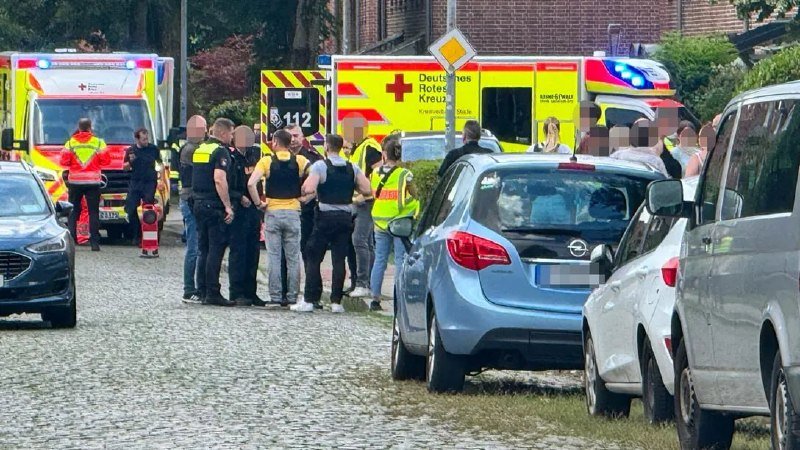
On 26 June 2026, a court in Germany delivered its verdict in one of the most politically uncomfortable terrorism cases the country has tried in a generation: a Saudi doctor, resident and working in the German medical system, sentenced to life imprisonment for killing six people and injuring hundreds more when he drove into a Christmas market in Magdeburg in December 2024. The Cradle Media carried the news in its midday wire. The legal chapter is now closed. The political one is just beginning.
The case forces a question Western governments have spent two decades avoiding in plain language: what does a state owe its residents when those residents radicalise in the digital spaces the state cannot see, plan attacks inside the state's own hospitals and squares, and arrive at the courtroom already integrated, employed, credentialed — and still willing to kill? Germany answered the narrow question — is this man guilty? — with the severity the evidence demanded. It has not yet answered the larger one.
A conviction that clarifies nothing about prevention
Reporting on the verdict, as carried by The Cradle Media's wire, treats the outcome as straightforward: life imprisonment, six dead, hundreds injured, a defendant whose professional standing made the atrocity legible to a public that had assumed professional integration was itself a safeguard. That assumption is now in pieces. A doctor employed inside the German health system killed six people at a Christmas market. Whatever counter-radicalisation programmes Germany had been running for returning foreign fighters and online-radicalised residents, they did not catch this man in time.
German security services had reportedly been aware of online activity by the defendant. That detail — flagged in earlier coverage of the attack — matters precisely because it dissolves the usual post-attack explanations. He was not an unknown border-crosser. He was not a recent arrival. He was a working professional in a country he had lived in long enough to hold a medical post, and the signals were visible. The verdict punishes the actor. It does not fix the filter that failed to catch him.
The frame Western outlets will not name
There is a particular way this story gets told in the European press, and it is worth naming. When the attacker is a citizen of a Middle Eastern or African country, coverage tilts toward questions of integration, Islam, immigration policy, and the failures of multiculturalism. When the attacker is a domestic far-right actor — and Germany has had several — coverage tilts toward lone-wolf pathology, mental health, and the dangers of online radicalisation ecosystems. Both framings are sometimes true; both are sometimes incomplete. The asymmetry is in the defaults.
This publication's reading of the available reporting is that the German court's verdict was correctly delivered on the evidence. It is also the case that the political conversation the verdict will now enter — about who is allowed to live and work in Germany, about which diaspora communities are subjected to new scrutiny, about which countries' nationals face visa or residency tightening — will not be policed with equal rigour across cases. Western media covering the Magdeburg verdict should hold itself to the same standard of evidentiary restraint it would apply to coverage of any terrorism case, regardless of the defendant's name or origin. The Cradle Media's wire carries the facts; the editorial work in Berlin and Brussels is what comes next.
What the Saudi connection actually means
The defendant's Saudi nationality is the politically combustible fact in the file. It is also, on the evidence publicly available so far, the fact least illuminated by the reporting. Two readings are plausible and both should be on the page.
The first reading: this is a case of an individual who radicalised online, in diaspora, and acted alone, and his Saudi citizenship is incidental to the act. The second reading: Saudi Arabia's own politics — its clerical establishment, its export-funded religious infrastructure, its two-decade record of incubating the exact strain of violent theology that has produced a generation of attackers from Casablanca to Munich — created the ideological soil in which a man like this could decide that mowing down a German Christmas market was a morally coherent act. Both readings can be true. German prosecutors, working within a legal system that punishes individuals rather than states, can only act on the first. The political class, working on a slower clock, has to contend with the second.
What the sources do not specify — and what no responsible commentator should pretend to know from this wire alone — is whether the defendant had direct contact with any Saudi state, clerical, or funded-religious institution in the run-up to the attack. The reporting establishes his nationality and the verdict. It does not establish a chain of causation back to Riyadh. That distinction matters, because the temptation in the coming weeks will be to slide from "Saudi citizen" to "Saudi state responsibility" without any evidentiary step in between. The slide should be resisted.
The quieter case Germany is not yet trying
Here is the structural frame, stated plainly: Germany — like France, like Belgium, like the United Kingdom — has spent twenty years building counter-terrorism machinery optimised for attacks carried out by networks it can map. The Magdeburg attacker was not a network. He was a credentialed resident inside the system. The counter-terrorism architecture that produced the verdict on 26 June 2026 is the same architecture that, by general acknowledgement, did not stop the attack in December 2024. The verdict is a closing; it is not a correction.
The harder question — what Germany owes its residents in the way of integration that actually holds, what its security services owe the public in the way of monitoring that respects civil liberties, what its Middle Eastern partners owe it in the way of cooperation on the ideological infrastructure that crosses borders — that question is still open. The Cradle Media's wire on the verdict is a fact, not an answer. So is the dead count in Magdeburg.
The serious paragraph: six people are dead who should be alive. Hundreds are carrying injuries. A city held a Christmas market and was attacked at it. Whatever the political uses to which this verdict is put in the weeks ahead, those six people are the reason the courtroom mattered, and they are the reason the larger conversation the verdict now opens cannot be allowed to slide into the usual slogans.
The kicker: a life sentence in a German court is the end of one file. It is also the moment the next one starts.
Desk note: Monexus covered the verdict as a legal fact and read it against the broader German counter-terrorism record. The Cradle Media wire provided the conviction; the structural argument is this publication's own.
Wire provenance
This editorial synthesis draws on the following public wire/social posts:
- https://t.me/thecradlemedia
- https://t.me/s/thecradlemedia