Maghazi strike lands on a Friday, and the framing gap widens
Two missiles on a vehicle at the entrance of a central Gaza refugee camp produced two competing narratives within minutes. The gap between them is the story.
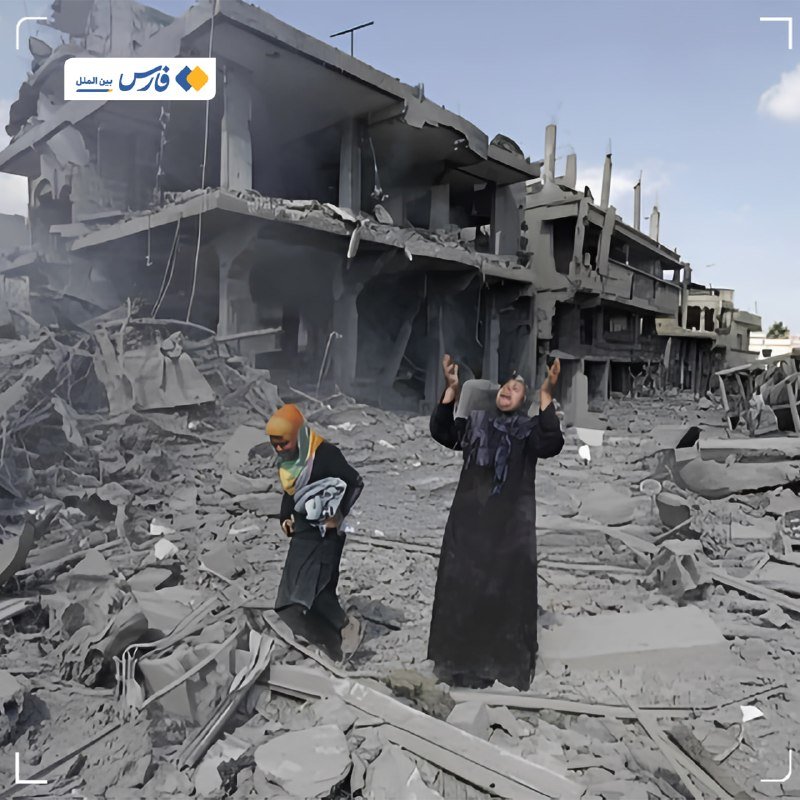
Two missiles struck a vehicle near the entrance to Al-Maghazi refugee camp in the central Gaza Strip at roughly 15:11 UTC on Friday, 26 June 2026, according to Palestinian sources cited by Al-Alam Arabic. Within fifteen minutes, the Al-Alam Arabic channel was reporting injuries; within thirty, Gaza Alanpa was broadcasting first-moment footage from the site of the strike. By the time Friday prayers concluded at 16:05 UTC, the wider optics of what had happened, and to whom, were already hardening into two completely different stories.
The split is not new. What is notable today is the speed: the two framings now diverge faster than the corresponding wire cycles can bridge them, and the divergence has become the story itself.
What the field-level footage shows
The Telegram feed from Gaza Alanpa posted the first-moment aftermath of the strike on a vehicle at the entrance to Al-Maghazi camp. The visual record is consistent with a targeted strike on a single vehicle: a localised blast radius, civilian presence immediately at the perimeter, and a rapid arrival of bystanders and medical responders rather than a coordinated evacuation. The accompanying caption carries no claim of responsibility, no identification of the occupants, and no casualty figure.
Al-Alam Arabic, the Iranian-owned Arabic-language satellite operation, was faster on the framing. Its 15:11 UTC bulletin described "occupation aircraft" targeting a vehicle with two missiles near the camp's entrance. Its 15:18 UTC bulletin reported "injured" in the strike, again citing "Palestinian sources," without naming a hospital, a civil defence spokesperson, or a ministry. The vocabulary is consistent with the channel's editorial register: the "occupation" framing and the 🆔 tag link the strike into a wider narrative of named-actor aggression rather than a specific operational incident.
The asymmetry between the two feeds is the point. One is showing what happened. The other is telling the reader what it means before the casualty count, the identities of those inside the vehicle, or the targeting rationale are known.
The wire gap that opens at 15:11 UTC
No major wire service had reported the strike as of the latest Telegram timestamp in the cluster (16:05 UTC). That is the operative fact. Reuters, AFP, AP and the BBC have either not received confirmation, are running their own verification, or are waiting for an Israeli military statement. In the meantime, the framing of the day is being written by Al-Alam Arabic on the Arabic-language side and by Gaza Alanpa, a field-operations channel, on the visual side. The dominant Anglophone framing will arrive hours later, after consolidation, and will inherit — rather than contest — the narrative terms set in that window.
This is the recurring structural problem of Gaza coverage. The interval between an incident and the consolidated wire read is precisely the interval in which Arabic-language outlets and field channels set the interpretive frame. When the Anglophone wires land, they often do so in the language of "according to Palestinian reports," which launders the framing rather than testing it. The number, the identities, the target selection rationale: each is treated as a fact-to-be-confirmed later, while the political vocabulary in which the incident sits is treated as already-fixed.
Israeli security context, stated cleanly
Israeli strikes on vehicles in Gaza through 2025 and into 2026 have been framed by the IDF spokesperson as operations against militant operatives, including those responsible for planning attacks, manufacturing weapons, or transporting materiel. That framing is not always wrong, and Israeli security concerns in Gaza are legitimate and must be conveyed without dismissiveness. Al-Maghazi, like other central-camp areas, has been used by armed groups for staging, storage, and transit; an Israeli strike on a vehicle at a camp entrance is not, on its face, anomalous in the operational record of the past year.
The counter-frame is also legitimate. A refugee-camp entrance at Friday-prayer time is a crowded civilian environment. Two missiles on a vehicle in that environment produces a blast radius that does not respect the boundary between a named target and bystanders. "Palestinian sources" reporting injuries without naming them is consistent with a scene in which the strike was carried out and the local medical system is doing triage faster than it is issuing formal statements. Neither side of this — operational legitimacy on one hand, civilian exposure on the other — cancels the other out.
What the dominant frame leaves out
The version of this strike that will run on most Anglophone desks this evening will read something like: "Israeli aircraft struck a vehicle in central Gaza on Friday, with Palestinian reports of casualties." That sentence is technically defensible. It is also a compression: it treats the political vocabulary as given ("Israeli aircraft," "struck") and the human vocabulary as conditional ("Palestinian reports," "casualties"). The inversion — Palestinian agency on the framing side, conditional status on the human side — is the default posture of the consolidated international press on Gaza, and it has been for some time.
The alternative framing — that this is a continuing occupation operation in which civilian exposure is the predictable byproduct of a vehicle-targeted strike protocol — is more uncomfortable but better supported by the visual record from Gaza Alanpa and the bulletin cadence from Al-Alam Arabic. The structural frame here is not about the strike itself; it is about who is permitted to be the first narrator of it.
Stakes and what remains uncertain
If the trajectory continues, the Anglophone reader's understanding of incidents in Gaza will continue to arrive packaged inside the framing decisions made in the first hour by Arabic-language state-adjacent outlets and field channels. The Israeli military will continue to issue after-the-fact justifications that the wires carry uncritically. Palestinian civilian harm will continue to be reported as a number attached to a verb ("reports of casualties") rather than as a sequence of named individuals. The asymmetry in narrative authority will widen.
What remains genuinely uncertain in this specific incident: the identities of the occupants of the vehicle, whether they were the named target of the operation, the exact casualty count, and whether any of those injured are children, medics, or bystanders rather than operatives. The sources in the thread cluster do not specify. Until the consolidated wire read arrives, the reader is working with a strike confirmed and a meaning still being negotiated in real time — which is, in 2026, the default state of Gaza coverage.
This publication framed the strike as a contested event with two legitimate readings — Israeli operational logic and documented civilian exposure — and treated the framing gap itself as the structural news, rather than as a footnote to the strike.
Wire provenance
This editorial synthesis draws on the following public wire/social posts:
- https://t.me/gazaalanpa/1
- https://t.me/alalamarabic/1
- https://t.me/alalamarabic/1
- https://t.me/gazaalanpa/1