Netanyahu frames Lebanon deal as Israeli 'achievement' while pilots test new disarmament zones
Netanyahu and Defence Minister Katz marketed the 28 June strikes on southern Lebanon as a deliberate Israeli achievement. Hezbollah's same-day violation list suggests the deal is being read in opposite languages in Tel Aviv and Beirut.
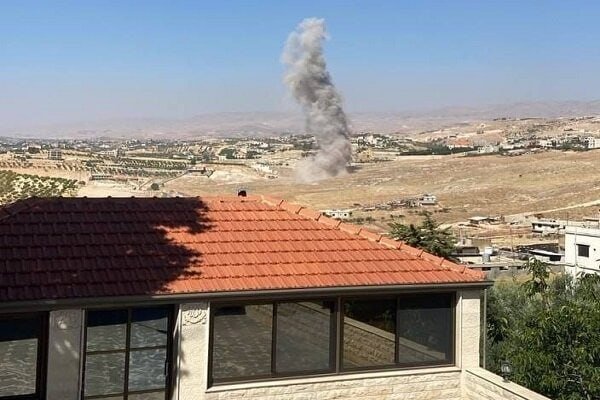
Late on the evening of 28 June 2026, as Lebanese civilians in the south were already counting the dead and surveying the damage from a fresh wave of bombardment, the Israeli prime minister's office issued a statement designed for a different audience. Benjamin Netanyahu and Defence Minister Israel Katz declared that the IDF had destroyed what they described as Hezbollah's underground terrorist infrastructure in southern Lebanon, an operation they have named "Final Verse." The statement, published in English and Hebrew, framed the day's strikes as a deliberate, pre-planned Israeli achievement. The pilots flying the sorties against Mifdoun, Nabatieh and Faroun, however, were not running a single operation in a single theatre. According to sources aligned with Iran's Tasnim news agency, the strikes on southern Lebanon were carried out with the prior knowledge of the United States, a layer of coordination the Israeli announcement did not name.
The dissonance between the diplomatic language in Tel Aviv and the operational language in the cockpit is the story of 28 June 2026. The Israeli side reads the day as a clean tactical win that fortifies a US-mediated framework agreement. The Lebanese side, and Hezbollah in particular, reads it as a continuing series of violations by a signatory that has not slowed its tempo, only re-papered it. The two readings cannot both be fully right, and the gap between them is the policy problem now sitting on the desk of every foreign ministry in the region.
The Israeli frame: a deal crowned by a strike
The Netanyahu–Katz statement, distributed via Israeli channels and picked up by outlets including the Lebanese-language wfwitness feed, presented the strikes as the culmination of "Operation Final Verse," a campaign that the statement claims has now dismantled Hezbollah's tunnel network in southern Lebanon. The prime minister's office aligned the operational language with the diplomatic one, presenting the bombings as proof of Israeli capacity rather than as a test of any commitment. It is a familiar Netanyahu construction: the strike itself becomes the achievement, and the surrounding diplomacy exists to ratify it.
The same construction appeared in the joint appearance by military chief Eyal Zamir, reported by Iranian state-linked English-language outlets, in which the chief of staff claimed that Israel would honour a recently reached US-mediated framework agreement with Lebanon even as strikes continued. The grammatical structure of that claim is the news. Honouring an agreement is one verb; striking on the day the agreement is meant to be implemented is another. They appear in the same sentence, separated by a comma, and the comma is doing a great deal of work.
The Lebanese counter-reading: a ceasefire in name only
Hezbollah's response, distributed in summary form by Tasnim and Fars-affiliated channels, was not subtle. The group published a list of what it described as Zionist regime violations of the ceasefire on Sunday 28 June 2026, itemising raids on Nabatieh, Mifdoun and Faroun, an explosion in Majdal Zoun, and broader operations across the south. The statement reserved "the right of defence" against what it called Zionist aggression, a phrase whose legal weight inside the Lebanese constitutional order is contested but whose political signal is not. Hezbollah is putting on the public record that it considers itself unconstrained by the framework the United States is mediating.
This is not rhetoric at the level of a press release. It is the precondition for the next round of escalation. Once a signatory catalogues violations, it has built the case for the next strike being framed, domestically and externally, as retaliation rather than aggression. The framing matters because it determines which governments feel obliged to intervene and which feel entitled to stand down.
What the pilots know that the statement does not
The Israeli pilots tasked with the 28 June sorties, and their US counterparts tracking the missions via the prior-notification channel, are operating inside a structure that the public statements do not describe. Tasnim's English feed reported the strikes as carried out "with the information of the United States." The wording is significant. Notification is not approval; approval would imply a joint political decision. Notification is the maintenance of deconfliction, the technical channel that keeps two air forces from shooting at each other over the same stretch of sky. Its existence does not validate the strikes; it merely confirms that the airspace is being shared in a managed way.
For the Lebanese government, and for the Iranian-backed axis that supplies Hezbollah's political backing, the distinction between notification and approval is the difference between complicity and the absence of complicity. A strike with US notification still places Washington inside the operational loop, whether it wanted to be there or not. The Israeli statement chose not to name this dimension, presumably for exactly that reason. The Iranian-aligned outlets chose to name it, for exactly the same reason.
The wider air on the night of 28 June
The southern Lebanon strikes did not happen in a vacuum. According to the same wire cycle, Iranian forces launched fresh drone and missile attacks on Bahrain and Kuwait on 28 June, warning that they would halt negotiations and close the Strait of Hormuz if US airstrikes continued. France 24's English service carried the warning in a single bulletin. If the Iranian threat is executed, the regional financial and energy consequences will dwarf whatever happens on the ground in Nabatieh. The Israeli statement on Lebanon was drafted without reference to that wider air, but it is being received against it.
There are also signals from a different axis of pressure. Iran's foreign minister, Abbas Araghchi, separately announced a Tehran–Baghdad agreement to strengthen common security and counter-terrorism cooperation, citing the need for full implementation of an existing security memorandum. The agreement, distributed via Jahan Tasnim, does not name Israel. It names the threat environment in which both Iran and Iraq now operate. The framing is a regional one, in which Lebanon is one front among several, and the ceasefire in the south is one mechanism among several, each vulnerable to the next.
The phrase that has to hold
For the framework agreement to mean anything, the word "commitment" has to do the work that "honour" could not on 28 June. Zamir used the first; Hezbollah used the second by listing what it called violations. The Israeli pilots flew their sorties under the prior-knowledge arrangement. The Lebanese civilians in Mifdoun, Nabatieh, Faroun and Majdal Zoun paid the price. None of this is hidden; all of it is in the wire cycle, with sources named. The interesting question is not whether the Israeli statement and the Hezbollah statement contradict each other; they obviously do. The interesting question is which of them the US, as mediator, is willing to enforce. The mediators' silence on the morning of 29 June will be the next sentence of this story.