Oman floats Hormuz transit fees as shipping slows after vessel attack
Muscat has told European diplomats there is no return to the pre-war status quo in the strait and that transiting ships may be charged for services, as traffic slows following an attack on a commercial vessel.
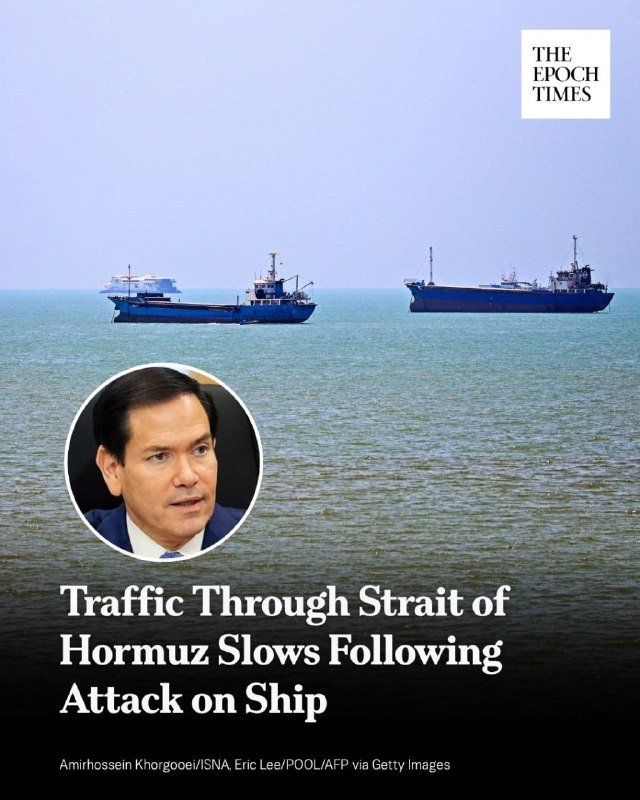
At 16:57 UTC on 26 June 2026, the Omani researcher network OSINTtechnicalOman reported that Muscat has informed European officials there will be no return to the pre-war status quo in the Strait of Hormuz, and that ships transiting the chokepoint may face payments for services such as pilotage and escort. The message, relayed through the network's Telegram channel and corroborated by a Bloomberg account cited in the same post, lands on the same day that Reuters reported traffic through the strait has slowed after an attack on a commercial vessel earlier in the week.
The proposal, if it matures into anything binding, would redraw the operating assumptions of the world's most important oil corridor. Roughly a fifth of global seaborne oil passes through the 21-mile-wide shipping lane between Iran and the Musandam Peninsula. A formal Omani toll regime — administered by the state that controls the southern shore — would give Muscat a direct revenue claim on the transit economy and an explicit say over which ships move and at what pace.
What Oman is signalling
The framing matters as much as the price. OSINTtechnicalOman quoted European officials as saying they were told there was "no way to go back to the pre-war status quo." That language is diplomatic code for a recognition that the maritime operating environment has permanently changed: insurance premia are higher, naval escorts are routine for some flag states, and re-routing around the Cape of Good Hope adds roughly two weeks and meaningful cost to Gulf-bound cargoes.
A separate Sprinter Press bulletin on 26 June at 16:28 UTC described Oman's posture as "indecision" continuing — a hint that within the Gulf, Muscat's positioning is being read less as a finished policy than as a deliberate ambiguity. Charging transit fees while publicly leaving the question open gives Oman leverage in three directions at once: with Tehran, with which it shares the strait; with the European shipping ministries whose flagged vessels dominate the tanker fleet; and with the United States and its Gulf allies, who have a strong interest in keeping the waterway nominally free of formal sovereign tolls.
The shipping data behind the politics
Reuters reported on 26 June at 16:50 UTC that traffic through the Strait of Hormuz has slowed following the attack on a commercial ship — the second such incident in recent weeks to be picked up by the wire. Vessel-tracking services have shown corresponding dips in transits over the past 48 hours, with several major operators diverting or holding position outside the strait pending security clarification.
The economics are not subtle. Each day a Very Large Crude Carrier sits idle burns roughly $40,000–$80,000 in operating cost without revenue, on industry-standard estimates. Charterers, already paying war-risk insurance premia several times the peacetime baseline, will reroute when the expected cost of waiting exceeds the expected cost of sailing around Africa. Insurance markets — not diplomats — are usually the first to ratify a new operating regime, and recent London market guidance suggests underwriters are pricing in a longer period of elevated risk than they did at the start of the year.
What we verified / what we could not
What we verified:
- That OSINTtechnicalOman, via its Telegram channel, reported on 26 June 2026 at 16:57 UTC that Oman had told European officials ships transiting the Strait of Hormuz may have to pay tolls, with the framing that there is "no way to go back to the pre-war status quo." The post explicitly attributes the underlying reporting to Bloomberg.
- That Reuters reported on 26 June at 16:50 UTC that traffic through the Strait of Hormuz has slowed after an attack on a ship, with the wire pointing to its own coverage at reut.rs/4wcjYdt.
- That a Sprinter Press Telegram post at 16:28 UTC on 26 June described Oman's posture as ongoing "indecision," explicitly characterising the transit-fee reports as part of a continuing stance rather than a settled decision.
What we could not verify from the available source items:
- The specific ship attacked earlier this week, its flag, owner, or cargo. Reuters's headline refers to "an attack on a ship" without naming the vessel in the truncated text available to this publication.
- The exact legal instrument Oman is contemplating — formal pilotage fee, security service charge, or informal "facilitation" arrangement. The OSINTtechnicalOman post speaks of "payments for services" without specifying the statutory basis.
- The size of any proposed fee, whether it would apply to all transits or only to vessels of certain flags, and whether it would be administered by Omani authorities unilaterally or under some multilateral framework.
- Whether the European officials cited in the Bloomberg account were from EU institutions, from individual member-state foreign ministries, or from a shipping-industry body. The source material does not specify.
- The Iranian response, if any, to a toll regime administered from the southern shore. Tehran's position is structurally critical — the strait is shared sovereign space under the 1974 Oman–Iran agreement — but is not addressed in the items available.
Why the southern shore matters
Oman's potential move fits a longer pattern in which smaller Gulf states are exploiting the security premium to convert geography into pricing power. The UAE's Fujairah pipeline, Saudi Arabia's East–West pipeline, and now Oman's possible transit regime each represent an attempt to monetise a corridor that, in the pre-war framework, was simply free. That framework was underwritten by the United States Fifth Fleet and accepted as a global public good. Its erosion is not, in itself, destabilising — but the manner of its renegotiation will set precedents that outlive the current conflict.
A countervailing read is also plausible. European officials, having absorbed higher insurance and fuel costs for months, may be quietly receptive to a formalised arrangement that brings predictability in exchange for fees — much as the Suez Canal's toll regime is grudgingly accepted because the alternative is the Cape route. From that vantage, an Omani service charge could be a stabilising instrument, not a destabilising one. The decisive variable is whether Iran treats a southern-shore regime as a provocation or as a precedent it can mirror on its own coastline.
Stakes
If Muscat formalises a transit charge, three constituencies recalibrate. Asian buyers — China, India, Japan, South Korea — absorb the cost directly through higher delivered crude prices; their diplomatic posture towards both Oman and Iran tightens. European shipowners, already squeezed by emissions rules and Red Sea disruption, face a new line item with no obvious pass-through to charterers. And Tehran gains a live template for asserting its own authority over the northern shore, with implications for any future negotiation over nuclear sanctions or regional security architecture.
The most likely near-term outcome is not a clean toll regime but a fuzzier one: a period of "facilitation payments," insurance surcharges routed through Omani-registered service companies, and informal scheduling preferences for vessels willing to use Muscat-based pilots. That is also the outcome most likely to extend the current ambiguity without resolving it — and ambiguity, in a corridor that handles a fifth of seaborne oil, is itself a tradable asset.
Desk note: Monexus is treating the 26 June OSINTtechnicalOman and Sprinter Press items as primary thread inputs, with Reuters as wire corroboration on the shipping-slowdown claim. The toll-regime specifics remain single-sourced to the Bloomberg account cited inside the OSINTtechnicalOman post; this publication will publish a confirmation when a second tier-1 outlet carries the underlying reporting.
Wire provenance
This editorial synthesis draws on the following public wire/social posts:
- https://t.me/s/osintlive
- http://reut.rs/4wcjYdt
- https://t.me/s/sprinterpress
- https://t.me/s/osintlive/2070348962800795648
- https://t.me/s/sprinterpress
Follow the event.
These dated source records provide context. They do not retrospectively verify this archive article.
Separate what the nuclear watchdog reported from what it could not determine after the June 2025 strikes.