South Korea's cascade: a divorce case, a crashed index, and a drone army in one week
A high-profile divorce appeal, an 8% intraday plunge that halted trading, and a 500,000-drone-warrior programme landed on the same news cycle — and each one tells a different story about what is rattling the country.
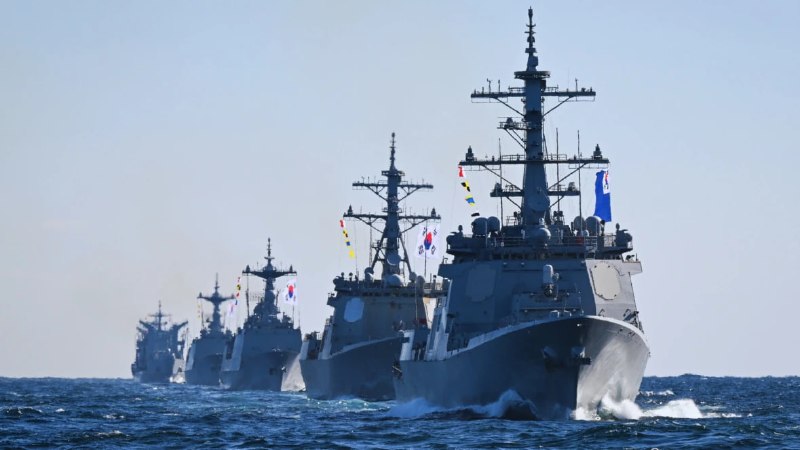
On the morning of 26 June 2026, three storylines arrived almost simultaneously from South Korea, and each one deserves to be read on its own terms before anyone tries to braid them together. A divorce appeal at a Korean court pulled the country back into the long-running legal saga of SK Group's chairman and the daughter of a former president. On the trading floor, the KOSPI fell roughly 8%, forcing a circuit-breaker halt. And from the defence ministry, a programme to train half a million "drone warriors" and field 110,000 unmanned aircraft by 2029 — a mobilisation posture that would have seemed fanciful five years ago.
None of this proves the three stories are causally linked. The point is sharper than that: in a single news cycle, South Korea is showing the strain lines across corporate governance, capital markets, and security policy at the same moment, and the country's political class is being asked to manage all three in parallel.
The courtroom that won't go away
The appeals court resumed hearings in the divorce case involving the chairman of SK Group and the daughter of a former president, reopening a dispute that has gripped South Korea at a time of heightened scrutiny over the country's family-run conglomerates. Reuters reported the resumption of arguments on 26 June 2026, framing the case as both a private matrimonial matter and a referendum on how chaebol wealth is divided when marriages fracture.
The structural question underneath the headlines is older than this particular filing. Korean corporate law has long treated controlling-family divorce as a foreseeable corporate event, because chaebol ownership passes through people, not just through share registers. A ruling that re-prices a stake, unwinds a trust, or forces a buyout cascades into the parent's capital structure and, from there, into the banks that lend against it. The court's calendar is, in effect, a corporate-governance event in slow motion.
The 8% morning
Separately and within hours, South Korea's share market plunged 8%, triggering a trading halt. The Spectator Index flagged the move on X at 05:35 UTC, citing an 8% drop; a halt at that magnitude is a circuit-breaker event, not a routine volatility pause. The index level and the specific catalysts behind the selling were not detailed in the thread material — a gap that matters, because attributing an 8% move to a single headline is usually a mistake.
The two most plausible readings, on the available evidence, are the divorce appeal's market overhang and a broader risk-off move tied to defence and geopolitical news. The drone-warrior announcement, landing in the same window, may have functioned as an accelerant for an already-skittish book rather than as the originating shock. Until the exchange or the financial regulator publishes the session summary, the chain of causation should be treated as open.
500,000 drone warriors
On the security side, South Korea announced plans to train 500,000 "drone warriors" and produce 110,000 drones by 2029, per a post on X carried by Polymarket at 01:31 UTC on 26 June 2026. The headline figure is large enough to be worth slowing down over. Half a million trained operators and an inventory of 110,000 airframes over a roughly three-year horizon implies a defence-industrial build-out that touches the existing aerospace primes, the wider electronics base, and the civil-use drone sector that Seoul has been pushing into export markets.
The strategic logic is straightforward. The Korean Peninsula is one of the most drone-surveilled borders on earth, and the lessons from the war in Ukraine have rewritten the procurement maths of small unmanned systems. Seoul is signalling that it intends to be a producer and exporter, not just a buyer — which is also a message to its principal security ally about industrial burden-sharing.
What the three stories share
Read separately, the items are a court filing, a market halt, and a procurement announcement. Read together, they describe a country being asked to perform three confidence tricks at once: convince households that the rule of law still binds the richest families; convince investors that the equity market is deep enough to absorb an 8% session without losing its footing; and convince the region that its defence industrial base can scale faster than the threats around it. Each demand is reasonable in isolation. The strain is in the simultaneity.
The thread material does not yet establish direct causation between the divorce appeal and the trading halt, and the sources do not specify the intraday drivers of the KOSPI move. What is verifiable from the wire items is the timing, the scale of the market move, and the size of the drone commitment. The rest is, for now, inference — and this publication prefers to mark that boundary rather than blur it.
The stakes, plainly: if the appeals court produces a clean ruling and the index reopens without a second-leg selloff, the week's headlines age into a stress test the system passed. If either breaks, South Korea will be having a much harder conversation about capital-flight risk, chaebol reform, and how a mid-sized power funds a serious defence build-out without spooking the very markets it depends on.
Desk note: Monexus is treating the divorce appeal, the trading halt, and the drone-warrior announcement as three distinct stories landing in the same window. We will not braid them into a single causal narrative until the exchange publishes a session summary and the court issues a substantive ruling.
Wire provenance
This editorial synthesis draws on the following public wire/social posts:
- https://t.me/osintlive