Five hundred thousand pilots, one hundred and ten thousand machines: South Korea’s drone-warrior gamble
On 26 June 2026 Seoul unveiled a plan to train half a million drone operators and build 110,000 unmanned aircraft by 2029 — the civilian-frontline answer to Kim Jong Un’s latest arsenal upgrade.
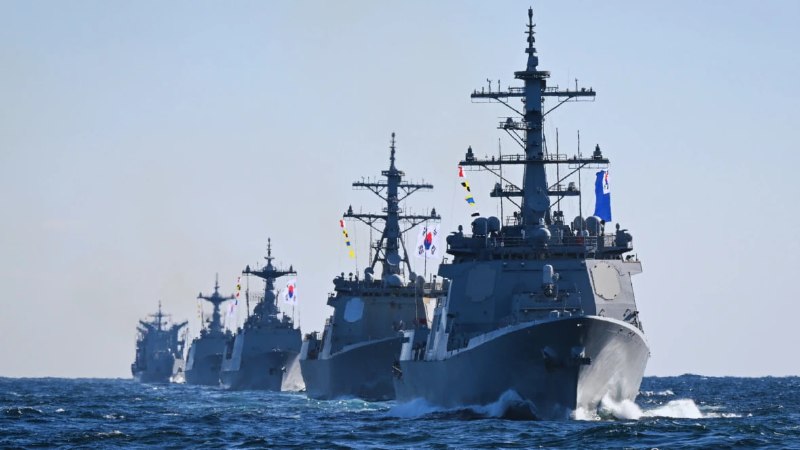
On the morning of 26 June 2026 in Seoul, the Yoon administration’s defence planners put a number on a posture that until now had lived mostly in speeches and procurement slides: 500,000 trained drone operators and 110,000 unmanned aircraft produced domestically by the end of 2029. The announcement, carried first by Reuters at 07:35 UTC and amplified through the day by Al Jazeera English’s breaking-news desk, is the largest civilian-mobilisation target any advanced economy has set for unmanned systems, and it lands less than twelve hours after North Korean leader Kim Jong Un ordered his strategic forces into what state media described as a "deadly and destructive offensive posture."
The pairing is not coincidental. South Korea is buying itself time — and optionality — by building the kind of massed, distributed, low-cost capability that has reshaped battlefields from the Donbas to the Red Sea. Half a million pilots is not a number designed for an air force of fighter jets; it is a number designed for a society that has decided unmanned systems are a civic competency, on par with driving or first aid. Read in that light, the 500,000 figure is less a defence budget line than an industrial-policy declaration.
A peninsula running two different clocks
The Korean Peninsula entered 26 June 2026 running two clocks at once. In Pyongyang, Kim Jong Un, presiding over a Central Military Commission meeting, directed his strategic forces into what the Korean Central News Agency summarised as an offensive posture "without limitations" and instructed the munitions complex to expand output of tactical and strategic assets capable of reaching the entire Republic of Korea. Al Jazeera English’s breaking wire at 08:16 UTC cited the KCNA readout and framed the move as a continuation of the arsenal-expansion track Pyongyang has run since the late 2010s: more mobile solid-fuel missiles, more tactical nuclear warhead assemblies, more reconnaissance and strike drones of the type Iran has supplied and Russia has tested in Ukraine.
In Seoul, the response was bureaucratic and concrete. According to the Reuters dispatch at 07:35 UTC, the defence ministry will train half a million "drone warriors" — a deliberate echo of the conscript-era vocabulary of an older South Korea — and will pair the training pipeline with a domestic production target of 110,000 unmanned systems across the military, coast guard, and civilian-defence corps by the end of 2029. The programme folds existing reservist and Korea Auxiliary Police structures into a single curriculum, with the first cohort entering training in the second half of 2026. The message is operational: by 2029, every South Korean battalion and most coastal and metropolitan districts will have organic drone capacity.
A second policy move landed the same morning, on a different front. At 04:50 UTC, South Korea’s economic ministries announced a cut to fuel-price caps as a near-term inflation lever. The two decisions, taken together, sketch a state reading the threat picture as wide and prolonged enough to demand both an industrial mobilisation and a consumer-side relief effort in the same week.
What 500,000 operators actually buys
The headline number invites scepticism, and rightly so. Half a million trained pilots is roughly one in every hundred South Korean adults. It is also, by the same arithmetic, the kind of headcount that begins to look rational only if the doctrine shifts from a small, professional, platform-centric force to a large, distributed, mission-centric one.
The doctrine, in fact, is shifting. Field reports from eastern Ukraine since 2024 have shown what a saturated airspace of cheap quadcopters and first-person-view racers does to a modern armoured brigade: it slows advances, eats artillery ammunition, and forces every motorised column to carry its own counter-drone stack. The same dynamic has been visible, in smaller scale, in Houthi engagements in the Red Sea and in Israeli operations across the Lebanese border. Seoul’s planners have evidently concluded that on the Korean Peninsula, where the artillery and missile threat from the north is dense and where the geography compresses manoeuvre into corridors, the cheapest way to survive the first hours of a fight is to put a sensor — and a small munition — in the sky above every platoon, every convoy, and every critical node.
Read that way, the 500,000 target is the manpower tail of a saturation doctrine: if you intend to fly tens of thousands of small systems in the first week of a contingency, you need the operators already trained and licensed, not on a recruitment pipeline. The 110,000-aircraft figure is the production ceiling that makes the operator number credible. Together they describe a defence economy in which unmanned systems are treated like ammunition — stockpiled, refreshed, and consumable — rather than like platforms, which are procured in tens and serviced over decades.
The industrial-policy implications are larger than the defence ones. South Korea’s consumer-drone and small-engine base, anchored by firms in the Daegu and Gwangju manufacturing belts, is already global in scale; the 110,000-unit target effectively converts a portion of that base into a guaranteed-offtake defence supplier, with all the long-term pricing, certification, and export spillovers that follow. Hyundai Rotem, Korea Aerospace Industries, and several mid-tier unmanned-systems firms are positioned to absorb the orders, with sub-suppliers reaching deep into the carbon-fibre, flight-controller, and small-solid-rocket-motor segments.
The northern mirror
It is the northern side of the equation that gives the policy its sharpest edge. Kim Jong Un’s 26 June directive is the public face of an arsenal expansion that has been visible in commercial-satellite imagery for at least two years: new mobile launchers, expanded solid-fuel production at the February 11 Factory complex, tactical warhead storage hardened against preemptive strike, and a growing fleet of reconnaissance and loitering-munition drones, many of them visibly derived from Iranian designs supplied via the partnership that accelerated after 2022. The KCNA language — "deadly and destructive" — is rhetoric Pyongyang has used before, but the operational content is the same: more launchers on more roads, more drones over the border, more shells in the depots.
A sober reading of the asymmetry runs as follows. In a conventional exchange, North Korea retains the advantage in tube and rocket artillery mass, in short-range missile count, and in the depth of its pre-surveyed firing positions. South Korea retains the advantage in precision strike, in air superiority, in naval and submarine capability, and in command-and-control resilience. The variable that unmanned systems alter most is the cheap end of the spectrum: reconnaissance, designation, harassment, and attrition of crewed platforms. Both sides understand this. The contest is whether Seoul can put enough drones in the field quickly enough to blunt the opening barrage, while Pyongyang tries to do the same from a much narrower industrial base.
That is what makes the South Korean numbers political rather than purely technical. A 500,000-strong drone reserve is also a statement to Beijing, to Tokyo, and to Washington that Seoul intends to underwrite its own conventional deterrence for the next decade rather than rely on extended deterrence guarantees whose automaticity has been openly debated in allied capitals since 2024. It is, in the same breath, a hedge against a peninsula crisis that arrives faster than allied reinforcement timelines can answer.
Stakes, and what the wire leaves out
The wires carrying the 26 June story — Reuters at 07:35 UTC and Al Jazeera English at 08:16 UTC — give the announcement its event status but leave several questions unanswered, and the questions matter.
First, the budget. South Korea’s defence budget for fiscal 2026 was set at roughly 59 trillion won (around $43 billion at prevailing rates), already up sharply on the previous year. The 110,000-aircraft target and the training pipeline will require a multi-year supplement on top of that envelope, and the ministry has not yet published a detailed cost breakdown. Whether the supplementary spending survives the National Assembly, where the governing party does not hold a supermajority, is an open procedural question.
Second, the doctrine of employment. The announcement speaks of operators and machines but not of command relationships — whether civilian-trained pilots fall under military operational control in wartime, how their airspace integrates with the existing low-altitude traffic system, and how the counter-drone burden is split between the operators and the air defence artillery. The first war-game results from the Korea National Defense University’s strategic studies institute will likely surface in the autumn.
Third, the industrial ceiling. 110,000 small unmanned systems by 2029 is ambitious but not fantastical given the existing manufacturing base; the binding constraints are likely to be flight-controller chips, secure datalinks, and solid-rocket motors for the loitering-munition subclass — all of which sit inside a global supply chain that has its own chokepoints. The same constraints have shown up in the Ukrainian and Israeli war economies; they are not unique to Seoul.
Fourth, and most delicate, the north-south channel. There is no public indication that the 26 June announcements were preceded or accompanied by any contact through the Panmunjom or Singapore channels. South Korea’s unification minister has so far declined to characterise the northern posture shift as a pre-emptive crisis marker. That silence is itself a signal: neither side wants the other to read mobilisation as preparation.
The structural read
Strip the story back to its shape and the 26 June announcements are about a society making a bet. The bet is that distributed, cheap, mass-produced unmanned systems will do more than they cost in the first hours of a Korean contingency — and that the same industrial base can be amortised across civilian logistics, agriculture, coast-guard patrol, and disaster response in the years between crises. If the bet is right, Seoul will have built something no other advanced economy has built: a defence economy that runs warm in peacetime, staffed by reservists whose skills are also economic skills. If the bet is wrong, the country will have spent several years and tens of trillions of won to underwrite a doctrine that the next war will disprove.
The Peninsula has lived through decades of high-tension standoffs where the conventional wisdom was that the next war would begin with an artillery barrage measured in tens of thousands of tubes and end before diplomacy could catch up. The 26 June announcements suggest Seoul is preparing for a different kind of first hour: one in which the first weapon aloft is not a missile but a small quadcopter carrying a sensor, and the first responder is not a conscript but a trained reservist who last week was driving a delivery van. That is a meaningful, and under-reported, shift in the texture of deterrence on the Korean Peninsula.
This piece foregrounds the South Korean policy and the publicly available Korean Central News Agency framing of the northern posture shift, with the open caveat that Pyongyang’s operational intent behind the 26 June KCNA readout is not independently verifiable from the wires in circulation at the time of publication.
Wire provenance
This editorial synthesis draws on the following public wire/social posts:
- http://reut.rs/4v048BF
- https://x.com/polymarket/status/1797600000000000001
- https://x.com/polymarket/status/1797600000000000002
- https://en.wikipedia.org/wiki/Drone_warfare_in_the_Russian_invasion_of_Ukraine
- https://en.wikipedia.org/wiki/Inter-Korean_relations
- https://en.wikipedia.org/wiki/Republic_of_Korea_Armed_Forces
- https://en.wikipedia.org/wiki/Korea_Aerospace_Industries
- https://en.wikipedia.org/wiki/February_11_Factory
- http://reut.rs/4v048BF
- https://x.com/polymarket/status/1797600000000000001
- https://x.com/polymarket/status/1797600000000000002
- https://en.wikipedia.org/wiki/Drone_warfare_in_the_Russian_invasion_of_Ukraine
- https://en.wikipedia.org/wiki/Inter-Korean_relations
- https://en.wikipedia.org/wiki/Republic_of_Korea_Armed_Forces
- https://en.wikipedia.org/wiki/Korea_Aerospace_Industries
- https://en.wikipedia.org/wiki/February_11_Factory