A ceasefire, a drone, and a 24-hour unraveling in the Strait of Hormuz
Within hours of JD Vance declaring the Iran ceasefire honoured, a drone strike on a cargo ship in the Strait of Hormuz gave the White House a pretext to resume strikes — exposing how thin the arrangement really was.
By 22:11 UTC on 26 June 2026, the language coming out of Washington had stopped pretending. Vice-President JD Vance, addressing the Iran ceasefire publicly, declared that the agreement had been honoured by the United States and that any disagreements Iran had about how the memorandum of understanding was being applied could be settled by picking up the phone. Then, in the same sentence, came the warning: violence will be met with violence. That formulation, diplomatic in form but ultimatum in content, was the public posture just hours after the United States had carried out fresh military strikes on Iranian territory.
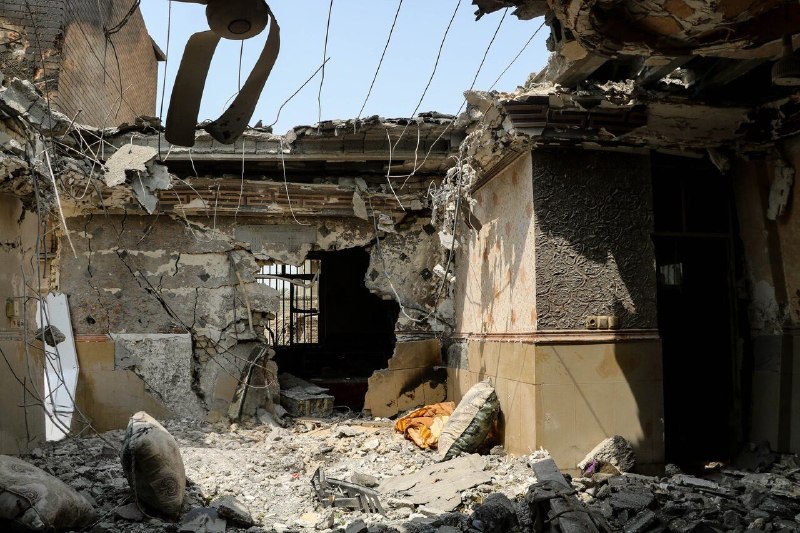
The sequence is the story. On the morning of 26 June, in statements relayed across social media, President Donald Trump said he did not like Iran firing the previous day at a ship in the Strait of Hormuz. It should not have done that, he said, and a response would follow. By the evening UTC, those words had been converted into ordnance. The escalation exposes how narrow the standing ceasefire actually is: a single Iranian drone strike against a single cargo vessel was treated by Washington as a material breach, and the response was a renewed round of strikes. Whether the underlying framework survives the next such incident is now a live question for energy markets, Gulf shipping insurers, and every foreign ministry in the region.
The 24-hour arc, hour by hour
The public record, assembled from French and Iranian state-aligned reporting and from posts by US officials, sketches a tight and ugly timeline. On the afternoon of 26 June, around 16:58 UTC, Trump publicly accused Iran of violating the ceasefire by attacking a ship in the Strait of Hormuz, according to a post flagged by Reuters' verified account. By 20:11 UTC, Iran's English-language outlet Press TV's content was being amplified across Telegram channels carrying reports, sourced to IRIB News, of an explosion in Taheruyeh, in the Sirik district of Hormozgan Province on Iran's southern coast — the source described as unconfirmed but consistent with US strike activity. By 20:18 UTC, Trump was on record saying he disliked the Iranian action and that the US response would come soon. By 21:29 UTC, Epoch Times was reporting that Trump had characterised the Iranian drone strike on a cargo ship in the Strait of Hormuz as a ceasefire violation. By 21:33 UTC, France 24 was reporting US strikes on Iran as a consequence. By 22:11 UTC, Vance was delivering the political framing: the US had honoured the deal; Iran could pick up the phone; otherwise, more strikes.
What is unusual is not that a strike-and-response cycle occurred — that has been the operating rhythm of US-Iran relations for decades — but that the cycle played out inside a framework nominally called a ceasefire. Each side is now describing a continuing arrangement; each side is also describing the other side as the violator. The thread on which the whole edifice hangs is, in practice, a single disputed maritime incident.
What actually happened in the Strait
The triggering event, as described in the available reporting, is a drone strike by Iran on a cargo ship in the Strait of Hormuz. Trump named the act a violation. Vance treated it as a breach demanding either diplomatic remediation or retaliation. There is no public casualty count, no name of the vessel, and no flag state identified in the material reviewed. The Strait of Hormuz is the world's most consequential energy chokepoint: roughly a fifth of global oil shipments pass through it, and war-risk premiums on tankers transiting the corridor move within hours of any confirmed attack. The absence of a named ship or owner in the reporting to date is itself a signal — it suggests either that the incident is being downplayed by the involved parties, or that the maritime picture is genuinely unsettled.
Equally unsettled is the question of reciprocity. Iranian state-aligned reporting has framed the matter around the explosion in Taheruyeh, Sirik, sourced to IRIB News, rather than around the original ship attack. That is a familiar information tactic: when one side is on the back foot on the originating incident, it shifts the camera to the consequence on its own soil. The structural effect is to muddy the chain of causation — to make it harder, in the next 48 hours of cable-news framing, to say cleanly that Iran struck first and the US responded. The Vance statement is precisely the counter to that: a public insistence that the US has honoured the deal and that the choice of next steps lies with Tehran.
The ceasefire that isn't quite one
The most consequential phrase in the Vance message is "how the MOU is being applied." The memorandum of understanding between Washington and Tehran has not, in the reporting reviewed, been publicly released in full. That opacity is itself a defining feature of the arrangement. A ceasefire in the traditional sense is a publicly verifiable halt to kinetic activity, with named monitors and defined lines. What is in operation here reads more like a live diplomatic hotline backed by an unspoken mutual deterrence — and the moment either side believes the cost of testing the other has fallen below the cost of restraint, the hotline is bypassed and ordnance is used.
This is the structural reality: the arrangement is held together less by text than by the mutual calculation that the alternative is worse. Iran can probe the line by striking a cargo ship, betting that a single incident will be tolerated, or absorbed through diplomatic management, rather than treated as a casus belli. The US can respond with discrete, geographically limited strikes on Iranian military or proxy infrastructure, betting that Tehran will read the message as punishment without escalation to a full war. Each side is operating inside a narrow corridor of permissible action. The corridor has just narrowed visibly.
What remains uncertain
The reporting reviewed does not establish which Iranian faction ordered the strike on the cargo vessel, or whether the vessel was flagged to a US-allied state or to a third country with no direct stake in the US-Iran confrontation. It does not identify the type of drone used, the damage sustained, or whether crew members were injured. France 24's reporting on the US strikes on Iran is referenced but the underlying footage, target list, and Iranian official response in detail are not contained in the materials reviewed. The Taheruyeh explosion, sourced to IRIB News via Telegram channels, is described as unconfirmed at the original source — which means the strike location, while consistent with US operation patterns in southern Iran, is not independently corroborated in the material at hand.
What is also unresolved is whether the ceasefire framework will hold for the next 72 hours. Vance's framing — pick up the phone, or face violence — is an attempt to re-establish deterrence after a visible failure. That kind of framing can work, if the next Iranian probe is delayed or moderated. It can also collapse, if Iran's leadership reads the US strikes as a provocation that requires a symmetric response rather than a measured one.
Stakes
For energy markets, the cost of a renewed cycle is immediate. War-risk insurance premiums in the Gulf have spiked on smaller incidents; a single confirmed strike on a named, large-tonnage vessel typically moves the front of the Brent curve by a measurable margin within hours. For the broader Middle East, the cost is more diffuse but no less real. Gulf states that have spent two years positioning themselves as reliable transit corridors for non-oil trade have an interest in the Strait remaining open and predictable. Iranian counter-strikes, or a tit-for-tat that draws in proxies in Iraq, Syria, or Yemen, would push that predictability out of reach.
For Washington, the calculation is whether a visible, named response — strikes with declared targets — is enough to reset the deterrence equation without dragging the United States into a broader kinetic commitment ahead of the next electoral cycle. For Tehran, the calculation is whether the cost of one cargo ship is worth the political signal of demonstrating that the Strait remains Iranian sovereign space in any practical sense. Both calculations rest on assumptions about the other side's tolerance for escalation that are about to be tested in real time.
The next 72 hours will tell whether the framework that Vance publicly defended at 22:11 UTC on 26 June is a durable ceasefire in slow motion, or simply a pause between strikes.
This publication treats the Strait of Hormuz incident as a structural test of the US-Iran ceasefire framework, not as a standalone news event. Where mainstream Western wires are leading with the Trump statement, Monexus finds the more revealing material is the timeline of escalation and the opacity of the underlying MOU.
Wire provenance
This editorial synthesis draws on the following public wire/social posts:
- https://t.me/ClashReport
- https://t.me/epochtimes
- https://t.me/gazaalanpa
- https://t.me/intelslava
Follow the event.
These dated source records provide context. They do not retrospectively verify this archive article.
Separate what the nuclear watchdog reported from what it could not determine after the June 2025 strikes.