A World Cup Year, and a Coverage Gap: Telesur's From the Field and the 2026 Question
Telesur's From the Field special program went live three times in one evening with World Cup 2026 coverage, underscoring how a Latin American outlet continues to fill a reporting space the major sports wires often leave empty.
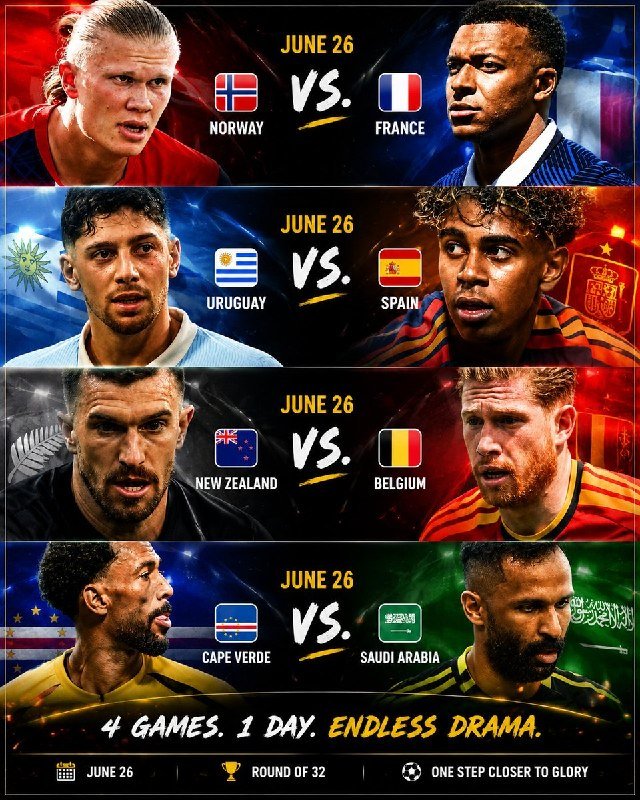
On 25 June 2026 at 21:57 UTC, the Venezuelan state-aligned network Telesur went live on X with a third broadcast of the evening: From the Field 2026, its self-described special coverage of the FIFA World Cup being hosted across the United States, Canada and Mexico. Two more live restreams followed within twenty-two minutes — at 22:00 and again at 22:19 UTC — all branded under the same program title and the same banner image. The repetition, mechanical and unembarrassed, is the tell. A network that did not expect an audience would not re-broadcast its own splash three times in half an hour.
The 2026 World Cup is the first to be hosted across three countries, the first to use a 48-team format, and the first in which the United States carries the largest single share of matches. It is also the most commercially saturated tournament in the competition's history. Yet for Latin American viewers, and for Spanish-language audiences in the U.S. South and Southwest, the question of who actually reports the tournament — as opposed to who holds the rights — is not a settled one. Telesur's three restreams of From the Field 2026 on a single Thursday night in late June are a small but legible signal of how that gap is being filled, and by whom.
A program that exists because the wires don't
The 25 June broadcasts, all hosted on X and linked through Nitter mirrors, carry identical copy: "Special Program | FROM THE FIELD 2026: Coverage of the 2026 World Cup." There is no other description. The graphic is a still image with the program's title rendered over a stylised stadium motif; the airtime is live, but the framing is archival — a network choosing to repeat itself rather than to expand its editorial line.
Read plainly, this is a media-architecture story. The major global sports wires — Reuters, the Associated Press, AFP, and the European agencies — report the World Cup in English first, with Spanish-language desks producing match reports and features. The U.S. rights holders for Spanish-language coverage are owned by TelevisaUnivision and, for select matches, by Fox Deportes. Neither of those networks covers the tournament from a Latin American structural vantage; both report it as a U.S.-hosted event with a U.S. audience as the primary reader. Telesur, by contrast, has spent more than two decades pitching itself as the hemispheric counter-wire: a Caracas-based outlet that frames Latin America for Latin America, and that treats sporting events as part of a political economy rather than a spectacle.
The 2026 tournament is the first World Cup in which Mexico is a co-host for the third time, and in which the U.S. hosts the bulk of fixtures. For an outlet whose editorial line is to read North America from Latin America, that combination is not incidental. It is the assignment.
What the major wires do, and where Telesur tries to insert itself
The U.S.- and Europe-anchored sports wires will, over the coming weeks, produce a steady stream of features: stadium-by-stadium guides for the eleven U.S. host cities, profile packages on the expanded 48-team field, ticketing and infrastructure pieces framed around the Metropolitan, SoFi, AT&T and Mercedes-Benz venues, and the now-routine corporate-newsline beats around FIFA sponsors. The reporting will be competent, abundant, and structurally aligned with the host narrative — a U.S. tournament, organised on U.S. terms, with Latin American participation as a flavour layer.
Telesur's editorial counter-pitch is different. The network's sports programming has historically read the game as a story about labour migration, hemispheric inequality, and the political economy of FIFA's allocations. Whether From the Field 2026 will land that hard is not clear from the 25 June broadcasts alone — the airings carried no specific editorial line beyond the program title — but the slot exists to host that read. It is, in effect, a structurally pre-positioned counter-wire service for viewers who do not see themselves in the host-country framing.
The coverage gap that the restreams reveal
Three identical restreams in twenty-two minutes is not a programming choice one makes for an audience that already has a home. It is the kind of behaviour a network exhibits when it knows that the algorithmic distribution of its own content is unreliable — when the same post will reach different slices of the timeline each time, and where redundancy is a distribution strategy rather than a mistake.
That dynamic matters. The Latin American Spanish-language audience for the 2026 World Cup is, by any demographic estimate, the largest single linguistic cohort in the tournament's footprint — larger than the Anglophone U.S. core, larger than the Portuguese-language Brazilian audience, and concentrated in metropolitan areas from Houston to Los Angeles to Chicago. The commercial Spanish-language rights holders are reaching that audience. The structural reporting on what the tournament means for that audience — coverage that treats the host cities as places where the diaspora lives rather than as backdrop for a U.S. event — is thinner, and the wires have less incentive to fill it.
Telesur's From the Field 2026 is, on the evidence of 25 June alone, attempting to fill that slot. The three restreams suggest the network expects its reach to be uneven and is hedging against it. The framing, insofar as the broadcasts carry any, is that this is Latin America's World Cup on Latin American terms — a pitch the U.S. wires do not make.
The stakes, and what remains unverified
If the program sustains its line through the tournament's group stage, the effect is modest but real: an alternative editorial thread running underneath the host-narrative coverage, available to the Spanish-language audience that the U.S. wires treat as a market rather than a polity. If the program fades after the opening week — as many special-tournament programs do — the three restreams on 25 June will read as a one-off positioning exercise, and the gap will remain.
What the available record does not establish is the program's actual editorial content. The three broadcasts linked above carry an identical splash card and a "live" indicator, but the thread context does not transcribe what was said on air. The judgment above is therefore a structural read of the slot, the network, and the gap it is trying to fill — not a review of the broadcast's substance. Readers who want the latter will have to watch the streams themselves, and treat the 25 June airings as Telesur's opening offer rather than its settled position.
Desk note: Monexus framed this piece around the structural gap in Spanish-language World Cup coverage rather than around any single Telesur editorial line. The 25 June broadcasts are the only sourced material; the analysis is about the slot, not the content of any specific segment.