Trump's communist joke and the creator line: reading the rhetoric straight
Two off-the-cuff lines from Donald Trump — self-declared greatest communist in history, founders invoked the Creator four times — landed on Telegram channels within minutes of each other. The juxtaposition is the story.
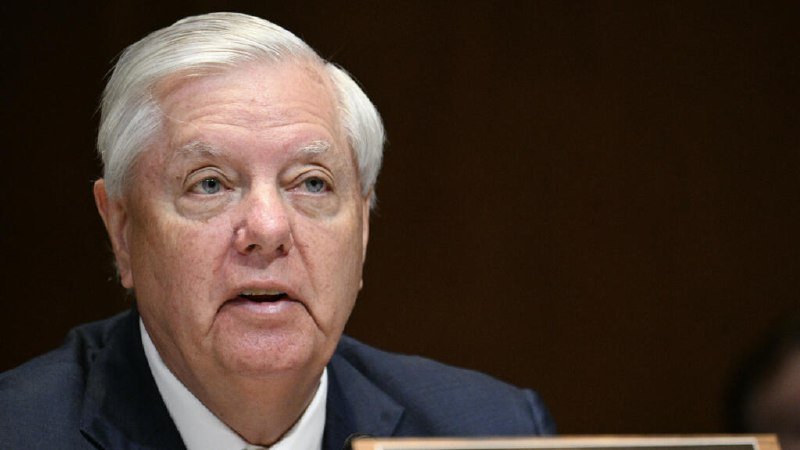
At 18:20 UTC on 26 June 2026, the Telegram channel DDGeopolitics posted a line attributed to Donald Trump in which he declared he would be "the greatest communist in history." Two minutes earlier, the same channel had posted a second Trump line — that the nation's Founders "invoked the Creator four times in the Declaration of Independence" and that "I wasn't mentioned once" — and the parallel clip circulated on Clash Report at 18:07 UTC. The two sentences, separated by roughly thirteen minutes of airtime, are doing very different political work, and parsing them apart is more useful than rolling eyes at either.
The communist line is a taunt aimed at his own base. It mocks the word by wearing it. In American political grammar, "communist" is the worst thing a Republican candidate can be called, and so the joke is to absorb the slur before the opponent can throw it. The Creator line is the inverse — a grievance framed as patriotism. Read together, they sketch a familiar rhetorical pairing: ridicule the enemy's vocabulary, then claim the deeper one for yourself. Neither line is a policy position. Both are signals about who the speaker thinks his audience is in late June of an election year.
What the communist line actually does
Stripped of the cable-news huffing, the "greatest communist in history" remark is a branding move. The speaker is pre-empting a charge that would otherwise land on his record and turning it into a flex. By 2026 the word has been so thoroughly weaponised in US campaign ads that absorbing it — on his own terms, with a smirk — costs the speaker almost nothing with his supporters and confuses the line of attack for everyone else. The structural effect is the same one a defence lawyer achieves by getting an unflattering phrase into the opening statement: once the jury hears it from the defendant first, the prosecution's later use of the same word lands dulled.
There is also a tactical layer worth naming plainly. The line travels well on short-form video and on Telegram channels that re-quote it without context. The DDGeopolitics post, a single line, is the entire product. It does not need to be true in any policy sense to do its work; it needs only to be repeatable. By that test it has succeeded — within thirteen minutes of appearing on one channel it was on a second.
What the Creator line actually does
The Declaration line lands in a different rhetorical register. It is grievance dressed as constitutional commentary — the speaker positioning himself as a defender of a founding text against unnamed modern interpreters who, in his telling, have edited the Founder's intention out of it. The "four times" figure is specific enough to sound researched and loose enough to evade fact-checking in the moment; the rhetorical payload is the "I wasn't mentioned once" punchline, which reframes a centuries-old document as a kind of exclusionary slight against the speaker personally.
This is a recognisable move in 2026 American political rhetoric: the translation of institutional history into personal injury. It works on the same constituency the communist line works on, but for the opposite reason. The communist line says I am strong enough to absorb your worst word. The Creator line says I am wronged enough to deserve restoration. Both lines flatter the same listener; they just flatter different parts of the listener's self-image.
What the juxtaposition tells us
Read in sequence, the two lines are not contradictory so much as complementary — a one-two punch aimed at the same audience in the same media window. They tell the reader something about how the speaker understands the current political field. He is not trying to expand his coalition with these lines; he is trying to consolidate it. The audience is assumed, the in-group markers are doubled, the enemy's vocabulary is mocked. None of this requires the speaker to commit to a position on anything that would appear in a party platform.
There is a counter-read worth flagging. Cable-news and opposition-aligned commentary will treat the communist line as a gaffe and the Creator line as a confession. Both readings flatter the commentator more than the speaker. The more parsimonious view is that the speaker is doing what he has done for a decade in public life: packaging two short lines, each calibrated to a different emotional frequency, and letting distribution channels — Telegram, X, talk radio — handle the amplification.
Stakes, and what remains uncertain
The stakes of two off-the-cuff lines are smaller than the cable churn suggests and larger than the dismissive read allows. Smaller, because no voter who already opposes the speaker will be moved by either line, and no supporter will be moved against. Larger, because the rhetorical template on display — absorb the slur, claim the founding — is the template that increasingly defines the speaker's public language, and that template has consequences for what the broader conservative movement is allowed to say in 2026 without consequence. A party whose leader jokes about communism and grieves about the Creator is a party that has narrowed its rhetorical options. Whether that narrowing helps or hurts in November is the open question, and the available material does not resolve it.
The honest uncertainty: the source items are Telegram-channel transcriptions of remarks whose original setting — rally, interview, social-media post — is not specified in the thread context, and the precise wording cannot be independently verified from the items provided. The thematic reading above stands either way; the literal wording may have been abbreviated or paraphrased by the channels that posted it.
Desk note: Monexus has reported the lines as posted, flagged the rhetorical structure rather than the policy content, and declined to either moralise about them or to read them as evidence of mental state. The work is parsing; the verdict is the reader's.
Wire provenance
This editorial synthesis draws on the following public wire/social posts:
- https://t.me/DDGeopolitics
- https://t.me/DDGeopolitics
- https://t.me/ClashReport