The Friday Accord: How Trump's Iran Deal Survived Its Own White House
A peace accord is to be signed in Geneva on Friday, but the public messaging from Washington has already begun to fray — exposing how thin the consensus on Iran really is inside the administration.
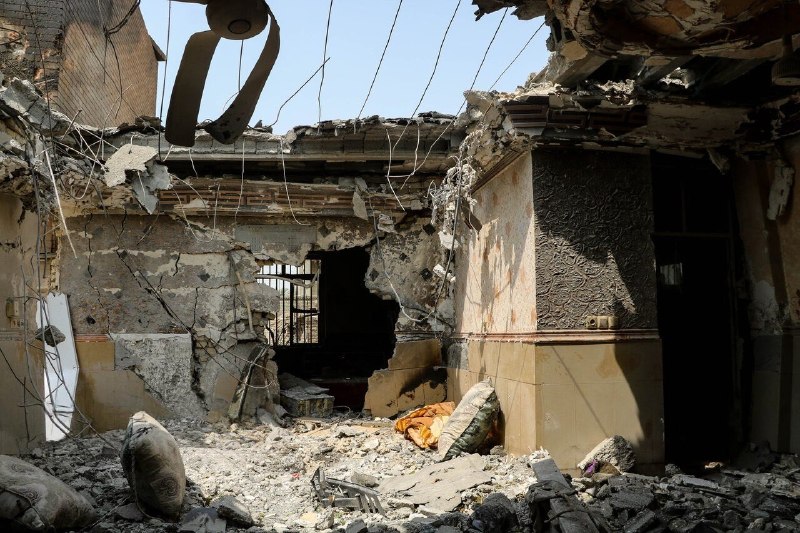
The headline President Donald Trump wanted was simple: the United States and Iran had agreed to a peace deal, and the ink would be dry by Friday in Geneva. On Thursday morning, that is essentially the message his administration put out. By Thursday evening, however, two of his most senior officials had begun describing the same package of understandings in noticeably different terms — and the gap between those terms now sits at the centre of how the accord will be judged, both in Washington and in Tehran.
The story that broke on 25 June 2026, and ran into the European morning of the 26th, is not yet a story about the accord itself. It is a story about who gets to define what the accord means — and about how a foreign-policy win, even a real one, can begin to fragment before it is signed. The Trump administration's public unity on Iran has been a managed artefact, and the management is now visibly under strain.
A deal in principle, divergent glosses in practice
Reporting from Reuters on 26 June, picked up across X at 05:20 UTC, characterised the situation in unusually careful language. Trump's administration, the wire wrote, has "pushed hard to present a united front" on the Iran war, but statements by his vice president and secretary of state had "at times diverged over the past week." The wire did not specify which statements diverged, or on which day the breaks were sharpest, but the framing made the analytical point: the unity on offer was curated, not organic.
At 04:30 UTC on the same morning, Middle East Eye's live blog reported a more concrete development: Trump had said Iran had agreed not to pursue nuclear weapons. The post linked to a longer live page on Middle East Eye tracking the diplomatic runway into a Friday Geneva signing ceremony. The headline was crisp, but it carried an asterisk worth flagging: Trump's own statement that Iran had "agreed" to a non-pursuit commitment is not, by itself, a signed instrument. It is a characterisation, made by one principal, of what the other side is prepared to put on paper. The careful reader should hold those two registers apart.
A third input into the day's read came from a market signal, not a wire. A Polymarket contract tracked what Iranian demands Trump would agree to by 30 June. As of mid-day on 25 June, the market gave roughly a 2% probability that Trump would allow Iran to charge transit fees in the Strait of Hormuz — a question that, on its face, looks technical, but which goes to the heart of who runs the world's most consequential energy chokepoint.
What the vice president and the secretary of state said
Reuters's reporting did not detail the divergences. This publication will not invent specifics the wire did not provide. But the pattern is recognisable from previous administrations and from this one's earlier episodes: when the White House wants a "win" out the door, the agencies with statutory ownership of the file — in this case the State Department — are sometimes enlisted to amplify, and sometimes left to qualify. The vice president, freed from the operational brief, can afford to talk about victory. The secretary of state, who must live with the implementation, often defaults to language that protects the department against what comes next.
That is not to say the divergence is theatrical. It can also be substantive. A deal that the vice president sells as an end to Iran's nuclear programme is a different deal, in political weight, from a deal the secretary of state sells as a managed inspection regime with specific milestones. Both can be true at once. Both can also be defended inside the same administration. The cost is that the administration's adversaries — Iran included — can choose which version to negotiate against, and Washington's partners can find themselves answering questions on either version depending on who called.
The Hormuz question nobody wants to discuss at the lectern
The Hormuz pricing question matters more than its 2% Polymarket number suggests. Somewhere between a fifth and a third of the world's seaborne oil transits the strait; a regime in which Iran charged transit fees would, in effect, partial-monetise a corridor currently treated as international commons under freedom-of-navigation norms. The market's low probability reads as a judgment that Washington will not concede this in writing. But the very presence of the market — the fact that this question is now priced, however cheaply — tells us the demand is on the table in Geneva.
It also tells us something about the broader shape of the negotiation. The official US position, going back decades, is that freedom of navigation through the strait is non-negotiable. The official Iranian position is that the strait is an internal waterway whose security is Tehran's responsibility, and that other littoral states have rights Iran has historically disputed. When a Polymarket contract on Iranian transit fees is live at all, we are in a different diplomatic era from the one that produced the 2015 nuclear deal, when the strait was not formally on the table.
Why this deal, and not the last one
The 2015 Joint Comprehensive Plan of Action rested on a bet: that verifiable limits on Iran's enrichment capacity, combined with intrusive inspections, would sufficiently lengthen any Iranian dash to a weapon that deterrence and diplomacy could outlast the program. The bet was contested inside both the Israeli and the US security establishments from the start. Its unraveling is not the subject of this article, but the new arrangement in Geneva must be understood against the backdrop of what that earlier arrangement did and did not deliver.
What the Geneva track appears to be delivering is something narrower and looser. The non-pursement commitment that Trump attributed to Iran, as reported by Middle East Eye, is a pledge about future conduct, not an enrichment cap with a verification protocol. That is a real distinction. It can be sold as a diplomatic victory because Iran's agreeing not to pursue a weapon is exactly what Washington says it wants. It can also be read as a more fragile commitment because there is no enrichment-monitoring infrastructure, by definition, monitoring a non-pursement.
The structural question — what is being given up in exchange for what — is where the White House's messaging discipline will matter most in the days after Friday. If the trade is described as "Iran gives up nukes, we give up sanctions," that is one accord. If the trade is "Iran gives up nukes, we ease some sanctions and accept a managed inspection regime, and the strait question stays in a side channel," that is a different accord. The wire so far suggests the second shape is closer to the truth.
Stakes and what to watch on Friday
Three things will matter once the Geneva ceremony is over. First, the language of the joint statement, if there is one. "Agreed not to pursue" is not the same as "will dismantle" or "will submit to inspections of known sites." The verb choice is the policy.
Second, whether the State Department and the vice president's office converge on a single line within 48 hours of signing, or whether the gap Reuters flagged on 26 June widens. Senior foreign-policy principals usually tighten messaging after a signing, because downstream counterparts will only deal with one version. If they don't tighten, that itself is the news.
Third, what happens in the strait. If tanker traffic continues to flow on the existing commercial terms, the 2% Polymarket probability will have been the right read, and the deal will be effectively confirmatory of the status quo ante. If there is a parallel Iranian announcement on transit or on the IRGC Navy's posture, we will know that the strait question was negotiated in a side channel after all, and that the public text did not capture the full bargain.
The cautious case for the deal is that it caps the war, gives Iran a sanctions-off ramp, and buys time for a more technical negotiation on enrichment and inspections to follow. The cautious case against is that it is too thin to enforce and too noisy to extend — a piece of paper that survives the signing but frays in the months after. Both readings are live in the source material. The Geneva text, when it appears, will narrow the range. Until then, this is what we have: a Friday deadline, a Thursday-night messaging gap, and a 2% market read on the question Washington is least willing to put on the podium.
Monexus framed this as a story about the politics of an accord on the eve of its signing, rather than as a story about the accord's substance — because the public record on 26 June, while rich on diplomatic choreography, is still thin on the document itself, and the divergences inside the administration are themselves a form of evidence worth surfacing.
Wire provenance
This editorial synthesis draws on the following public wire/social posts:
- https://x.com/reuters/status/2070376522960023552
- https://x.com/middleeasteye/status/2069701471642255360
- https://x.com/polymarket/status/2068421403636850688
Follow the event.
These dated source records provide context. They do not retrospectively verify this archive article.
Separate what the nuclear watchdog reported from what it could not determine after the June 2025 strikes.