Trump's Iran "market" pitch exposes the contradiction at the heart of his diplomacy
The president calls Iran a "new market" while Tehran accuses him of trying to confiscate the very agreement both sides signed. The contradiction is the policy.
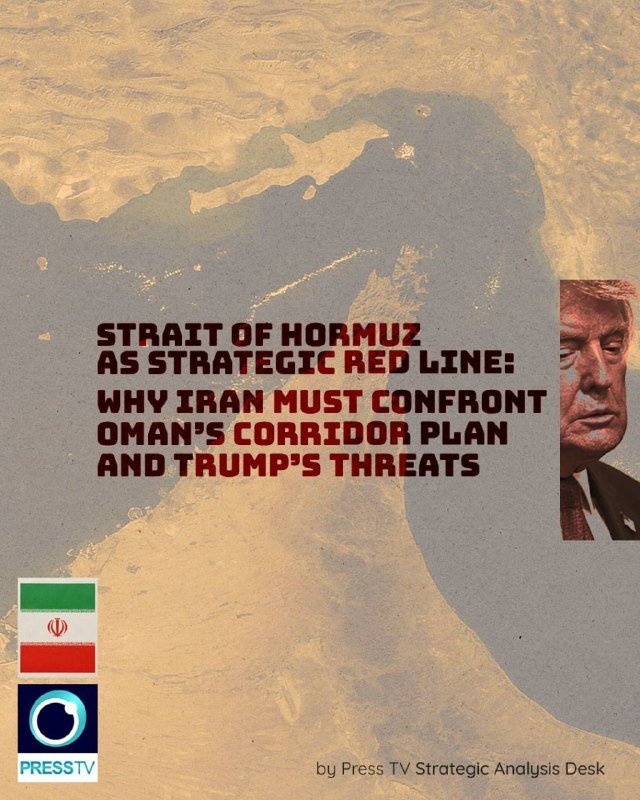
At 00:05 UTC on 26 June 2026, the Middle East Spectator channel posted a clip of President Donald Trump addressing an audience with the pitch that America had "a new market coming up, and that's called The Lovely Country of Iran. It's a beautiful place. Would anybody like to go there?" Twenty minutes earlier, at 00:59 UTC, Iran's Fars News had framed the same moment differently: Trump, Fars wrote, was "still trying to reduce the volume of critics of the war by confiscating the contents of the memorandum of understanding with Iran." Two readings of a single transaction, both released within an hour.
The contradiction is the policy. Washington is selling a normalisation narrative to investors and foreign-policy audiences while Tehran is reading the same moves as confiscation. Neither side is lying; both are describing the same package of partial sanctions relief, agricultural-purchase commitments, and political pressure from opposite ends. The result is a deal that, by midday in Europe, looks simultaneously like an opening and an extraction.
The market pitch
Trump's framing was characteristically commercial. According to the Middle East Spectator clip, he described Iran as a "beautiful place" whose integration into the US commercial orbit was imminent, and predicted a large volume of agricultural purchases "very soon," a line Fars News also carried in a separate 23:47 UTC post on 25 June. The pitch borrows the language of frontier markets: large population, sanctions-cleared balance sheet, pent-up consumer demand. For an investor audience exhausted by the slow grind of the post-2018 sanctions regime, it is a compelling story.
It is also a story the United States has told before, most notably during the brief 2015–2018 window of the Joint Comprehensive Plan of Action, when Western firms queued to re-enter the Iranian market and then queued again to leave. The present arrangement is narrower — agricultural and select humanitarian goods rather than a full nuclear settlement — but the marketing language is broader.
The confiscation charge
Fars News, an outlet close to the Islamic Revolutionary Guard Corps, took a sharply different line. In its 25 June posts, Fars accused Trump of "fantasising" about Iranian agricultural purchases and described his moves as an attempt to "confiscate the contents of the memorandum of understanding." That is not the language of a state preparing to normalise; it is the language of a state preparing to litigate. The Iranian complaint, in plain terms, is that the United States is accepting commitments on paper while keeping in place the secondary-sanctions architecture that makes those commitments unenforceable in practice.
The dispute is structural rather than rhetorical. Iran wants the deal to bind US policy; the United States, by Fars's account, wants the deal to bind Iranian policy while leaving its own leverage intact. Tehran's read is that this asymmetry is not a negotiating posture but a permanent feature of the arrangement.
What the memorandum contains
Public reporting across both Iranian state-aligned and regional outlets suggests the memorandum is narrower than the original JCPOA. It centres on Iranian purchases of US agricultural commodities — wheat, soybeans, rice — financed through a constrained mechanism that routes dollars via third-country banks to avoid direct exposure to the US financial system. In exchange, Washington has signalled willingness to issue limited oil-export licences, though the details of which tankers, which buyers, and which insurance providers qualify remain unspecified in the public reporting cited here.
The architecture mirrors the limited, transactional deals struck with Venezuela over the past two years: a system in which sanctioned states can move a defined volume of goods through tightly licenced channels, and where the licence itself — not the underlying trade — is the object of negotiation. Critics in Tehran argue that this concentrates power in Washington to grant or withhold access at will, which is precisely the form of dependence the deal was supposed to relieve.
The counter-narrative
The strongest counter to Iran's confiscation framing is that no government voluntarily signs a memorandum of understanding it considers void. Iranian negotiators sat across the table from American counterparts and initialled the text. The deal may be narrow, conditional, and reversible, but it is not unilateral. Trump's "beautiful place" line, read charitably, is not a sales pitch imposed on Iran; it is a sales pitch aimed at the American and Gulf-investor audience whose political support the White House needs to defend the deal against domestic hardliners.
That defence has limits. A market pitch aimed at investors is still a signal to Tehran about how durable the White House expects its own commitments to be. If the deal is being sold in Washington as a commercial opportunity that can be expanded or contracted at presidential discretion, Iran is entitled to read the same signal as a warning.
Stakes
The immediate stakes are commercial. Iranian agricultural imports from the United States have been functionally zero for nearly a decade; even a partial resumption would reset pricing in Gulf and Black Sea wheat markets, with knock-on effects for Egyptian and Turkish importers who currently absorb the marginal Iranian demand. On the energy side, any licenced Iranian crude exports would arrive into a market already adjusting to Venezuelan and Russian flows under partial waivers, and the marginal price impact is more likely to be felt in the discount applied to Iranian barrels than in headline benchmarks.
The larger stake is precedent. A deal that survives on the explicit understanding that it is partial, reversible, and subject to "confiscation" by either side is not a treaty in any classical sense; it is a managed disagreement. For Gulf states weighing their own arrangements with Tehran, the US-Iran memorandum is a template. For non-aligned states watching from the BRICS+ and SCO peripheries, it is a case study in how far the dollar-centred financial architecture can stretch before it snaps.
What remains contested
The sources cited here disagree on the most basic question of who benefits. The Middle East Spectator clip frames the deal as a US commercial opening; Fars News frames it as an American attempt to seize Iranian commitments without reciprocal concessions. Neither account can be verified against the full text of the memorandum, which has not been published. The reported scale of agricultural purchases is described as "very large" by Trump and left undefined by Iranian outlets, and the licencing regime for any energy component is not detailed in the public reporting available. What can be said with confidence is that on 26 June 2026, the two governments were telling incompatible stories about a document they both claim to have signed.
This article was written by Monexus editorial and reflects the outlet's framing of the 26 June US-Iran signals relative to the wire and regional reporting cited above.
Wire provenance
This editorial synthesis draws on the following public wire/social posts:
- https://t.me/Middle_East_Spectator
- https://t.me/FarsNewsInt
- https://t.me/FarsNewsInt