"You'll find out": Trump's Strait of Hormuz ultimatum and the slide toward a US-Iran war
Hours after Iran-launched drones hit a cargo vessel in the Strait of Hormuz, President Trump told reporters "you'll find out" what comes next. By late evening US Central Command had answered the question with strikes on Iranian targets.
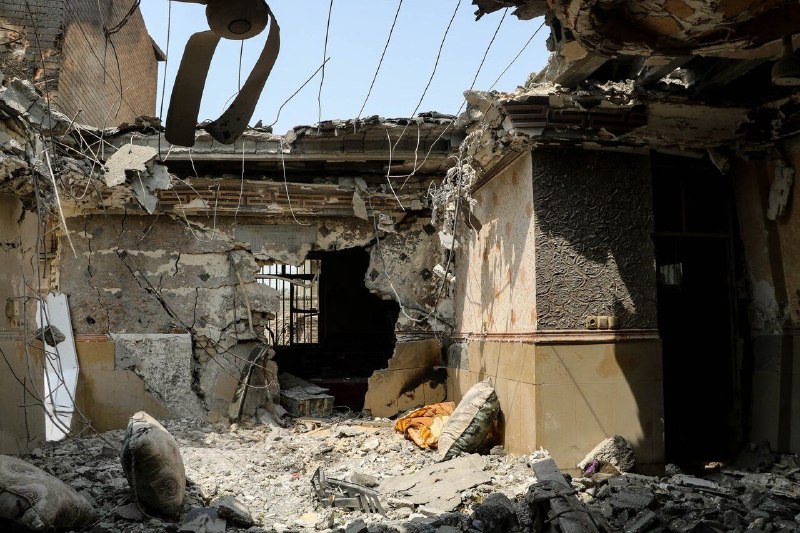
At 16:20 UTC on 26 June 2026, President Donald Trump announced from the White House that Iran had launched four one-way attack drones at commercial shipping in the Strait of Hormuz. Three of the drones were intercepted by US forces; the fourth struck a cargo vessel, according to the president's account relayed by Cointelegraph. Less than five hours later, in a brief exchange with reporters captured on video, Trump declined to detail the American response, replying only: "You will find out." By 22:14 UTC, France 24 was reporting that US forces had struck targets inside Iran, with the White House framing the operation as a response to an Iranian violation of an existing ceasefire.
The 26 June sequence is the most consequential US-Iran escalation of the year, and it unfolded inside a single news cycle. It also fits a recognisable pattern: a provocation in or near the strait, a deliberately theatrical presidential statement, and a kinetic American reply whose scale and duration are not yet disclosed. This publication walks through what is known, what is contested, and what the operation signals about the limits of the ceasefire that has governed the Gulf since the spring.
The Hormuz attack, as the White House describes it
Trump's own account, posted through Cointelegraph's newsroom channel at 16:20 UTC, is the most detailed public reconstruction of the incident so far. Four one-way attack drones were launched at commercial shipping in the Strait of Hormuz. US naval forces intercepted three of them. The fourth hit a cargo vessel, causing damage that has not yet been quantified in any of the source materials available to Monexus. The president characterised the strike as a deliberate Iranian test of the ceasefire that has held, in name at least, since the spring arrangement.
The Strait of Hormuz is the world's most consequential energy chokepoint. Roughly a fifth of seaborne crude oil transits the narrow passage between Iran and Oman, and any sustained disruption to traffic there is felt within hours at refineries from Rotterdam to Singapore. The fact that three of four drones were intercepted is significant: it suggests US forces were positioned, alerted, and cleared to engage. The fact that one got through is also significant, and is the operational justification Washington has chosen to emphasise.
Independent confirmation of the damage to the cargo vessel has not been published in the source materials. Lloyd's List, TankerTrackers, and the International Maritime Organization's incident database — the standard reference points for events in the strait — have not been cited in the available reporting. That gap matters. The difference between a near-miss and a successful hit changes the legal and political framing of the American response. For now, the dominant account is the White House's, and the dominant account says a ship was hit.
The "you'll find out" doctrine
Trump's afternoon-to-evening messaging moved through three registers. At 16:34 UTC, he announced — via Polymarket's newsfeed — that his administration had the highest average daily ICE and CBP arrest rate of any presidency "by far," a domestic-enforcement boast unconnected to the Iran file but indicative of how the day's news flow was being managed. At 17:06 UTC, he announced a 100 percent tariff on any country that imposed a digital services tax on US companies, an unrelated trade escalation. At 17:41 UTC, he warned that communism represented the most serious threat to the United States in its 250-year history — an ideological flourish whose connection to the day's other items is, at best, oblique.
Then came the Iran material. The 20:24 UTC Euronews dispatch captured the on-camera moment: asked by a reporter whether there would be consequences for Iran for violating the ceasefire, Trump replied, "You will find out." Insider Paper's 21:11 UTC bulletin catalogued a separate Trump post promoting a "U.S.A.'s New Passport," a piece of design theatre that appears to belong to a separate news cycle but was filed in the same hour. The cumulative effect is a White House that runs multiple feeds in parallel and uses the Iran file as the gravitational centre of the day's output.
By 21:33 UTC, France 24 was reporting that US strikes against Iran had begun, framed explicitly by the channel as a consequence of the alleged ceasefire violation. The video of the Trump "you'll find out" exchange, distributed via Sprinter Press on X at 22:14 UTC, is the visual artefact most likely to define the operation in Western memory: a president declining to disclose the scale of an American military action against a sovereign state, on camera, hours before the strike.
What the ceasefire actually was
The ceasefire now invoked by the White House as the violated baseline is itself opaque. Source materials do not contain its text, its signatories beyond the United States and Iran, its monitoring mechanism, or its enforcement triggers. The reporting treats it as a fact on the ground — Iran "violated" it; the US is responding — but the public documentary record on which Monexus can rely does not specify what violation consists of, or who certifies it.
That opacity is itself the story. A ceasefire whose terms are not public cannot be verified by anyone outside the two governments that negotiated it. It can be invoked, as it was on 26 June, to justify a kinetic response; it can also be repudiated by either side without external contradiction. The arrangement that holds the Gulf quiet is, in effect, a bilateral confidence measure that the White House can mobilise at moments of its choosing — including, on this evidence, within hours of a single drone strike on a single vessel.
This is not to suggest that the Iranian launch was fabricated. Multiple independent outlets carried the announcement. It is to observe that the architecture in place to manage US-Iran friction is bilateral, secret, and enforceable only by the party with the larger navy.
The structural frame: chokepoint politics and the speed of escalation
A single ship, hit or missed, in a single strait, in a single afternoon, has produced — on this evidence — an American military operation against a country of 88 million people, less than nine hours after the incident. That ratio is the structural fact underneath the news cycle. The threshold for US kinetic action against Iran has compressed dramatically over the past two administrations, and the Hormuz incident suggests it has compressed further.
Two pressures are converging. The first is the strategic geography of the strait itself: any disruption to traffic there is a direct shock to global energy markets, and the United States has spent two decades building the naval posture to police it. The second is the political economy of presidential war-making under the current administration: a kinetic response can be announced, executed, and broadcast within a single news cycle, with the rhetorical payload — "you'll find out" — designed for the social media environment in which the administration communicates. The video of the exchange is the operation's first press release.
The Iranian counter-narrative, which has not surfaced in the source materials available to Monexus, will matter when it does. Tehran's framing is likely to emphasise that the drones were a response to a prior provocation — a boarding, a sanctions action, an Israeli strike on Iranian assets in Syria — that Western reporting has not foregrounded. Iranian state media, when it weighs in, will read the operation as the latest instalment of a US campaign that began with the withdrawal from the nuclear agreement. The structural point is that the same incident can be narrated from Washington as a defended ceasefire and from Tehran as a defended sovereignty; both narratives are coherent; only one of them is currently being broadcast in English.
Stakes and what to watch next
The operational scope of the 26 June strikes is the first unknown. France 24's headline references strikes; the video record and the social media trail do not specify targets, depth of strike, or duration. A single-target retaliation would be one kind of operation; a sustained air campaign would be another. The market response in the hours ahead — Brent crude, the dollar index, gold, regional equities — will be the cleanest real-time signal of how financial actors read the scope.
The second unknown is the diplomatic track. No Gulf state — Saudi Arabia, the UAE, Oman, Qatar — has been cited in the source materials as having weighed in publicly. Their silence, if it holds, suggests either advance coordination or deliberate distance. Either reading has consequences for the regional architecture.
The third unknown is whether the operation produces an Iranian escalation in kind, and on what vector. The asymmetric options available to Tehran — closure of the strait, attacks on US bases in Iraq and the Gulf, mobilisation of Hezbollah, acceleration of nuclear work — are well-rehearsed in the strategic literature but cannot be predicted from this news cycle alone. The pattern of the past five years is that Iranian retaliation comes in days, not hours.
For now, the situation is this: a single cargo vessel in a single strait was hit by a single drone; within hours, the president of the United States was asked on camera what he planned to do about it, and replied that the answer would arrive on its own schedule. By nightfall in Washington, the answer had arrived.
Monexus frames the 26 June US-Iran escalation with primary weight on the White House's own account of the Hormuz incident, supplemented by the Euronews on-camera exchange and the France 24 strike report. The Iranian narrative has not yet been incorporated into the source materials available to this publication and will be added when Iranian state-media reporting surfaces.
Wire provenance
This editorial synthesis draws on the following public wire/social posts:
- https://t.me/cointelegraph/0
- https://t.me/euronews/0
- https://t.me/insiderpaper/0
- https://x.com/polymarket/status/
- https://x.com/polymarket/status/
- https://x.com/polymarket/status/
Follow the event.
These dated source records provide context. They do not retrospectively verify this archive article.
Separate what the nuclear watchdog reported from what it could not determine after the June 2025 strikes.