Tariff Threat Meets Drone Strike: Trump Tests Two Fronts in a Single News Cycle
Within ninety minutes on 26 June 2026, the US president threatened 100% tariffs on any country taxing American tech, accused Iran of breaching a ceasefire, and reported an Iranian drone strike on shipping in the Strait of Hormuz. Two coercive tools, one news cycle.
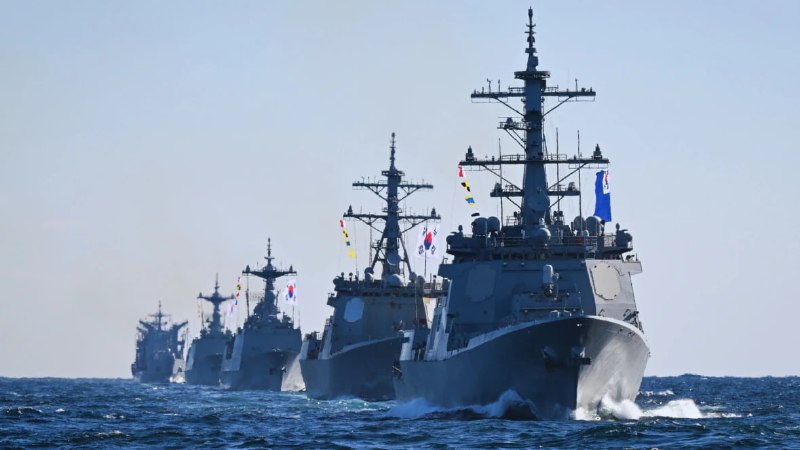
At 16:20 UTC on 26 June 2026, US President Donald Trump said Iran had launched four one-way attack drones at commercial shipping in the Strait of Hormuz. One drone struck a cargo vessel; US forces intercepted the other three, according to the account relayed by Cointelegraph. Forty minutes later, at 17:01 UTC, Reuters reported that the same president had threatened a 100% tariff on goods from any country that imposes a digital services tax on American companies. At 16:50 UTC, a third item crossed the wire — Trump declaring, via a Telegram channel aligned with BRICS reporting, that Iran had violated a ceasefire agreement.
Three statements, ninety minutes, two coercive instruments. The first uses tariffs to discipline allies over how they tax US technology firms. The second uses the language of ceasefire violation to re-open pressure on Iran. They look like separate stories. They are not.
What the digital-services tariff threat actually targets
The 100% tariff threat, as reported by Reuters at 17:01 UTC, is not a tax dispute in the ordinary sense. It is a trade instrument aimed at the legal regimes that countries have used since 2019 — France, the United Kingdom, Italy, Spain, Canada, India, Turkey, and others — to extract revenue from the largest US technology platforms. Those regimes emerged after years of frustration that companies operating across borders paid effectively nowhere what they earned.
The threat rewrites the cost of disagreeing with Washington. A 100% tariff is not a fine; it is the price of exit from the US market for any exporter from the offending jurisdiction. The instrument is blunt, public, and aimed at the legislative choices of sovereign parliaments. Its signalling value is as much about deterrence as revenue: any capital considering a new digital levy now prices in the possibility that the United States will treat the decision as an act of economic aggression.
For decades, the United States has used the dollar's centrality and the threat of secondary sanctions to discipline foreign economic policy. A tariff conditional on domestic tax law is a quieter, more territorial version of the same tool. The message to finance ministries in Paris, London, and New Delhi is that taxing the rents of American platforms will be treated as a trade violation, not a regulatory choice.
The Hormuz drone account — what is and is not on the record
At 16:20 UTC on 26 June, Cointelegraph reported Trump's account of an Iranian drone incident in the Strait of Hormuz: four one-way attack drones launched at commercial shipping, one cargo vessel struck, three intercepted by US forces. The account is presidential, single-sourced, and not yet corroborated by independent navies, shipping registries, or the Iranian side. The Strait of Hormuz is a chokepoint through which a substantial share of seaborne oil transits; any kinetic event there moves global energy benchmarks within minutes.
The same afternoon, the BRICS News Telegram channel carried Trump's assertion that Iran had violated a ceasefire agreement. The framing is significant. The word "violation" implies that a ceasefire exists, that Iran broke its terms, and that the United States is the arbiter of compliance. If a ceasefire is in force, then by definition Iran and the United States are not at open war, and an American president can treat a single drone strike as a definitional breach rather than a casus belli. If no ceasefire is in force, the framing collapses and the act becomes an escalation of hostilities.
That ambiguity is not incidental. Whether this moment sits inside an existing diplomatic architecture or outside it determines whether the next move is a return to negotiation or a widening of the conflict. The available reporting does not specify which architecture, if any, is operative; it carries the president's characterisation.
Why the two moves belong to the same doctrine
Tariff escalation and ceasefire-violation rhetoric share a logic. Both treat a foreign action — a tax law, a drone launch — as a violation to be priced, not a position to be negotiated. Both use the threat of economic or military force as the default response, with diplomacy as the off-ramp rather than the entry point.
This is a recognisable pattern in the conduct of US economic statecraft since at least 2018. The mechanism is consistent: identify an action by a foreign jurisdiction, characterise it as unfair or unlawful, pre-announce a punitive scale that exceeds the harm, then negotiate downward from a position the other side never agreed to. It works because the scale of the threatened cost — a 100% tariff, a naval response in a 21-mile-wide strait — is rarely borne in full; the threat itself is the product.
What is different on 26 June 2026 is the simultaneity. Two coercive moves in ninety minutes, against different actors, on different theatres, are not a coincidence of scheduling. They are a statement about bandwidth — about which levers the United States is willing to pull in a single news cycle, and about the kind of cost Washington expects other capitals to internalise when they make their own choices.
The counter-read: restraint, or pressure for a deal
A plausible alternative reading of the day's sequence is the opposite of the one above. The tariff threat could be read as defensive — a last-resort signal to legislatures in Europe and Asia that the United States will not allow the digital services tax regime to harden into permanent revenue extraction from US-headquartered firms. The Iran statements could be read as calibrated — a public naming of a violation designed to lock Tehran into a diplomatic frame that the United States controls, rather than a prelude to escalation.
On this reading, the simultaneous use of both instruments is not adventurism but triage. The administration is signalling that, in a world of limited attention and contested resources, it will move on multiple friction points at once because the cost of not moving — a digital tax regime that entrenches, a Strait of Hormuz incident that goes unanswered — is greater than the cost of acting in parallel. The doctrine is escalation-management rather than escalation.
That reading is consistent with what little is on the record, but the record is thin. No independent navy or shipping registry has confirmed the Hormuz incident. No Iranian statement has been published in the available reporting. The tariff threat is reported as a presidential statement, not a promulgated executive order. The BRICS-aligned Telegram channel is not a US government source. The journalism here is the journalism of declarations, not of verified events.
What is at stake
If the dominant framing holds — that the United States is willing to weaponise tariffs against the tax policies of allies and to frame a drone strike as a ceasefire violation in the same news cycle — the consequence for non-US capitals is a re-pricing of autonomy. A French or Indian digital levy is no longer a regulatory choice but a trade risk. A German or Japanese decision about shipping insurance in the Gulf is no longer a commercial calculation but a foreign-policy signal.
For Iran specifically, the Hormuz incident, if confirmed, deepens an already acute economic and diplomatic pressure. Even if a formal ceasefire is in force, an attribution of violation gives the United States a public rationale to escalate sanctions enforcement, naval posture, or both. For Europe, the tariff threat raises the cost of every regulatory move that touches the digital economy — and therefore the political price of any future attempt to tax platforms, regulate AI, or assert digital sovereignty.
The time horizon is short. The next 72 hours will likely show whether the tariff threat is followed by executive action, whether the Hormuz incident is independently corroborated, and whether Iran responds publicly. Until then, the record is what the United States says it is — and that, more than any specific outcome, is the structural fact the day has produced.
Desk note: This piece leads with single-sourced presidential statements carried by Reuters and Cointelegraph, plus a BRICS-aligned Telegram channel; no Iranian, European, or independent naval confirmation is on the record at the time of writing. Monexus frames the day's events as a single coercive doctrine rather than two unrelated stories, while flagging the thin sourcing explicitly.
Wire provenance
This editorial synthesis draws on the following public wire/social posts:
- https://t.me/s/Cointelegraph
- https://t.me/s/bricsnews