Trump's World Cup silence, an attendance record, and the underdogs rewriting the bracket
With 48 matches still to play, the 2026 World Cup has already passed 1994's all-time attendance mark — and the United States' own president has yet to show up at a game.
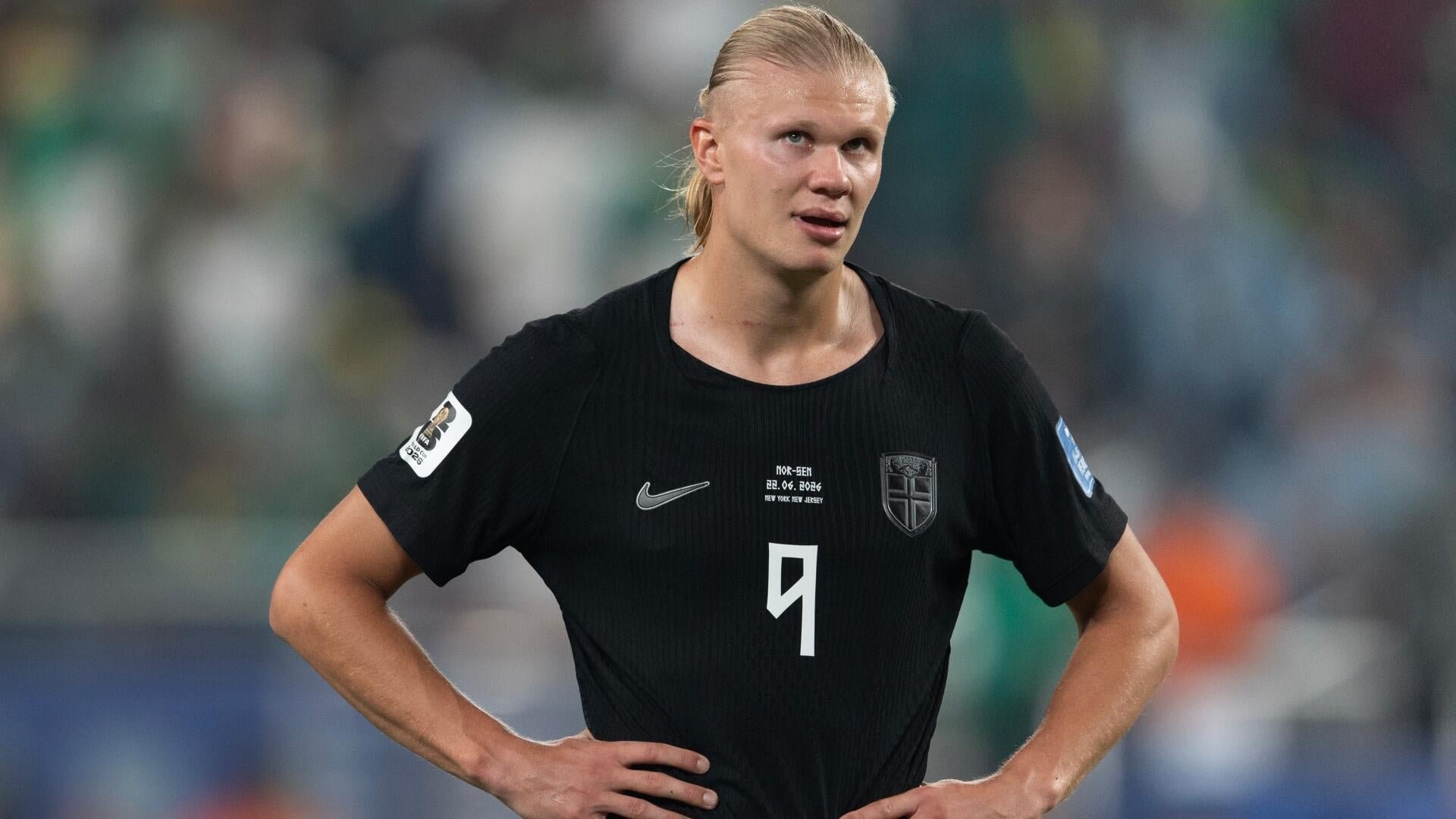
Donald Trump has so far stayed away from the 2026 FIFA World Cup, a tournament co-hosted by the United States, Canada and Mexico that is on pace to rewrite the record book. On 25 June 2026, Polymarket's account flagged that the competition had "officially set[] new all-time attendance record[s], surpassing the 1994 record with 48 matches still to play." Two days earlier, BBC Sport had published an explainer titled "Why has Trump stayed away from the World Cup?", posing the question of whether the sitting US president would appear before the final.
The juxtaposition is more than anecdotal. The tournament is the largest sporting event ever staged on American soil, the first with 48 nations, and a diplomatic showcase in which the US federal government is host, security guarantor, and broadcasting counterparty — via Fox's exclusive English-language rights in the US — to the rest of the world. A sitting president's decision to absent himself from that stage is itself a signal worth reading.
A host without a head of state in the stands
BBC Sport's 26 June piece notes that Trump's no-show is conspicuous because the tournament is being held, in significant part, on US soil. Presidential attendance at marquee home fixtures has, in modern practice, served as a soft-power instrument: Barack Obama appeared at the 2010 World Cup draw in Cape Town and at the 2014 US-Germany group-stage match in Recife; George W. Bush was a regular at MLS matches in Texas. A US president choosing not to attend games in his own country, while still weighing in on tangential legislative business — Trump told reporters on 25 June "I said I'm not signing the housing bill," per the @unusual_whales account — reframes the optics of who, exactly, is hosting this World Cup.
The question is not whether the tournament will proceed. It will, with venues from Atlanta to Monterrey, and with FIFA president Gianni Infantino continuing to position the event as the "most inclusive" in the competition's history. The question is whose face gets attached to it. Infantino, Fox broadcasters, and the governors of the eleven US host cities have done most of the visible diplomatic lifting; the White House has not.
An attendance record that almost wrote itself
The arithmetic here is straightforward and politically inconvenient for the doubters. The 1994 tournament, hosted exclusively in the United States, set the previous all-time attendance record over 52 matches. The 2026 edition runs to 104 matches across three countries, with stadium capacities in the 70,000–80,000 range at venues including MetLife Stadium, SoFi Stadium and AT&T Stadium. Per Polymarket's 25 June 2026 post, the 1994 record had already been surpassed with 48 matches still to play. The path from headline-grabbing to history-of-the-sport was structurally baked into the format change adopted in 2017 and ratified for 2026.
Two consequences follow. First, the "will the expanded World Cup dilute the product" debate — which dominated FIFA's consultations through 2023 and 2024 — will be re-litigated by the numbers themselves. Second, the financial lift matters: each additional match is a separate gate, broadcasting sublicense, and sponsorship activation. Fox's $1.4 billion investment in US English-language rights, negotiated in 2018 and indexed to a 48-team tournament, is being validated match by match.
The underdog question nobody asked
BBC Sport's 26 June explainer on lower-ranked teams performing above expectation addresses a separate but connected storyline. The expanded field includes debutants and qualifiers who, in previous formats, would not have had the slots. Group-stage upsets — Curacao-style results from the African and Asian confederations — are not statistical noise; they are the predictable consequence of a deeper talent pool finally getting access. Whether that pattern reflects "clever planning and execution" by federations with limited resources, or simple variance, is the question BBC raises and does not resolve. It is also the question that will determine whether FIFA's expansion pitch survives contact with the knockout rounds.
Stakes, and what remains unresolved
Three trajectories are now in play simultaneously, and the next fortnight will sort them. The US federal government's visible role in hosting — a question of presidential presence, security posture, and visa enforcement at the border — will be judged by the final on 19 July 2026 at MetLife Stadium. The attendance and revenue numbers will accrue regardless of who shows up. And the on-pitch story of an expanded format will be settled by whether the bracket produces the marquee final the broadcasters paid for, or a contest that confirms the skeptics.
What the public record does not yet show is whether Trump will attend the final — BBC Sport frames it as an open question — and whether the housing-bill standoff signalled on 25 June reflects a broader White House disengagement from the tournament's domestic footprint, or simply a coincidence of scheduling. The safest read is that absence is, in this case, a choice with downstream cost, and that the cost will be measured not in tickets but in soft-power receipts.
Desk note: This piece leans on BBC Sport's two 26 June 2026 explainers as the structural spine, with the Polymarket attendance data point treated as a market-verified figure rather than an editorial claim, and the @unusual_whales housing-bill quote read as on-record presidential commentary rather than wire copy.
Wire provenance
This editorial synthesis draws on the following public wire/social posts:
- https://x.com/unusual_whales/status/
- https://x.com/polymarket/status/