A Framework in Washington: What the US-Israel-Lebanon Deal Actually Says
A Washington framework agreement lets Israel keep a security zone inside Lebanon with operational freedom for the IDF, while Beirut and Washington frame it as a path back to sovereignty.
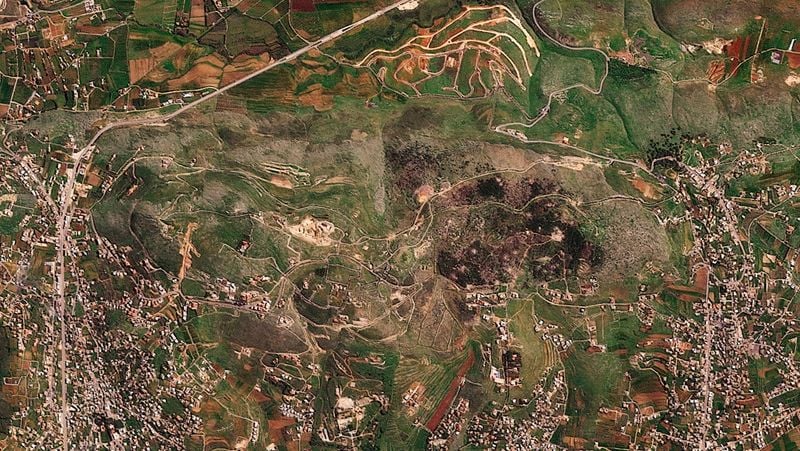
On the evening of 26 June 2026, in Washington, the governments of Lebanon, Israel, and the United States initialled a framework agreement that, in its published outline, permits the Israel Defense Forces to maintain a security zone inside Lebanese territory and to operate with operational freedom inside that zone. France 24 reported the signing at 18:55 UTC, describing the document as the product of months of shuttle diplomacy mediated by the US. An earlier X post at 18:25 UTC, from the account Unusual Whales, summarised the same text as "a framework agreement allowing Israel to maintain a security zone in Lebanon, with the IDF retaining operational freedom within that zone." At 13:37 UTC the same day, the prediction market Polymarket priced the probability of an Israeli withdrawal from Lebanon before the end of 2026 at 29 percent. The three data points, taken together, frame the deal less as an end to a war than as the start of a managed occupation.
The agreement is the first written instrument among the three governments since the cessation of major hostilities in late 2024, and its political centre of gravity lies in what it does not say. There is no publicly circulated text of the full annexes; what is in circulation is a framework, meaning a statement of principles with implementing protocols to follow. Its principal innovation is to legalise, in a tripartite instrument rather than a unilateral declaration, an Israeli military presence on Lebanese soil. For Beirut, the framework is sold domestically as the recovery of state sovereignty over the country's southern border; for Jerusalem, it is the institutionalisation of a buffer that until now existed as a battlefield expedient; for Washington, it is a way to convert an open-ended commitment into a calendar-bound diplomacy. Each of those readings is defensible. None of them is the whole text.
What the framework actually contains
The publicly available elements of the document, as summarised by France 24's Middle East correspondent and confirmed by the Unusual Whales post that circulated the same hour, rest on three pillars. First, a defined zone inside southern Lebanon — the location of which has not been disclosed in the framework text — within which the IDF will continue to deploy and patrol. Second, an "operational freedom" clause that, in plain English, grants Israeli forces latitude to act against targets inside the zone without prior coordination with the Lebanese Armed Forces, though reporting indicates that real-time notification mechanisms will be set up through a joint US-chaired mechanism. Third, a sequencing commitment under which the zone's perimeter and rules of engagement are to be reviewed periodically, with the United States as the convening party.
What the framework does not contain is at least as consequential as what it does. It does not name Hezbollah as a party, although the group's disarmament is widely understood to be the deal's underlying purpose. It does not specify a withdrawal timetable, which is why Polymarket's market on an Israeli pullout by year-end traded at 29 percent as the news broke. It does not address the disputed Shebaa Farms area or the line of withdrawal from 2000, two of the legal-technical questions that have bedevilled Lebanon-Israel diplomacy for a quarter-century. And it does not, on the public text, commit any party to a permanent end-state.
The Lebanese reading: sovereignty recovered, not ceded
The Lebanese government's political logic for signing is straightforward, if uncomfortable to articulate in public. Since the autumn 2024 ground campaign, the de facto Israeli presence along the southern frontier has been enforced by Israeli armour, air cover, and a string of hilltop positions whose names appeared on Israeli military maps before they appeared on any Lebanese one. Beirut's argument, advanced by Prime Minister Nawaf Salam's cabinet and echoed in Beirut-based outlets, is that a formalised framework underwritten by Washington is preferable to that arrangement because it converts a unilateral posture into a contracted one, attaches a US convening role to any future dispute, and gives the Lebanese Armed Forces a defined, if junior, place in the joint mechanism.
That reading has critics at home. Lebanese opposition figures have already described the text as a dressed-up foreign occupation; the March 8 bloc's reaction, pending a fuller text, has been guarded. The strongest domestic argument against the framework is that "operational freedom" for the IDF inside Lebanese sovereign territory is, by any standard reading of the UN Charter, a derogation that no Lebanese government should sign — and that the supposed protections of US mediation amount to a fig-leaf. The strongest argument in favour is that the alternative on offer, in late 2026, is the absence of any document at all: an open-ended presence, no review mechanism, and no Lebanese seat at the table.
The Israeli reading: a buffer that is finally legible
For Jerusalem, the framework is best understood as the legal translation of a strategic conclusion reached in 2024: that Hezbollah's military infrastructure along the frontier cannot be neutralised by air power alone, and that a permanent ground presence, however politically costly, is the price of preventing reconstitution. Israeli commentary, particularly in the pages of Haaretz and the Jerusalem Post, has long distinguished between maximalist annexationist language inside the coalition and the more limited security doctrine that has actually driven operations: deny the immediate frontier to a re-armed non-state army, buy time, and shift the burden of ground holding to a third-party arrangement.
This framework fits that doctrine. It does not annex; it does not displace Lebanese villages in the way some Israeli voices had advocated; and it ties the IDF's freedom of action to a document rather than to a fait accompli. Critics inside Israel — including, predictably, voices on both the settler-rights flank and the anti-occupation flank — have already noted the same point from opposite directions: that the deal codifies a presence which, under any prior Israeli government, would have been politically unsellable. Whether the security dividend is real will turn on whether the joint mechanism constrains unilateral Israeli action more than the unilateral posture did. On the public text, that question is open.
The American reading: a calendar where there was none
Washington's interest is the most procedural of the three, and the most important. The Biden administration's late-2024 mediation, continued and intensified under the current administration, had run into a structural problem: Israel and Lebanon had no shared document, and the US was de facto the only party talking to both. The framework is, among other things, a piece of bureaucratic architecture. It creates a US-chaired review mechanism, a notification procedure, and a defined text against which future disputes can be measured. None of that resolves the underlying conflict. All of it converts a crisis-management posture into a managed process — which is, in Washington's own institutional language, what diplomacy is for.
The framework also gives the White House a deliverable at a moment when the regional agenda is crowded: Iran's nuclear file, the Red Sea corridor, the still-unresolved hostage track with Hamas, and the Syrian transitional arrangement. A signed Lebanon-Israel text, however limited, allows the administration to claim one fewer open front. Whether that is a tactical convenience or a structural success will depend on whether the deal's review mechanism actually convenes — and whether the IDF's "operational freedom" survives contact with the next incident.
What remains contested
Three uncertainties are worth naming plainly. First, the perimeter of the zone has not been disclosed; the framework speaks of a zone without mapping it. Second, the role of the Lebanese Armed Forces is described in general terms, but no public troop-commitment schedule has been attached. Third, and most consequentially, Hezbollah's posture toward the deal — silence, rejection, or selective cooperation — will determine whether the framework stabilises or merely reorganises the conflict. The group's media outlets have so far declined to characterise the document as binding, which is itself a position.
The Polymarket price — a 29 percent implied probability of an Israeli withdrawal from Lebanon before 31 December 2026 — is a useful summary of informed skepticism. It says, in effect, that even traders with money at stake do not believe the framework's review mechanism will produce a full pullout inside six months. The French 24 report, the Unusual Whales post, and the market price are not the same kind of evidence, but they converge on the same reading: a real document, signed in Washington, whose implementation is the question that begins tomorrow.
Desk note: this article leads with the France 24 wire and the Unusual Whales summary, both timestamped on 26 June 2026, and treats Polymarket's implied probability as a snapshot of informed sentiment rather than as a forecast. Where the framework's text is silent — on the zone's perimeter, on Hezbollah's status, on a withdrawal date — the piece says so rather than filling the gap.
Wire provenance
This editorial synthesis draws on the following public wire/social posts:
- https://x.com/unusual_whales/status/
- https://en.wikipedia.org/wiki/Lebanon%E2%80%93Israel_relations
- https://en.wikipedia.org/wiki/United_Nations_Security_Council_Resolution_1701
- https://en.wikipedia.org/wiki/Shebaa_Farms
- https://en.wikipedia.org/wiki/Israel%E2%80%93Hezbollah_conflict_(2023%E2%80%93present)
- https://x.com/unusual_whales/status/
- https://en.wikipedia.org/wiki/Lebanon%E2%80%93Israel_relations
- https://en.wikipedia.org/wiki/United_Nations_Security_Council_Resolution_1701
- https://en.wikipedia.org/wiki/Shebaa_Farms
- https://en.wikipedia.org/wiki/Israel%E2%80%93Hezbollah_conflict_(2023%E2%80%93present