USMNT's Pochettino faces contract crossroads after Türkiye defeat exposes squad depth gap
Hours after a 3-2 loss to Türkiye exposed the USMNT's second-string frailties, ESPN reported that Mauricio Pochettino and U.S. Soccer are in positive talks over a contract extension — a juxtaposition that captures the federation's gamble on continuity.
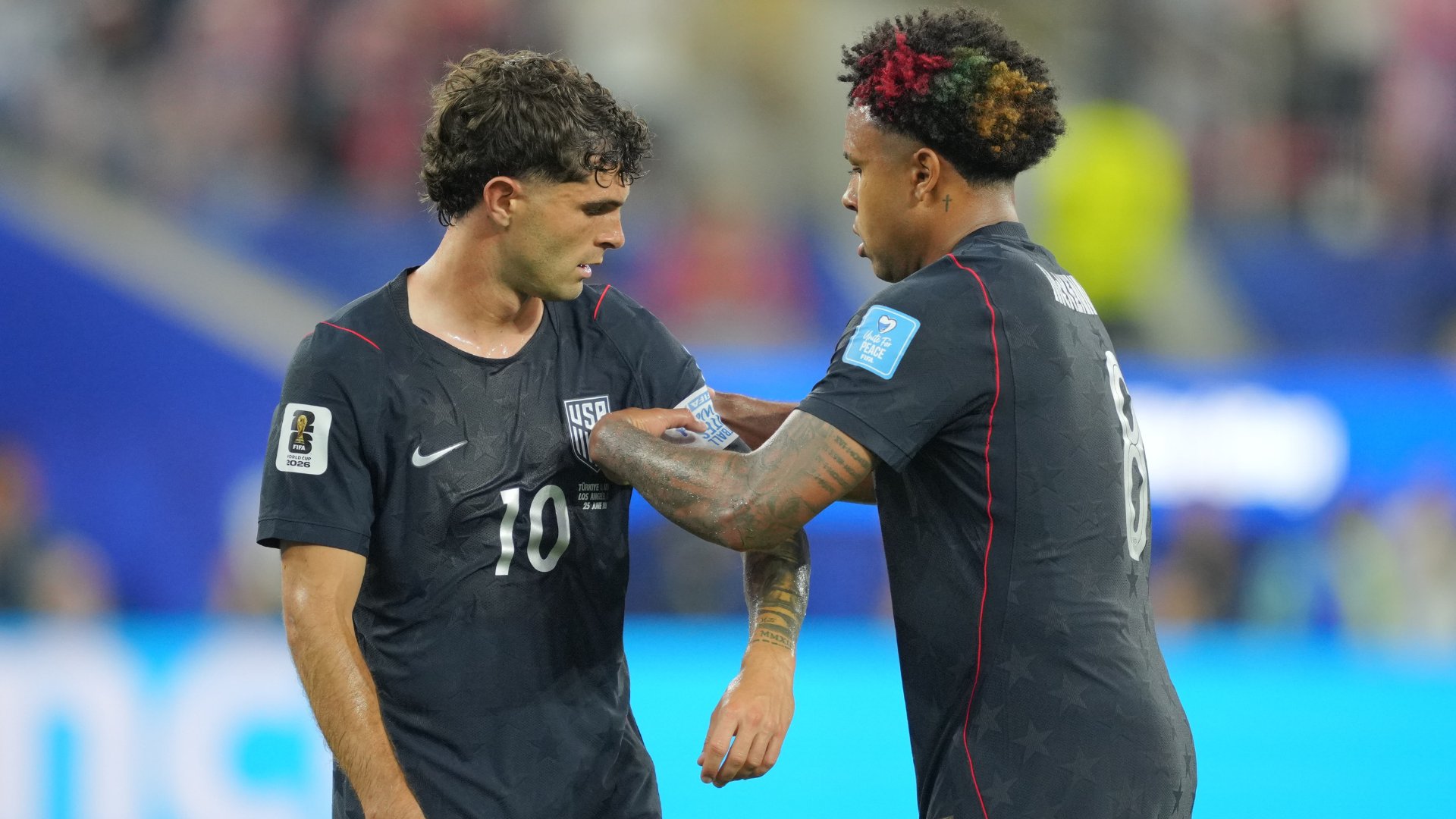
The United States men's national team walked off the field in East Hartford on the night of 25 June 2026 on the wrong end of a 3-2 scoreline against Türkiye. By Thursday morning Eastern time, the most consequential USMNT news was no longer the result — it was the suggestion, reported by ESPN at 19:45 UTC on 26 June, that Mauricio Pochettino and U.S. Soccer are in positive talks over a contract extension that would keep the Argentine in charge beyond the World Cup he was hired to win at home.
The juxtaposition is uncomfortable and clarifying. Pochettino has now presided over a tournament group win, a string of uneven friendlies, and a defeat that — by his own postgame framing — still leaves the United States as group winners. Whether that record merits an extension is precisely the kind of question federations prefer to settle behind closed doors, and ESPN's sourcing suggests those talks are already underway.
What the Türkiye loss actually showed
The 3-2 defeat was Pochettino's first loss since taking the job, and it came against a side that, by any reasonable read of the world rankings, sits below the United States. According to ESPN's 06:27 UTC match write-up, the late concession will count for little in the grand scheme of things — but it told the manager plenty about the depth chart behind his first-choice XI.
Pochettino started a second-string lineup. The experiment produced a performance that looked exactly like what second-string lineups are supposed to look like: promising in flashes, structurally incoherent for long stretches, and ultimately outscored by a mid-tier European opponent playing its own rotation. That is not a scandal. It is, in fact, the entire point of running friendlies against non-conference opposition in a World Cup year — to learn what happens when the starters are not on the field.
The lesson, plainly, is that the gap between the USMNT's core and its reserves is wider than the federation would like. Whether that gap is closing or structural is the question an extension would answer by implication.
The contract question — what ESPN is actually reporting
ESPN's 19:45 UTC story is thin on specifics, by design. The outlet reports that Pochettino and U.S. Soccer have had positive talks about a possible contract extension, attributed to sources. No length, no compensation framework, no trigger dates, no signature timeline. That is how labor talks at this stage get reported, and the lack of detail is itself a tell: negotiations are real enough to be characterised as "positive," but early enough that neither side is leaking terms.
This matters because Pochettino was hired on a deal that ran through the 2026 World Cup. An extension is therefore not a routine rollover — it is a federation decision to bet on continuity past the tournament the entire project was built around. If the United States reaches the latter rounds at home, the extension is a coronation. If the United States stumbles, the extension becomes the federation's alibi for why a mid-tournament change of course was never on the table.
Pochettino's media posture — and what it signals
The postgame press conference after the Türkiye defeat, captured in ESPN's 07:33 UTC report, showed Pochettino combative and visibly frustrated with reporters. He pushed back on what he called "weird" questions and insisted that the United States had, in his framing, still won the group — a sentence that scans as defensible in tournament context and untenable in a friendly.
That posture is worth noting on its own terms. Pochettino's public persona across his club career has leaned toward measured diplomacy. Snapping at the assembled press after a June friendly against a team the United States is broadly expected to beat is a small data point, but it suggests a manager who is conscious of being read as beleaguered and is pre-empting the read. Federations notice that. So do agents.
The stakes — and the alternative read
The dominant framing is straightforward: U.S. Soccer likes its manager, the manager's team won the most recent competitive group it played in, and a World Cup on home soil is a bad moment to change coaches. The alternative read is that federations which extend coaches before home World Cups are often extending them into a crisis, not out of one. The history of incumbent-host performances is not kind to the idea that continuity alone produces tournament runs.
What remains genuinely contested is the second-string gap. If the depth chart is fixable through the MLS season and the European spring, an extension is cheap insurance. If the gap is structural — a product of a player pool that has not produced enough first-team-quality alternatives at several positions — then the more honest move might be to keep Pochettino through 2026 and plan a clean succession afterwards, rather than to paper over the depth problem with a longer contract for the same coaching staff.
The talks are reportedly positive. The result against Türkiye, on the same day the talks surfaced, is a reminder that "positive" and "settled" are not the same thing.
This publication framed the contract talks as the lead story rather than the friendly itself, because the friendly's interpretive weight sits downstream of who will still be in the dugout in 2027.