Vishnu Vishal's Netflix apology and what it reveals about Indian streaming's economics
When a Tamil OTT-first release misses on Netflix, the residual claimant is rarely the platform. A single actor's apology opens a window onto who actually carries the loss in Indian streaming's mid-budget regional tier.
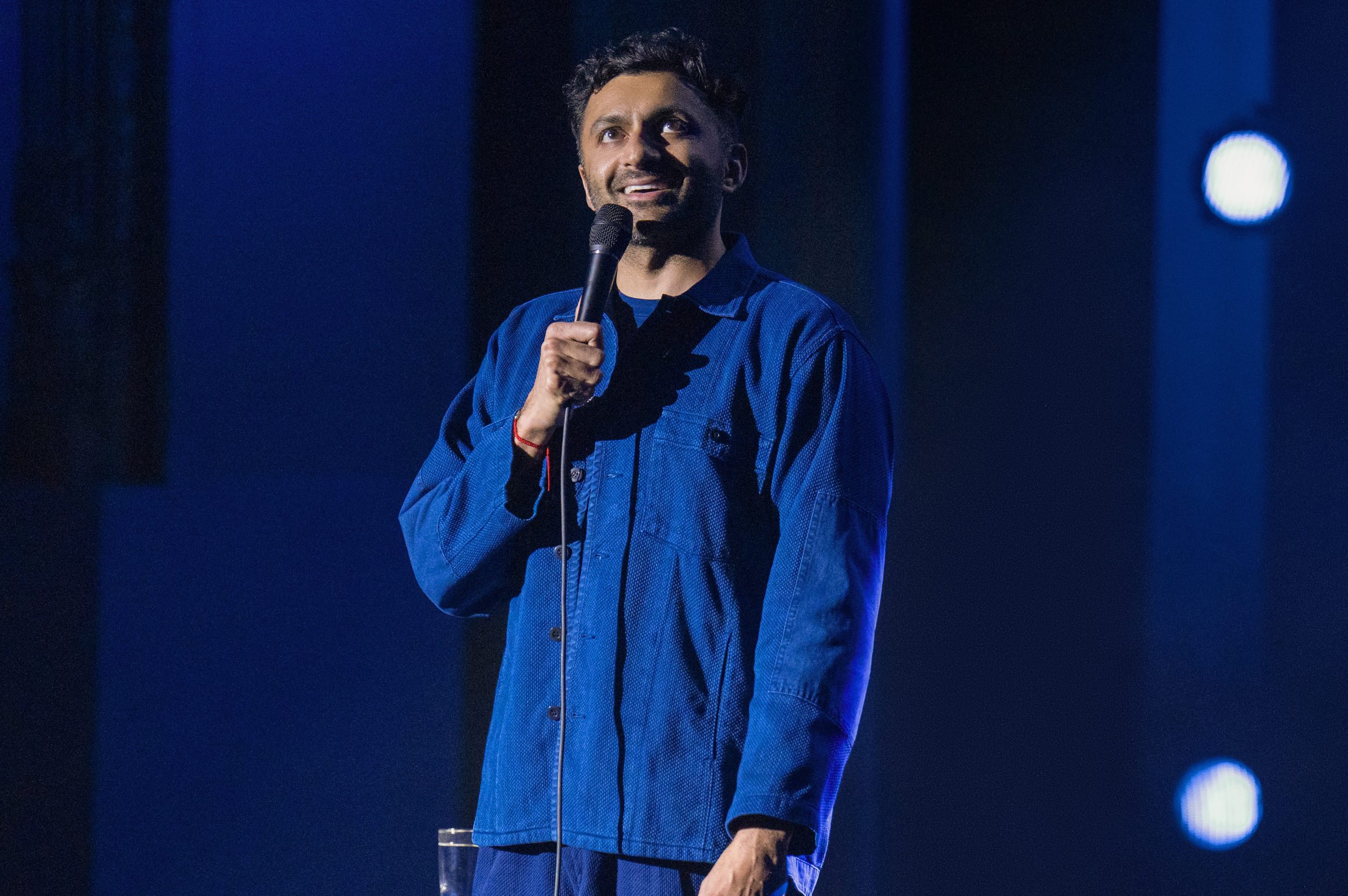
On a Tamil-language chat show in late June 2026, actor Vishnu Vishal did something the trade press in Mumbai rarely writes about at length: he apologised. The apology was directed at Netflix India for the under-performance of his film Gaganachari, which premiered directly on the platform and, in his telling, did not get the algorithmic oxygen a Netflix-first title usually requires to clear break-even.
The exchange, clipped and recirculated across X and regional YouTube channels, has been read in the Indian entertainment press mostly as a celebrity indiscretion, a small moment of public grievance from a mid-budget star who has spent most of his career inside the theatrical window. That reading is the comfortable one. The more instructive one sits underneath: who actually carries the loss when a South Indian OTT-first release misses, and what does the answer tell us about the quiet re-pricing of risk inside Indian streaming.
The economics of the OTT-first bet
Gaganachari was conceived as a direct-to-Netflix title: no theatrical leg, no satellite pre-sale, no recovery cushion from music rights. The economics of that model depend on a handful of variables, most of which sit inside Netflix's recommendation stack rather than the producer's control room. A Tamil-language comedy with a recognisable cast buys a slot, a thumbnail, and roughly two to four weeks of homepage placement. If the title's completion rate holds above the internal threshold, the algorithm keeps feeding it. If it dips, the slot is recycled for the next acquisition and the title goes into the long tail, where viewership decays along the curve of every other miss in the catalogue.
The producer's downside in this configuration is asymmetric. Fixed costs, the print-and-advertising equivalent for an OTT slate (dubbing, digital marketing, talent advances), are sunk before the algorithm renders its verdict. The variable reward, which used to come from theatrical exhibition windows and subsequent satellite sales, is now gated almost entirely on the platform's internal thresholds. There is no second window to recover into, no regional pay-TV backstop, and increasingly little room for a theatrical afterthought once a film has been labelled an OTT original.
Who catches the loss
When a theatrical release misses in Chennai or Coimbatore, the loss is distributed across a familiar stack: exhibitors lose a week's rental, distributors absorb a partial recovery, and the star's per-film fee resets lower at the next negotiation. Each rung carries some of the downside.
When an OTT-first release misses on Netflix India, the platform recoups its minimum guarantee and the cost of the slot regardless. The producer's P&L is the residual claimant: the marketing co-fund they committed to, the talent advances already paid, and the option value of the actor's next OTT vehicle, which is now lower by exactly the magnitude of the under-performance. Stars in the mid-budget South Indian tier, those whose entire careers sit between the A-list theatrical ceiling and the web-series floor, are the human face of that residual claim. Vishnu Vishal's apology, in this reading, is less a grievance than an honest pricing of the position he actually occupied on the release.
The structural frame the press keeps skipping
Indian streaming's acquisition boom between 2020 and 2024 taught every regional producer that platform money was structurally different from theatrical money: faster, simpler, and crucially, non-recourse. The platform did not pretend to share in the upside, so the producer could not pretend to be insulated from the downside. But the human psychology of film-making does not fully internalise that. Creators continued to price their projects as if a Netflix slot were equivalent to a theatrical release plus a satellite cycle, when in reality it is a single-bet option on algorithmic favour.
The wire treatment of Vishnu Vishal's interview has focused on the tone of the apology, on whether stars should publicly call out platform partners, and on the etiquette of grievance in a regional industry still small enough that everyone knows everyone else's advance. Monexus is interested in a different question: whether the apology itself marks the moment South Indian mid-budget producers begin to renegotiate the share of risk they are willing to carry for an OTT-first release. If the answer is yes, the next round of direct-to-platform deals in Tamil and Telugu will look materially different. Talent floors will be cut, marketing co-fund commitments will be capped, and the algorithmic threshold above which a title gets sustained placement will become a contract line rather than an opaque internal metric.
The wider signal
A second thread makes the structural read sharper. Indian OTT platforms have spent the last eighteen months throttling the kind of mid-budget regional film that used to be a producer's bread and butter, redirecting acquisition budgets toward Hindi prestige drama and pan-India event titles. Netflix's regional slate has thinned accordingly. A title like Gaganachari now lands in a more competitive slot than it would have in 2022, against a higher internal bar, with a smaller piece of homepage real estate allocated to Tamil-language originals. The apology, in other words, may have less to do with the film's specific under-performance than with the broader repricing of the regional OTT window.
This is the part of the story that the celebrity-press frame cannot accommodate. The frame wants a personality: the actor who complained, the platform that did not respond, the industry that took sides. The structural read wants a market: a class of producers re-underwriting a contract they signed when money was looser and algorithmic thresholds were kinder, and a generation of mid-budget stars who have just discovered they are residual claimants on a bet whose pricing they do not control.
What to watch next
The first tell will be the next round of Tamil OTT-first acquisitions announced for the late-2026 slate. If minimum guarantees compress and marketing co-funds shift back toward producers, the apology will have functioned as a quiet collective renegotiation, delivered in a single actor's voice. If the next batch of deals re-prices on the old terms and stars continue to absorb the asymmetry, the moment will pass as a curiosity, and the next under-performing Tamil OTT original will produce its own apology clip, and the cycle will repeat.
Indian streaming is in the unglamorous middle of its maturation. The headline-grabbing phase, when platform money flowed freely and every regional producer could treat Netflix as a buyer of last resort, is over. What replaces it is a market in which the platforms have reasserted pricing power, the producers are slowly learning to underwrite algorithmic risk rather than absorb it, and the stars, especially in the mid-budget regional tier, are discovering that the residual claimant on a streaming miss is, more often than not, them.
Desk note: Monexus framed Vishnu Vishal's apology as an industry-structural read on OTT-first economics in South Indian streaming. Wire treatment focused on the personal disclosure and platform etiquette; we focused on the re-pricing of risk and the asymmetric exposure of mid-budget regional stars.