Xbox prices climb in August: a quiet margin story dressed up as a gaming headline
Microsoft will raise Xbox console prices worldwide from 1 August 2026, with the cheapest current-generation machine jumping to $499.99 — a move that says less about gamers and more about the economics of selling boxes in a services-first era.
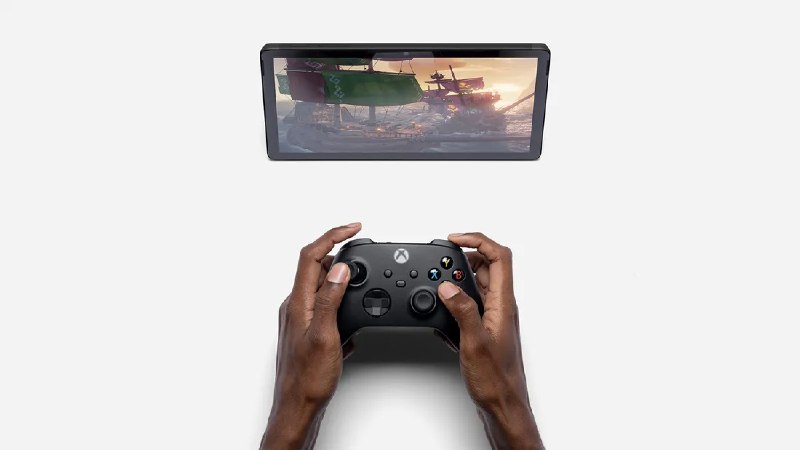
Microsoft will raise prices on its Xbox consoles worldwide from 1 August 2026, according to a Reuters dispatch dated 26 June 2026, with the cheapest current-generation model — the 512-gigabyte Xbox Series S — moving to $499.99 and the 1-terabyte Series S climbing to $599.99 in the United States. The 1-terabyte digital-only Series X, the top of the new line, was not priced in the initial announcement. The increase was confirmed on X by the markets account @unusual_whales on 25 June 2026 at 20:58 UTC and by gaming-industry tracker @pirat_nation at 17:42 UTC the same day.
The story is dressed as a gaming headline. It is, more usefully, a margin story. Microsoft's gaming division is now the third pillar of a company that has, over five years, slowly reweighted itself away from selling operating systems and toward renting compute and content. Console hardware, once the loss-leader that locked players into an ecosystem of high-margin software, has become a smaller and stranger object inside that portfolio — and a price hike is what a smaller, stranger object looks like when the people who make it want it to start paying its own way.
The new shelf, by SKU
Reuters's 26 June report frames the change as a worldwide repricing "from August," with US prices confirmed as follows: Xbox Series S (512GB) at $499.99; Xbox Series S (1TB) at $599.99; and Xbox Series X Digital (1TB), the flagship all-digital machine, with a price to be set. The 1-terabyte Xbox Series X — the disc-drive model that has, since 2020, anchored the premium tier at $499.99 — is conspicuously absent from the US list circulated by @pirat_nation on 25 June.
That absence is itself a signal. Microsoft has, over the past eighteen months, talked publicly about an "all-digital future" for Xbox. A disc-less flagship priced above $599, sitting alongside a disc model that may or may not be re-priced to match, is the practical shape of that future: the company is pushing buyers toward the SKU it controls most tightly, while leaving itself optionality on the SKU that competes with second-hand discs, Game Pass trials, and the used-game market it has spent a decade trying to disintermediate.
For a US buyer, the cheapest way into Microsoft's current-generation ecosystem is now $499.99 — exactly the price at which the Series X launched in 2020. The Series S, which launched at $299.99, has been repriced upward by 67 percent over six years. That trajectory outpaces US headline inflation in the same window by a comfortable margin.
Why now: a hardware cycle with a budget problem
There is no single villain in this story. Component costs — particularly NAND flash, custom AMD SoCs, and the persistent premium on high-bandwidth memory driven by AI-server demand — have moved in directions unhelpful to console makers. The same memory crunch that has lifted server-side bills for the hyperscalers has, second-order, lifted the bill of materials for every device that ships a gaming-class GPU and more than a token amount of RAM.
Sony took the equivalent move earlier in this console cycle, lifting PlayStation 5 prices in selected markets and trimming disc-drive bundles. Nintendo, with a hardware-rationing strategy and a Switch 2 launch that prioritised margin over volume, has effectively been repricing by scarcity. Microsoft is the last of the three to move — and is moving on a global, not regional, basis, per Reuters's 25–26 June reporting.
Two structural facts make this round different from the 2023 wave of selective hikes. First, gaming subscription and storefront revenues are now a larger share of Microsoft's gaming division than they were two years ago, which dulls the conventional wisdom that consoles must be sold at a loss to seed software attach. The conventional wisdom was always half-true; it is now less true than it was. Second, the alternative to buying a console — a PC, a handheld, a streaming tier, a phone — is more credible, and more price-competitive, than at any previous generation transition. A $499.99 Series S is competing with a Steam Deck OLED, a handhelds category that barely existed at the Series S launch, and a Game Pass catalogue whose most-played titles are increasingly cross-platform.
Counter-narrative: this is not, primarily, a tariff story
The instinct in some corners of the gaming press and the financial markets will be to read the 1 August timing as a tariff artefact — a hedge against a US trade-policy environment that has, across 2025 and 2026, made hardware imported from or assembled in East Asia more expensive to land. There is a real tariff story underneath US consumer-electronics pricing in 2026, and it does affect Microsoft's bill of materials.
But the Reuters wire does not frame this as a tariff move, and the more parsimonious read is the duller one: Microsoft believes its gaming hardware can carry a higher number without losing the customers who matter most to its software and services revenue. The customer who buys a $499.99 Series S is, statistically, a Game Pass subscriber or a first-party-storefront customer. That is the customer Microsoft wants to acquire or retain. The customer who does not subscribe is, increasingly, a customer Microsoft is willing to lose.
The corollary: if the August move lands without a measurable contraction in attach rate, expect Microsoft to push the envelope again at the next major SKU refresh. If attach contracts, expect a regional or seasonal promotion — but no rollback of the headline price. Hardware list prices, in this industry, almost never come down between generation.
What it means for everyone downstream
For consumers, the immediate calculus is mundane: anyone who has been waiting to buy a Series S gets a worse deal in August than they would have got in July. Game Pass pricing, controllers, accessories, and first-party software prices are not part of this announcement and should not be assumed to follow automatically.
For retailers, the repricing is a margin positive — the same percentage cut of a higher number — but a unit-volume negative, and retailers do not get to choose which side dominates. Expect aggressive trade-in offers and bundle pricing through the back-to-school window as the channel tries to pull forward demand before 1 August.
For Sony and Nintendo, the August move is an information gift. Microsoft has just told the market what it thinks the floor of the current-generation entry price is. Sony's next material PlayStation 5 price move, if there is one, will be calibrated against this new floor rather than against 2020's.
For Microsoft's competitors in cloud gaming and subscription services — GeForce Now, Boosteroid, the ever-present shadow of an Amazon- or Apple-branded entrant — the move raises the implicit price of console-anchored play and nudges more players toward a device they already own.
What remains uncertain
The headline prices for two of the most-watched SKUs are not yet in the public reporting. The 1-terabyte Xbox Series X (disc) is the natural anchor for any buyer comparing against a PlayStation 5 Pro bundle; its absence from the US list circulated on 25 June leaves a hole in the picture. The Series X Digital price point will, in effect, set the new premium ceiling for the line and signal how aggressively Microsoft wants to retire the disc SKU.
Three things the sources do not yet say. First, whether the August price is uniform across markets or whether the "worldwide" framing in Reuters's 26 June dispatch hides a regional band. Second, whether Microsoft's first-party subscription prices (Game Pass Ultimate, the console-only tier) move in the same window — historically, hardware and software pricing have been decoupled, but the decoupling is not doctrinal. Third, whether the disc-equipped Series X is being repriced upward, repriced flat at its 2020 $499.99, or quietly discontinued in favour of the all-digital variant.
The honest summary is the dull one. Microsoft is moving the price of boxes in a services-first era, and the only real question is how much further it can move them before the box stops being worth selling at all.
This article maps the price announcement to the underlying economics of Microsoft's gaming division and sets the read against Sony's and Nintendo's recent moves. Monexus did not have access to Microsoft's internal margin modelling; the analysis is built on the publicly reported US price points and the structural context of the current console cycle.
Wire provenance
This editorial synthesis draws on the following public wire/social posts:
- http://reut.rs/3StDrYw
- https://t.me/unusual_whales
- https://t.me/pirat_nation
- https://en.wikipedia.org/wiki/Xbox_Series_X_and_Series_S
- https://en.wikipedia.org/wiki/Xbox_Game_Pass
- https://en.wikipedia.org/wiki/PlayStation_5
- https://en.wikipedia.org/wiki/Nintendo_Switch