Ancelotti's Brazil look steadier — but the World Cup tests still bite
Carlo Ancelotti says Brazil are "finally on the right track" ahead of the World Cup. The underlying numbers tell a more cautious story.
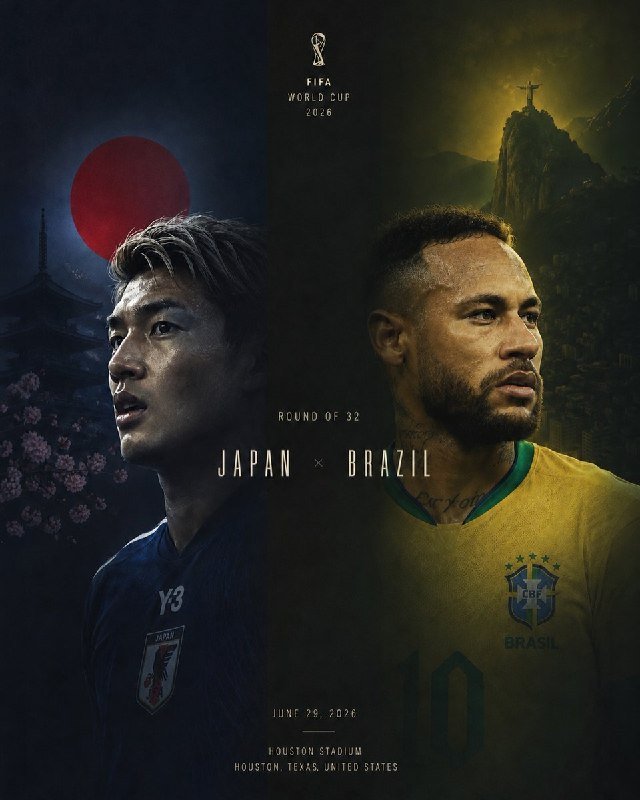
Carlo Ancelotti, the Italian manager who took charge of Brazil's senior men's team earlier this year, told reporters on 27 June 2026 that the Seleção are "finally on the right track" as the World Cup cycle sharpens, framing recent results as evidence that the rebuild is bedding in. The optimism is partly tactical, partly psychological — Ancelotti's preferred reading is that the squad has stopped searching for a post-Tite identity and started playing in one.
The honest reading is more cautious. Brazil's underlying performance data over the past four windows has been competent rather than commanding, and the team's record against ranked opponents remains uneven. Ancelotti's job is to convince a country of 215 million that the next few months constitute a project rather than a holding pattern. Whether that conviction survives the actual tournament will depend on what happens when the Seleção meet a side capable of pressing them high and breaking the lines.
What "on the right track" actually means
Ancelotti's comments, carried in ESPN's 27 June 2026 report, lean heavily on the eye-test argument: Brazil are recognisably Brazil again, with a shape that the manager has been drilling since his appointment. The implication is that the early-2026 wobble — a run of draws against mid-tier opposition and a loss to a South American rival — has been diagnosed and corrected rather than papered over.
The structural problem is that Brazil's recent calendar has not offered a clean read. Several of the fixtures Ancelotti pointed to as evidence of progress came against opponents ranked outside the top twenty. Friendlies in this window serve dual purposes: they let a new coaching staff install patterns, and they let a federation manage a national mood bruised by the 2022 quarter-final exit. Both purposes are real. Neither is the same as proof that Brazil can beat France, Argentina or England over ninety minutes in a knockout game.
The counter-narrative inside Brazil
Inside Brazilian football, the Ancelotti appointment was sold as a prestige move — a four-time Champions League-winning coach who could give the Seleção a tactical sophistication that had eluded his predecessors. The pitch inside the federation, as covered in ESPN's report, was that Ancelotti's club-honed man-management would translate to a national-team context.
The counter-narrative is older and louder: Brazil's identity problem is not a coaching problem. It is a development problem. The pipeline that produced the 2002 team — Robinho, Kaká, Ronaldinho, Adriano emerging from a domestic league where young attackers played 60-plus senior games a season — has been thinned out by the relentless Europeanisation of Brazilian talent. The best under-23s are at Manchester City, Real Madrid, Chelsea and Paris Saint-Germain by 19 or 20, and the Brazilian league, while still producing, no longer develops them in the same way. Ancelotti can coach what he inherits; he cannot coach what never arrives.
What the structural picture looks like
Read across all major footballing nations, the pattern is similar but uneven. European federations have formalised their academy-to-senior pathways around the under-15, under-17, under-19 and under-21 tiers, and they have the first-mover advantage when talent emerges inside their borders. Brazil's competitive advantage has historically been that its best teenagers were forced to compete as men in Serie A and the Brasileirão at an age when their European peers were still on the periphery of academy football. That pipeline has narrowed, and the consequence shows up in the senior squad: a thinner bench, fewer game-changing substitutes, and an over-reliance on a small core of world-class starters.
Ancelotti's tactical response — higher defensive lines, more structured pressing triggers, a clearer shape in possession — is the right one for the players he has. But it is also, in plain terms, the kind of scheme that requires depth. When the plan works, it minimises the talent gap. When it doesn't, the gap reasserts itself quickly, because there is no second wave of equivalent quality waiting in the dressing room.
Stakes for the Seleção and for Ancelotti
The next several months carry asymmetric risks. For Brazil, a deep run — semi-final or beyond — would ratify Ancelotti's appointment and buy the federation another cycle of patience. An early exit, particularly a group-stage exit, would re-open every question that his hiring was meant to close, including the federation's structural relationship with the domestic game and the calendar that governs it. For Ancelotti personally, a failure at a World Cup with Brazil would be the loudest failure of a managerial career that has, until now, repeatedly converted pressure into trophies. He has never lost a major final in club football; he has never coached Brazil at a World Cup.
What remains genuinely uncertain is whether the recent form is a trend or a window dressing. The sources do not provide a complete record of xG or pressing data across Brazil's 2026 calendar, and the eye-test argument, however confidently Ancelotti deploys it, is not the same thing as performance data over a meaningful sample. The reasonable position is to credit the manager with stabilisation while reserving judgment on whether stabilisation is the same as elevation.
This publication's framing diverges from the federation-friendly reading by treating the "right track" claim as a hypothesis rather than a finding, and by foregrounding the structural thinning of Brazil's development pipeline — a question that tactical choices alone will not solve.
Wire provenance
This editorial synthesis draws on the following public wire/social posts:
- https://en.wikipedia.org/wiki/Carlo_Ancelotti
- https://en.wikipedia.org/wiki/Brazil_at_the_FIFA_World_Cup
- https://en.wikipedia.org/wiki/Campeonato_Brasileiro_S%C3%A9rie_A