Azizi's three banners: how Tehran's chief of staff is reframing the Hormuz standoff
In three Telegram posts on 27 June 2026, Iran's chief of staff laid out a single message: the Hormuz chokepoint is secure, the anti-American slogan is policy, and Western audiences need to hear the rest.
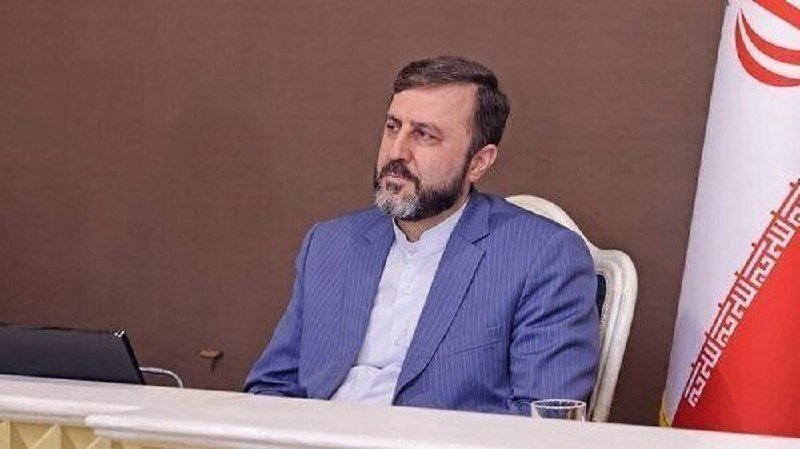
At 08:08 UTC on 27 June 2026, an audience of English-speaking Iran-watchers scrolling Tasnim's wire saw a single-sentence thesis land in their feed. Mohammad Bagheri, chief of staff of the Iranian armed forces, used an American Human Rights Review Week address to argue that "courageous storytelling and international follow-up against American crimes are necessary." Five minutes later, at 08:13 UTC, the same channel posted a second claim: the Strait of Hormuz sits under the "intelligent management" of the armed forces and the IRGC, and Iran is ready to "deal decisively with any violation of the memorandum." At 08:24 UTC came the third: the slogan "Death to America" will continue until Washington's "hostile behavior" changes. Three posts, one continuous speech, one framing.
The pattern is worth reading closely because Tehran is doing something more deliberate than it is usually credited for. It is packaging three otherwise unrelated claims — counter-narrative warfare, maritime control, ideological permanence — into a single editorial week and exporting them through English-language state media. The result is a tidy counter-policy: every Western wire story about Hormuz that quotes an Iranian official now arrives bundled with an indictment of U.S. conduct and a refusal to soften a forty-year-old slogan.
What the three claims actually say
The first item is the softest. Bagheri's call for "enlightenment" and "honest" international coverage frames Iran's posture as defensive — a country wronged by U.S. policy, appealing to a global public that the Western press, in his telling, has failed. The second is the hardest. The Strait of Hormuz claim is operational language: the IRGC's naval units, the regular Navy, and the basij-pattern auxiliary craft are positioned and rehearsed to respond to any breach of the memorandum — a term that, in Iranian usage, covers the traffic regime and tanker-inspection protocols negotiated intermittently with Gulf neighbours and indirectly with Western powers. The third is symbolic. Bagheri links the longevity of the anti-American slogan to a behavioural test applied to Washington, not to Tehran. The slogan persists because the policy persists; the slogan ends when the policy changes.
What the framing invites us to miss
Western coverage will, with some justification, lead on the slogan. It is the most quotable line and it slots neatly into an existing storyline about Iranian ideological permanence. That lead does some real work in Washington and in Gulf capitals where domestic audiences expect their officials to denounce the chant. But the slogan is the third claim, not the first. By the time a reader has absorbed the operational statement about Hormuz, the chant reads as consequence rather than cause. That ordering is itself a piece of messaging.
The deeper blind spot is the memorandum. Bagheri does not name the document, the parties to it, or the specific violation he has in mind. That is the term on which any future negotiation turns. If the memorandum is read narrowly as the tanker-inspection arrangement of recent years, the threat is calibrated. If it is read broadly as any flag-state rights Iran asserts in the strait, the threat envelope widens considerably. Tehran's English-language posts consistently leave that ambiguity in place.
What the Western wire line looks like
The standard Western framing is that Iran uses Hormuz as a permanent leverage point — periodic seizures of commercial tankers, harassment of U.S. Navy transits, and rhetorical escalation timed to nuclear-file negotiations. By that reading, Bagheri's three posts are a coordinated pressure campaign aimed at whichever capital will be the next to engage Tehran. The slogan is the noise; the strait is the instrument. That reading is internally consistent and supported by a long pattern of incidents.
The Iranian counter — visible in the same three posts — is that Hormuz is a shared waterway managed responsibly by the regional power with the largest coastline, and that the chant is a symptom of an unresolved historical grievance rather than an end in itself. The structural argument underneath both readings is that the strait is the only card Iran holds that the United States cannot neutralise through sanctions, and that the chant is the cheapest way to keep that card visible without spending it.
What to watch next
The immediate question is whether any third party — Oman, Qatar, Iraq, China — treats Bagheri's operational claim as an opening or a closure. Iranian messaging tends to harden around shipping incidents and soften around negotiated inspections. The next tanker detention, or the next freedom-of-navigation transit by a U.S. or Royal Navy vessel, will tell us which side of that cycle we are on. The harder question, and the one the slogan keeps alive, is what "hostile behavior" would have to look like in Tehran's eyes before the chant is retired. On the evidence of 27 June, the answer is: nothing currently on offer.
This publication treats Iranian state-media English output as a primary source for Tehran's framing while reserving judgment on the operational facts, which require independent maritime tracking and shipping-industry confirmation.
Wire provenance
This editorial synthesis draws on the following public wire/social posts:
- https://t.me/tasnimnews_en
- https://t.me/tasnimnews_en
- https://t.me/tasnimnews_en