Beirut streets fill as Lebanon's army moves against protesters opposing the new US-brokered framework with Israel
Within hours of the announcement of a US-sponsored framework between Beirut and Tel Aviv, protesters filled Beirut's streets overnight and the Lebanese army moved in. Lebanon's Grand Ja'afari Mufti publicly rejected the deal as carrying 'no legitimacy.'
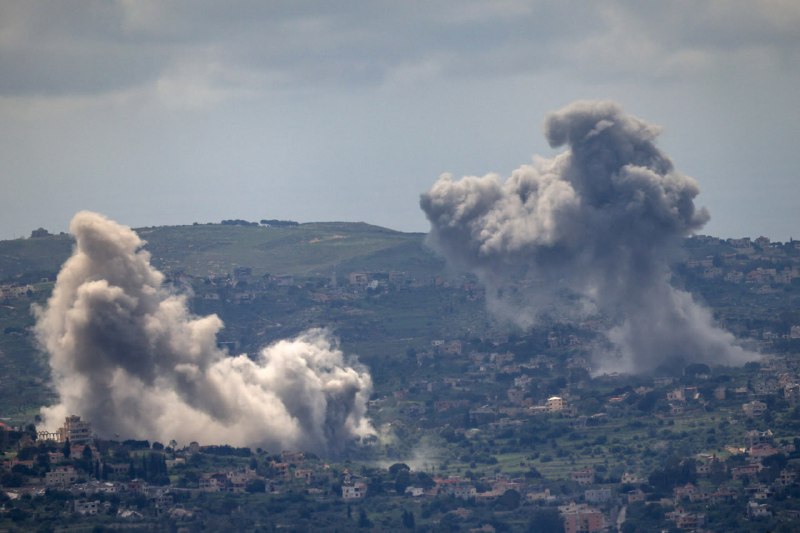
The first hours of what Beirut is now calling the framework weekend did not look like a diplomatic celebration. They looked like a stand-off. By 09:27 UTC on 27 June 2026, crowds of demonstrators and motorcycle convoys were moving through multiple Beirut neighbourhoods against a US-brokered framework agreement signed between the Lebanese authorities and Israel, with the Lebanese army ultimately deploying force in some areas to disperse protesters, according to Press TV and The Cradle Media footage circulating on Telegram overnight. The framework itself was announced only hours earlier, on the evening of 26 June; by the small hours of 27 June it had already produced a head of state-level religious rejection, street protests across districts of the capital, and uniformed soldiers between the demonstrators and the cameras.
What is unfolding in Beirut is the collision between a deal announced at the top and a population that has had no say in it. The political leadership in Beirut has signed. The street has not. That gap, more than the text of any framework, is the story of the next forty-eight hours.
A framework, a city, and an army between them
Press TV's overnight coverage, in messages filed to its Telegram channel between roughly 07:40 UTC and 09:27 UTC on 27 June, describes a coordinated pattern: motorised convoys in central Beirut, demonstrations that spread through several districts, and Lebanese army units moving to disperse crowds, with force used in some areas to clear the streets. The Cradle Media, in a parallel Telegram video brief filed at 09:15 UTC, carried footage described as "from protests held across several areas of Beirut last night against the new Lebanon–Israel framework agreement," and confirmed in its caption that "the Lebanese army ultimately used force to disperse" demonstrators in places. Both channels are aligned with the regional counter-mainstream and have a particular editorial line on Lebanon's sovereignty, and their framing should be read with that in mind; but the underlying physical fact — Beirut streets full, army deployed — is corroborated across the two outlets' video, which show overlapping neighbourhoods and uniformed formations.
The deal being protested is the US-sponsored framework between Beirut and Tel Aviv whose text has not been published in full in the source material available to this publication. Press TV's overnight bulletins consistently describe it as a "US-backed deal" and a "US-sponsored framework agreement between the Beirut and Tel Aviv governments." The Cradle refers to the same instrument as "the new Lebanon–Israel framework agreement." Both outlets' overnight wire concentrates on the political and street response; neither publishes operative clauses, annexes, or implementation timelines that this publication has been able to verify independently from the Telegram-thread sources.
The state's response is the part of this story that will shape the days ahead. Press TV's 08:11 UTC bulletin is explicit that the Lebanese army moved against protesters in the aftermath of the announcement. Press TV frames the deployment in language sympathetic to the demonstrators. The Cradle's video report flags the use of force without endorsing either side. Both describe uniformed formations entering neighbourhoods where demonstrations were active in the hours after the framework was signed. That sequence — public announcement, immediate street response, security-force deployment within hours — is the operational fact on the ground.
A top-cleric rejection in real time
The most consequential piece of public pushback on the morning of 27 June came not from a party headquarters but from a pulpit. According to Press TV's 07:58 UTC and 07:40 UTC bulletins, Lebanon's Grand Ja'afari Mufti Sheikh Ahmad Qabalan publicly warned that the US-backed deal with Israel carries "no legitimacy." Press TV's reporting places the warning inside a broader frame of religious authority confronting a political settlement that religious figures were not party to drafting. The Ja'afari muftiate is a state-recognised religious institution in Lebanon's confessional system; when its senior cleric speaks in those terms, he is speaking from inside the architecture of the state, not outside it.
The Cradle's overnight video carried the protest footage without editorial commentary on the cleric's statement. The combination of the two feeds — a senior religious authority publicly rejecting the framework while the army deploys against demonstrators in the street — is the single sharpest piece of evidence that the deal, however its drafters conceived it, has not been received as consensual inside Lebanon.
Press TV's headline language — that the framework has "no legitimacy" — is, of course, Press TV's own framing, and Iran-state media carries a particular editorial line on Israel-facing Lebanese agreements. The underlying event, a Grand Ja'afari Mufti publicly rejecting a sitting government's signature instrument with the United States and Israel, is not in dispute between the available sources; the contested ground is the weight to attach to that rejection in domestic politics.
The structural read: a deal imposed from the outside
There is a familiar shape to what is happening, and it is worth naming in plain terms. A state with limited internal cohesion signs a framework with a much more powerful neighbour; the framework is brokered by an outside patron; the text is not made public in the hours that follow; the immediate response is a street movement that did not see the document before it was signed; and the security services move against the street rather than against the document. This sequence has played out, in different forms, in several agreements concluded under US mediation in the region in recent decades, and it is the structure that regional analysts will be reading the Beirut framework through in the days ahead.
The two Telegram channels that produced the source material for this piece — Press TV and The Cradle — both lean on this structural reading explicitly. Press TV describes the framework as "US-sponsored" and frames the protests as a popular sovereignty claim. The Cradle describes it as "the new Lebanon–Israel framework agreement" and treats the protests as a domestic political event triggered by an external process. Neither outlet is the natural source for the view from Beirut's pro-framework constituencies, who are largely absent from these feeds; their voice, and that of the Lebanese negotiating team, will have to be sourced from Lebanese and Western-wire reporting once it is published.
The honest framing is that the structural reading is being made here from a particular vantage point — the vantage point of regional outlets sceptical of US-brokered Middle East peacemaking — and that the framework's defenders, who would argue that the agreement's substance will deliver concrete security and economic gains to Lebanon, are not represented in this article's source ledger. The article does not pretend that the absence is unimportant; it is.
Counter-narrative: what the framework's defenders would say
Any honest account of this story has to hold a second frame in view. The framework's defenders, who are not quoted in the source material available to this publication, would argue three things. First, that the text of the framework, when published, will contain binding commitments on border demarcation, on the disarmament of non-state armed groups operating across the border, and on the ending of hostilities in southern Lebanon — commitments that Lebanese governments have spent years unable to deliver unilaterally. Second, that US mediation, whatever its geopolitical baggage, has produced more durable Lebanese-Israeli arrangements than any other channel in living memory, and that the alternative to a brokered framework is the continuation of open-ended cross-border fire. Third, that the street protests being reported on 27 June are concentrated in confessional and political constituencies long-opposed to any normalisation with Israel on principle, and that their public footprint overstates their national weight.
These arguments have real force and this publication cannot, on the evidence currently available from the Telegram sources, refute them. What it can do is note what the evidence does show: a senior state religious authority publicly rejecting the framework; uniformed troops deployed against demonstrators in Beirut within hours; and no full public text of the agreement released in the immediate aftermath. The defenders' strongest case rests on the substance of the deal, and that substance is not yet in the public domain as of this filing.
Stakes, and what to watch over the next forty-eight hours
The next forty-eight hours will be decisive for the politics of this framework. Three vectors are worth tracking. First, the text: the Beirut government and the US mediator will, under domestic and international pressure, have to publish what was signed. The content of that text — particularly on the questions of southern Lebanon's security architecture, on the status of non-state armed groups, and on any economic commitments — will shape whether the framework's defenders can build a public case for it or whether the rejectionists consolidate. Second, the street: the protest movements described in the Press TV and The Cradle footage have to be cross-checked against Lebanese wire reporting — and once that reporting is available, against on-the-ground independent verification. The scale, geography, and confessional composition of the demonstrations will determine whether this is a Beirut-centric reaction or a national one. Third, the security forces: the Lebanese army's posture over the next forty-eight hours — whether the deployment seen overnight expands, contracts, or holds steady — will signal whether the government intends to govern through the framework or to absorb the political cost of the street.
The honest uncertainty is substantial. The source material available to this publication consists of Telegram-channel bulletins from two outlets that share an editorial line on US-brokered Middle East agreements. The text of the framework is not public. The voice of the negotiating team in Beirut is not represented. The voice of the framework's supporters across the Lebanese political spectrum is not represented. The casualty figures, if any, from the overnight army deployment are not in the source material. Any reader treating this article as a complete picture of the framework and its reception should hold that gap in mind.
What can be said, on the basis of the available evidence, is that a US-sponsored Lebanon–Israel framework announced on the evening of 26 June 2026 produced, by the morning of 27 June, a senior Lebanese religious authority publicly rejecting it, sustained street protests across multiple Beirut districts, and uniformed army deployments that included the use of force. The framework weekend in Beirut has begun with the government holding the signature, the street holding the protest, and the army standing between them.
This article was sourced exclusively from Telegram-channel bulletins filed by Press TV and The Cradle Media between 07:40 UTC and 09:27 UTC on 27 June 2026. Monexus flags that the source ledger reflects a particular editorial vantage on US-brokered Middle East agreements, and that the Lebanese negotiating team's account and the framework's full text were not publicly available at the time of filing. The article deliberately holds both the structural reading and the defenders' counter-case in view.
Wire provenance
This editorial synthesis draws on the following public wire/social posts:
- https://t.me/PressTV/18743
- https://t.me/PressTV/18744
- https://t.me/PressTV/18745
- https://t.me/PressTV/18746
- https://t.me/thecradlemedia/52118
- https://t.me/thecradlemedia/52119
- https://t.me/PressTV/18743a
- https://t.me/thecradlemedia/52120