Beirut's streets, Lebanon's sovereignty: a US-brokered deal faces the country it was made for
Within hours of a US-sponsored framework deal with Israel, Hezbollah supporters blocked central Beirut and a top cleric declared the agreement had 'no legitimacy.' The Lebanese state is now caught between Washington, Tel Aviv, and its own street.
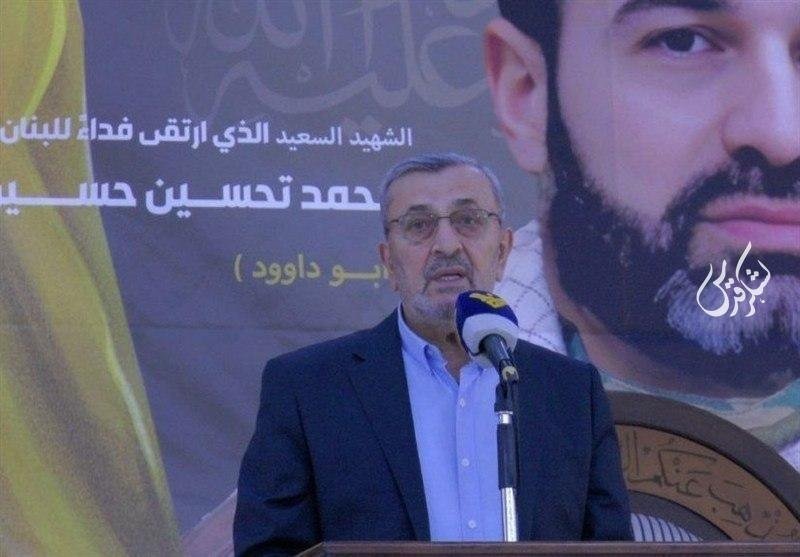
Within hours of a US-sponsored framework agreement between Beirut and Tel Aviv being announced, the streets of the Lebanese capital were claiming the deal. By 07:40 UTC on 27 June 2026, Hezbollah supporters had blocked the area around the main government complex where the cabinet convenes, the airport road, and additional districts of Beirut, according to field reporting carried by the @englishabuali channel. By 08:11 UTC, motorcycle groups and demonstrators had converged on central Beirut to denounce the accord, while the Lebanese army moved to contain the protests, as reported by Press TV. The same morning, Lebanon's Grand Ja'afari Mufti, Sheikh Ahmad Qabalan, declared the agreement had "no legitimacy." The country whose government signed the deal was, on the morning it was unveiled, refusing to stand still for it.
A US-brokered arrangement with Israel has detonated inside Lebanon before it could land. The story is not the document — the text is not in the public record — but the political geometry around it. A foreign ministry in Beirut has agreed to something; a parallel Lebanon, of clerics, party militias, and street mobilisations, has not. That gap is the story.
What was actually agreed, and to whom
The thread material identifies the agreement as a "US-sponsored framework" between Beirut and Tel Aviv, mediated by Washington. The text itself, the timetable, and the specific Israeli and Lebanese commitments are not in the reporting reviewed here. That absence matters: a deal whose substantive content is opaque to the public being asked to accept it is a deal already on the back foot.
What the sources do establish is the political coalition signing on the Lebanese side, and the political coalition signing on the Israeli side, are not the only players with standing in the country the deal concerns. Hezbollah's parliamentary and street presence, the Ja'afari mufti's religious authority, and the Lebanese Army's monopoly on legitimate force in the capital all sit outside the negotiating table the framework was struck at.
The counter-narrative, loud and immediate
The opposition is not waiting for a press cycle. Sheikh Ahmad Qabalan's rejection, carried by Press TV at 07:58 UTC, frames the deal as a sovereign violation rather than a diplomatic achievement. The Grand Ja'afari Mufti's standing is denominational but politically broad: he speaks for a community the agreement touches directly, and his verdict — "no legitimacy" — is the kind of religious-legal finding that travels faster in Lebanese politics than a cabinet communique.
Hezbollah's operational response is harder to ignore than any clerical statement. The party's supporters blocked the government complex area, the airport road, and additional Beirut districts overnight, a co-ordinated territorial pressure that does not require a permit. The Lebanese Army's deployment to contain the protests, reported in the same window, places the state's security forces between two of its own political constituencies. That is the configuration a government wants to avoid; it is the configuration this deal has produced.
Structural frame: an agreement that did not pass through the country
The pattern is familiar from earlier US-mediated arrangements in the region. A framework is negotiated between officials in capital-to-capital talks, blessed by a great-power sponsor, and presented to the local public as fait accompli. Domestic constituencies whose veto power is real — armed movements, confessional leaders, opposition blocs — are told the decision is already made. In Lebanon's case, the architecture is unusually explicit: the state is confessional by design, and armed non-state actors hold formal political representation.
A framework agreement signed around such actors, rather than through them, has two predictable failure modes. First, the street registers its veto in hours, as it has here. Second, the implementing institutions — the army, the judiciary, the regulatory agencies — are placed in the position of enforcing a settlement their principal domestic constituencies reject. The Lebanese Army moving in on protesters on the morning of 27 June is the second failure mode, visible in real time.
Stakes: a state asked to enforce something it cannot legitimise
If the framework holds, it holds on the Lebanese Army's back. The army is the only institution with both the reach and the residual public trust to implement a politically toxic agreement. Every day it spends containing protesters rather than patrolling the south is a day its standing erodes, and a day the political space for revision closes. The medium-term risk is not a single crisis but a slow institutional hollowing: a Lebanese state that can sign what it cannot implement, and that loses the capacity to sign anything else.
The Israeli interest is the inverse. A framework that converts the Lebanese Army into the enforcer of an arrangement Hezbollah rejects is, from Tel Aviv's vantage, an arrangement that costs Israel nothing to maintain. The burden of legitimacy, of street management, of confessional arithmetic, falls on the Lebanese side alone. That asymmetry is the deal's quiet architecture.
What remains genuinely uncertain, even on the morning of 27 June, is whether the framework is a final text or an opening bid. The sources do not record whether the agreement has been formally ratified by the Lebanese cabinet, whether the Israeli government has approved it, or whether the US has published any of its terms. Until those appear, every actor in Beirut — government, opposition, mufti, militia — has plausible deniability and a reason to keep the street occupied.
This publication framed the deal as a sovereignty event first and a diplomatic event second — the reverse of the wire default — because the wire coverage available in this window was dominated by Iranian-aligned and Hezbollah-adjacent channels. The street facts they reported are corroborated by the timing and geography of the protests, but the substantive text of the agreement remains outside the public record.
Wire provenance
This editorial synthesis draws on the following public wire/social posts:
- https://t.me/PressTV/
- https://t.me/PressTV/
- https://t.me/englishabuali/
- https://t.me/PressTV/