The Mouse That Wouldn't Die: How a 1928 Theft Built an Unreplicable $200B Enterprise
A single counterparty betrayal in 1928 — the theft of Oswald the Lucky Rabbit — set Walt Disney on a century-long campaign of vertical integration that no other studio has been able to copy.
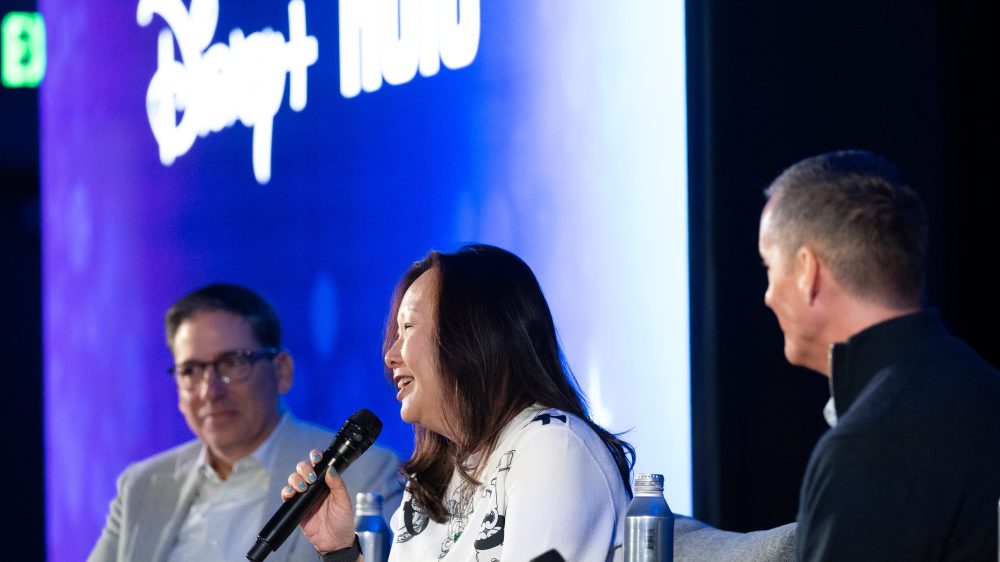
On 27 June 2026, the Acquired podcast published its most ambitious episode yet: a roughly five-hour narrative history of the Walt Disney Company, framed around a single argument — that Disney's IP flywheel is structurally unreplicable. Hosts Ben Gilbert and David Rosenthal spent the episode tracing the company's arc from Walt Disney's 1901 birth in Chicago through the 1966 opening of Walt Disney World in Florida, and the pattern they returned to again and again was the same: every competitive moat Disney built was downstream of a 1928 trauma that almost killed the studio before it began.
That trauma was the loss of Oswald the Lucky Rabbit. In 1928, distributor Charles Mintz — working with Universal — had quietly secured the rights to Oswald, the character Disney's team had created. Mintz then poached most of Disney's animators behind his back, leaving Walt with a near-empty studio and the bitter lesson that would govern every decision he made for the next four decades. As Rosenthal put it on the episode: the Oswald theft is the foundational trauma that drove Disney's lifelong obsession with IP ownership and vertical integration. Without Oswald, there is no Snow White vault. Without Snow White, there is no Disneyland. Without Disneyland, there is no Walt Disney World. Almost everything Disney has built since 1928 sits on top of that single counterparty betrayal.
This is a story about why that lesson turned into a $200 billion enterprise, and why — even after 100 years of visibility — no other studio has managed to build a comparable machine.
The character that won't age
The first reason Disney's flywheel works is structural, and it has nothing to do with management quality. Animation is a fundamentally different content business from live action. As Gilbert argued on Acquired, characters don't age, are always available, don't require paying star actors, and generate durable cultural memory that compounds across generations. A 1937 cartoon of a mouse can be sold to a four-year-old in 2026 with zero reshoot cost. A 1937 live-action film starring a 27-year-old actor cannot.
This is not a small advantage. It is the central reason the Disney vault — the strategic re-release cycle that keeps classic films out of circulation for roughly seven years before bringing them back to theaters — has no real parallel in Hollywood. Other studios have tried vault strategies and abandoned them, because their IP doesn't age as gracefully. A 1950s John Wayne western re-released to modern audiences is a period piece; a 1950s Disney animated feature re-released to modern audiences is, for a child, simply new.
Roy Disney later crystallised the principle in a line the Wall Street Journal picked up years later: "Our product is practically eternal." That phrase is the operational logic behind every reissue decision Disney has ever made. Walt himself made the point more quantitatively in 1951, noting that 25 million new children had been added to the potential re-release audience in just eight years. The vault doesn't work because Disney is cleverer than other studios. It works because the underlying asset class — animated characters — is the only content type that genuinely appreciates with age.
The flywheel, in five moving parts
Gilbert and Rosenthal spend much of the episode extracting the flywheel's structure into five repeatable elements. First, you need genuinely compelling new IP — there is no flywheel without a Snow White or a Mickey Mouse at the centre. Second, you maximise distribution in the core delivery vehicle, which in 1930 meant theatrical short subjects and today means Disney+ streaming and theatrical blockbusters. Third, you feed the IP into ancillary nodes — merchandise, fan clubs, daily newspaper comics, theme parks — so the characters appear in every corner of a child's life. Fourth, you park the IP in the vault for roughly seven years, then re-release it to a new generation that has no idea the film is "old." Fifth, you use parks and television as amplification nodes that drive demand back toward the core films.
What makes the model tick is the compounding. By 1934, royalty income from Disney merchandise had already exceeded revenue from film rentals. Within six months of Kay Kaye (or K. Kaye, as the hosts pronounced it) taking over the consumer products division in 1933, gross merchandise sales hit $6 million. By 1935, that figure was scaling to $70 million annually. Ingersoll sold 2.5 million Mickey Mouse watches over two years starting in 1933. The Mickey Mouse Club franchise, launched in 1929, scaled to 800 clubs with over 1 million members within a few years — more than Boy Scouts and Girl Scouts combined — at $25 per charter, before television existed, before the internet existed, distributed entirely through theater networks.
The flywheel was running at full speed within five years of the Oswald theft. It has not stopped since.
The $1.5M bet that wasn't
The conventional origin story of Disney's modern era is that Snow White and the Seven Dwarfs (1937) bankrolled everything that came after. The episode dismantles that story in detail. Snow White cost $1.5 million to produce, equivalent to roughly $35 million inflation-adjusted. It grossed $8 million in first-run rentals. Disney's actual producer share, per the 1940 IPO prospectus, was $4.5 million over a 1-year-9-month period. That is a spectacular return on a single film — but it was not enough to fund the construction of the new Burbank studio, which is what most of the cash went toward, alongside repayment of a $4.5 million Bank of America loan taken out after Pinocchio's commercial disappointment.
Walt Disney's framing at the time was characteristically blunt: "We had decided there was only one way we could successfully do Snow White, and that was to go for broke, shoot the works. There would be no compromise on money, talent, or time. We did not know whether the public would go for a cartoon feature, but we were darn sure that audiences would not buy a bad cartoon feature." That decision — to spend everything on a single bet rather than hedge — became the template. Snow White didn't fund the enterprise. It proved the model.
The 1941 animator strike nearly broke the model anyway. Disney laid off roughly 500 animators — taking headcount from 1,200 to 700 — and the studio's output collapsed. The strike's deeper legacy was a fracture in the relationship between Walt and his workforce that never fully healed. But the flywheel survived because by then the IP had value independent of any single production cycle. The characters — Mickey, Donald, Goofy, the dwarfs — were already durable cultural assets. The machine could run leaner and still produce returns.
Vertical integration by necessity, not strategy
A common reading of Disney's history is that Walt Disney was a brilliant strategist who deliberately built vertical integration ahead of his competitors. The episode pushes back on this. Buena Vista, Disney's self-distribution arm, was established in 1953 not because Walt suddenly discovered the virtues of controlling distribution, but because Disney didn't have the working capital to wait for theaters to pay them. As Rosenthal explained on Acquired: you cannot distribute before theaters pay you, and Disney didn't have the cash float to operate as a downstream studio until the mid-1950s. Vertical integration happened when it did because the underlying balance sheet finally supported it, not because someone in Burbank drew a five-year strategic plan.
The ABC partnership that financed Disneyland followed a similar logic. By 1953, Disney's postwar film business was struggling. Average annual US movie theater attendance per person had fallen from 40 visits in the 1920s to 32 in 1947 to just 14 by 1956. Television had gone from 9% US household penetration in 1950 to 65% by 1955. Hollywood's instinct was to fight TV. Walt's instinct was to embrace it. As he later recalled: "When television first hit, I went back to New York and I spent a week in New York just to study television. I had the feeling then that it was important and that we ought to get in it. The feeling of the motion picture business was that television was something we should fight or we should ignore it... I said television is going to be my way of going direct to the public, bypassing the middleman."
The deal structure was a masterclass in capital-efficient expansion. Disneyland was built as a joint venture: Walt Disney Productions held 34%, ABC held 34%, Western Publishing held 14%, and Walt Disney personally held 17%. Roy Disney negotiated the structure specifically so the public company would not be financially bankrupted by the park — it was a reputational bet by Walt, not a corporate one. ABC's financing package included $500,000 in equity in Disneyland Inc., $4.5 million in bank loan guarantees, and $5 million per year for seven years to produce the Disneyland TV show — at the time the largest TV programming contract in history. Total project cost ballooned from a $5 million budget to $17 million actual (roughly $210 million inflation-adjusted). The park opened on 17 July 1955, watched by 83 million viewers on ABC's live broadcast — nearly half of America. First-year attendance hit 3.6 million; year two exceeded 4 million, surpassing Grand Canyon and Yellowstone combined.
The structure worked because it solved three problems at once. It got the park built without traditional debt. It got Disney into television with an upfront-paying distributor. And it gave ABC a hit show and a stake in what would become a generational consumer brand.
The compounding machine, 1955 onward
Once the model was in place, compounding did the rest. Davy Crockett, the 1954–55 ABC TV miniseries, generated roughly $300 million in gross merchandise sales, with Disney earning about $7.5 million — more than the total cumulative first-run animated feature profits through 1957. Ten million coonskin caps sold in 1955 alone. The flywheel was now operating at full scale: a TV show fed merchandise, which fed park attendance, which fed brand awareness, which fed the next TV show.
By 1966, when Walt Disney died on 15 December, the company he founded had a market capitalisation under $90 million against $21 million in pre-tax earnings. Warren Buffett bought Disney stock that year, calling it "the buying opportunity of a lifetime." Today, Disney's parks and cruises segment alone does $36 billion in revenue and $10 billion in profit per year — twice the profit of the entire Entertainment division. The company is, fundamentally, a parks business that happens to also make films.
Buffett's 1966 buy turned out to be the trade of the century. As Gilbert noted on the episode, 99.95% of Disney's current market value was created after Walt died. Roy Disney built Walt Disney World's Magic Kingdom in 1971 for $400 million with no debt — a disciplined execution of a project Walt had envisioned as a far more ambitious "Experimental Prototype Community of Tomorrow" that never got built. The 27,000 acres of Florida land Disney secretly acquired for the project — twice the size of Manhattan — was the kind of patient-capital bet that defined the post-Walt era.
Why no one else has built it
If the Disney flywheel is so logical, why hasn't anyone else replicated it? The episode's answer is unsentimental: the flywheel requires patient capital, animation's structural advantages, and an ownership structure that can absorb multi-decade compounding. Almost no other studio has all three.
Animation is expensive, slow, and talent-intensive. Other studios have tried to build animation divisions and have generally wound them down within a decade because the returns are too distant for quarterly capital markets to tolerate. Disney's relative advantage — articulated repeatedly by Roy in language the Wall Street Journal later quoted — was that the company treated its IP as a compounding asset: "Our diversified activities are related and tend to complement each other... Integration is the key word around here. We don't do anything in one line without giving a thought to its likely profitability in our other lines." That sentence is the operational thesis of the entire enterprise. Most studios do not operate that way because their ownership structures, debt loads, and quarterly reporting rhythms do not allow it.
The Oswald trauma also left a legacy that is hard to overstate. After 1928, every Disney deal — the studio's ownership of its characters, its distribution relationships, its theme park joint ventures, its TV partnerships — was structured to ensure that the company could never again be stripped of its IP by a counterparty. That defensive instinct produced an unusually disciplined approach to deal-making. When Roy negotiated the Disneyland cap table, he did so specifically to protect the parent company from Walt's personal ambitions. When Disney finally launched its own distribution arm, it did so because the alternative was dependence on studios that could, in extremis, behave like Mintz had.
This is the through-line. A 1928 theft produced a defensive operating posture. The defensive posture produced vertical integration. Vertical integration, combined with animation's structural advantages and a willingness to let IP compound across generations, produced an enterprise that, as Buffett recognised in 1966, had been priced as if Walt's death would end the story. It did not. The flywheel was already turning. And unlike any of its competitors, it has never really stopped.
This piece draws on a single primary source — the AcquiredFM episode 'The Walt Disney Company: The most successful enterprise for monetizing human nostalgia' (27 June 2026). All named actors, direct quotes, and statistics trace to that episode's research. Where a claim sits in the public record — Snow White's production cost, the Disneyland cap table, the Buffett 1966 purchase — it has been cross-checked against the episode's source material but the episode remains the authoritative reference. Monexus treats this as a structural-history piece rather than breaking news.
Wire provenance
This editorial synthesis draws on the following public wire/social posts:
- https://www.youtube.com/watch?v=7EUVr0-V6DA