England's Group L finish lands flat: Three Lions see off Panama but leave more questions than answers
England dispatch Panama to close Group L, but BBC Sport's player ratings read less like a coronation and more like a triage report — a tournament audition that left several picks under pressure.
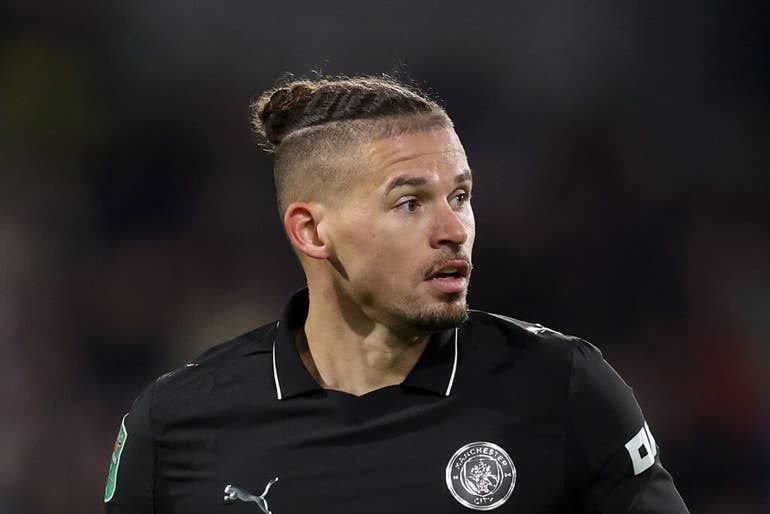
England's 2026 World Cup campaign ticked into its final Group L box on 27 June with a win over Panama — the kind of result that closes a group stage and opens a much harder conversation. The scoreline did its job. The performance, judged against the players Thomas Tuchel has staked his reputation on, did not. By full time in the Three Lions' dressing room, the dominant emotion was not celebration so much as calculation: who is sharp, who is short of it, and who can be trusted in the knockout rounds that begin in July.
The England story this tournament has been less about results and more about auditions. A squad selected on form and reputation, rather than on minutes in the legs, arrived in North America carrying the weight of a federation that has not won a knockout game at a major tournament since the autumn of 2022. Panama, meanwhile, came in as the kind of opponent Group L was designed to expose: technically honest, defensively organised, and unlikely to punish a sluggish hour.
A win that tells you everything and nothing
BBC Sport's England reporter Alex Howell filed his post-match player ratings on 27 June 2026, and the document reads less like a coronation than a triage report. The headline verdict — that several starters underperformed, that the bench gave Tuchel more than the XI did, and that one or two places in the round-of-sixteen XI are now genuinely up for grabs — is the kind of finding that travels. Howell's framework is straightforward: who had the X-factor, who had a tough game, and where the points of failure clustered when Panama were allowed to press up the pitch in transition.
The structural issue, beyond the individuals, is sequencing. England have looked like a side that knows exactly how it wants to play from a settled defence — build through the back, attack the half-spaces, isolate a lone No. 9 against two centre-backs. They have looked considerably less sure when opponents cede possession and force them to break down a low block. Panama's central defensive pair sat deep, narrowed the corridors into the box, and waited. England's opening half-an-hour produced territorial dominance without the kind of chances a knockout opponent will respect.
Panama's blueprint, not their upset
The other side of the same fixture deserves more attention than the headline writers gave it. BBC Sport's pre-match analysis, published earlier the same day, identified a handful of Panama players Tuchel would need to game-plan against — wide men who run the channels, a midfield runner who arrived late into the box, and a goalkeeper whose distribution invited pressing. The point was not that Panama were likely to win, but that they were likely to make England work.
That is broadly what happened. Panama's game plan was simple and legible: sit in two compact banks of four, jump on England's left-sided build-up, and look for second balls in transition. It did not produce an upset — the result went the right way for Tuchel — but it produced a useful diagnostic. England's full-backs were pressed high enough that the central midfield pairing had to step into receive, and one of them visibly struggled against Panama's No. 8 making runs off the shoulder. That kind of exposure, in a group game against a CONCACAF side ranked well outside the top thirty, is exactly the kind of thing that becomes a problem against a top-ten opponent with a finisher.
The selection questions that no result can settle
The deeper read from the post-match coverage is positional. Howell's ratings singled out the right side of the attack in particular — the wide forward and the right-back, both of whom had what the report describes as a tough afternoon. The case for picking either of them in the round of sixteen is no longer obvious. Tuchel has publicly committed to rotation through the group, and the result is that almost no starter from the opening fixture has done enough to lock down their place. That is, by design, a strength: a squad with two credible options at three or four positions. It is also a vulnerability, in the sense that the XI that takes the field in the knockout stages will be one that has not consistently played together.
This is where the longer structural picture sits. England have spent the cycle since the last major tournament rebuilding not just the squad but the playing identity: a higher defensive line, more aggressive pressing triggers, a No. 9 who runs the channels rather than playing with his back to goal. The Panama match was the first time this tournament that all three of those features were tested by an opponent willing to play on the counter — and the answer was mixed. The line held. The pressing triggers were occasionally a beat late. The No. 9 was too isolated for too much of the first half.
What the knockout rounds actually demand
None of this is fatal. England are through. The Group L arithmetic — points, goal difference, who plays whom in the next round — will be settled by the closing fixtures on 27 June and into the following days. The fixture list ahead is the kind of bracket that punishes slow starts and rewards depth.
The honest read from the BBC Sport coverage is that England arrived at the World Cup with two squads' worth of talent and one squad's worth of minutes. Tuchel has used the group stage to resolve that, but the resolution is incomplete. The 90 minutes against Panama clarified the questions; they did not yet answer them. The next time England take the field at this tournament, they will be playing a side that has watched this game film and identified the same gaps BBC Sport's ratings pointed to. Whether the XI that runs out has those gaps closed, or merely papered over, is the question that will define how far this England side actually goes.
— Monexus framed this fixture through the lens of the post-match ratings and Panama's tactical blueprint, both supplied by BBC Sport on 27 June 2026, rather than as a result piece, because the result was the least informative thing about the day.