Europe's June heatwave is testing more than temperature records
A late-June heat dome is rolling from France and Britain into Germany and Poland, breaking national temperature marks and exposing how unprepared northern Europe remains for the climate it is now entering.
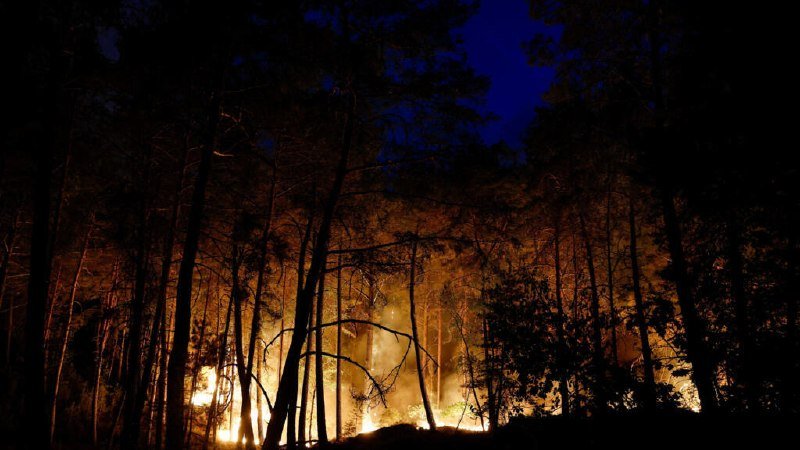
By the morning of 27 June 2026, the thermometer had become the day's loudest politician in western Europe. France, Britain, Switzerland and Germany have all posted record June temperatures inside a single week, and the system pushing the heat eastward is now setting up over Germany, with Poland next in line. According to France 24 and Al Jazeera, the run began in France, where deaths have already been reported, before the dome slid across the Channel into Britain, over the Alps into Switzerland, and on into the German interior, where a new national June record fell on Friday. The geography matters: this is no longer a Mediterranean story. It is a northern-European story now, and the infrastructure of those countries — housing stock, rail, schoolyards, hospital cooling, labour law — was not designed for it.
The pattern is unglamorous but consequential. A heatwave that walks across four national borders in a week exposes a continent whose heat planning was built for the south and borrowed for the north. What looks like a meteorological event is, in practice, a stress test of political choices made decades ago about how buildings are insulated, how workers are protected, and how candid governments are willing to be about the climate that is now arriving.
What the record books now show
The headline figures, drawn from the wire reporting on 27 June, are blunt. France, Britain, Switzerland and Germany have all recorded their highest June temperatures in the modern record, and Germany reset its own mark on Friday as the heat moved east. According to Al Jazeera's breaking-news line on 27 June 2026, several countries including the UK and Switzerland have posted record June temperatures, with deaths reported in France. France 24's same-day dispatch, filed at 07:56 UTC, frames the system explicitly as one rolling "across Germany towards Poland," with the German national mark broken the day before. That sequencing — west to east, with records falling at each stop — is the story, not any single city.
The practical consequences are already visible in the framing of the two reports: emergency services under strain, outdoor work curtailed, rail buckling in places that do not yet treat rail buckling as a recurring summer event. The wires do not yet give us a continent-wide casualty toll; what they give us is a clear, dated picture of a system in motion.
The counter-narrative that is harder to sustain
There is a temptation, every summer, to treat each new record as an isolated event — a freak, a wobble, an outlier. The counter-narrative, that these are now the floor rather than the ceiling, is harder to sustain politically because it forces decisions. If a northern European country accepts that its June baseline has shifted, then the case for retrofitting schools, rewrites of labour law, and the political cost of telling voters that air conditioning is no longer optional becomes unavoidable.
Both France 24 and Al Jazeera, in their 27 June coverage, treat the heatwave as a moving system rather than a curiosity, and both explicitly gesture at the next stop — Germany and then Poland. That is closer to the meteorological consensus than to the older journalistic reflex. The wires are not editorialising about causation; they are simply describing a heat dome that has not stopped breaking things.
The structural frame, in plain language
What we are watching is the closing of a gap between southern and northern European climate experience. For most of the post-war period, the Mediterranean handled the heat and the north handled the rain, and the two halves of the continent planned accordingly. That division no longer holds. A continent-wide infrastructure layer — buildings, transit, public health protocols, agricultural calendars — was built on the assumption that the north would remain temperate, and that assumption has now been falsified inside a single June.
The deeper pattern is a familiar one: a slow-moving physical shift runs ahead of political adaptation, and the cost of that gap is paid first by the people least equipped to absorb it. The wires we are reading on 27 June do not put it in those terms, but the structure is there in the reporting — deaths already reported in France, records falling in sequence, and the system still moving east.
Stakes, and what remains uncertain
If the trajectory continues, the practical stakes are concrete and near-term. Germany's record, set on Friday, will not be the last word in this heatwave; the system is rolling toward Poland, and Polish housing, labour and rail systems will face the same test the German ones are now failing. Public-health systems that treated extreme heat as a Mediterranean problem will be asked to respond at scale further north, with budgets and protocols that have not been built for it. Agricultural calendars will slip again, and the political pressure on governments to be honest about long-term adaptation costs will rise with each new mark in the record book.
What the available reporting does not yet resolve is the eventual toll. The wires confirm deaths in France and records in three other countries, but a continent-wide casualty figure for this event has not been published in the items we have. A clean read of the structural costs — labour days lost, crop damage, infrastructure retrofitting bills — will arrive only after the system passes. For now, the story is the records themselves, and the uncomfortable fact that they are now falling in countries that once read about them elsewhere.
Desk note: Monexus framed this as a structural adaptation story rather than a weather brief, drawing on France 24 and Al Jazeera's 27 June 2026 reporting and noting the explicit eastward trajectory toward Germany and Poland that both wires flag.
Wire provenance
This editorial synthesis draws on the following public wire/social posts:
- https://t.me/france24_en