Football Is the Last Honest Story the World Tells Itself
A literature column, a prediction market, and a Tunisian pitchside proposal all converge on the same stubborn truth: football still writes plots that no script room would approve.
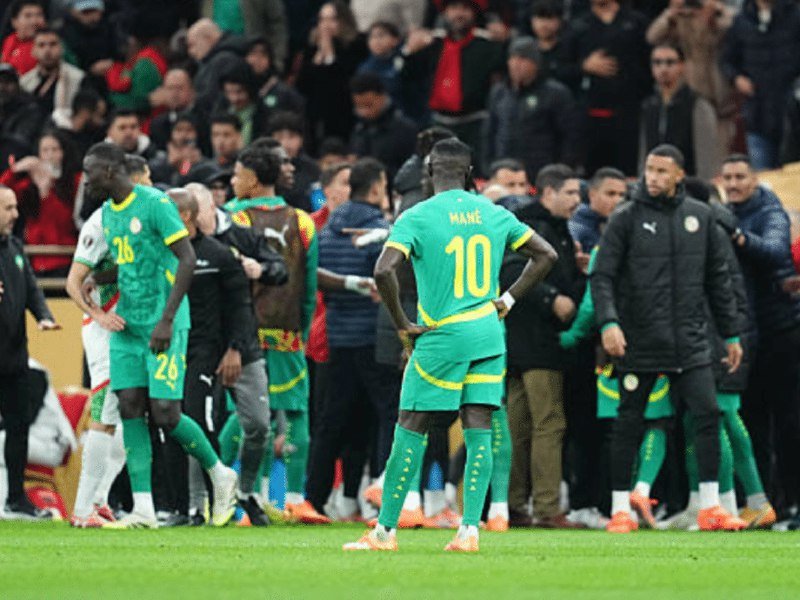
Football, the saying goes, is the beautiful game. It is also, increasingly, the only remaining global ritual that the script-room of professional public life has not managed to fully overwrite. On 26 June 2026, the Tunisian midfielder's girlfriend dropped to one knee in the stands during the Tunisia versus Netherlands group fixture; by the next morning, the clip had circled the planet, ranking above most cabinet reshuffles in the feed. It was not a story about geopolitics, currency architecture, or platform governance. It was a story about two people in a stadium, and the world chose to watch.
A column in Daily Nation the same weekend made the connection explicit. Nation Africa's literary desk framed the World Cup as an epic drama — a long-form narrative with heroes, betrayals, and improbable returns that no commissioning editor would green-light. The argument is unfashionable and worth taking seriously: in an era when most global stories are engineered for a six-hour half-life, football still produces plots that take ninety minutes to resolve and another week to digest. The prediction markets agree, in their cold probabilistic way. On 26 June, the Netherlands sat at roughly six per cent to lift the trophy on Polymarket's World Cup stage-of-elimination board — long enough to be plausible, short enough to keep the book honest. Markets do not flatter. They price the gap between hope and likelihood, and they do it in public.
The literary case
The Nation column is not nostalgia. It is a working claim: that the World Cup is the closest thing the world still has to a shared primary text. Other candidates — the Olympic opening ceremony, the Eurovision final, a papal funeral — have either narrowed into regional audiences or been captured by production values that smother the spontaneity. The pitch-side proposal in Tunisia is a clean example of the form. No broadcaster planned it. No federation approved the choreography. The camera found it because the camera is always there, and what it found was older than television: a public promise, in front of witnesses, in the middle of something larger than either of the people involved.
The market's colder reading
Polymarket's six per cent on the Dutch is a useful counterweight to the literary case. It says, in effect, that the Netherlands are a credible but not favourite contender — that the epic frame does not require a happy ending. A prediction market is indifferent to narrative. It is a clearinghouse for the gap between what fans believe and what the available information supports, and on 26 June the gap on the Dutch was wide enough to leave room for disappointment and narrow enough to keep punters interested. The juxtaposition is the point. Football sustains its hold precisely because it runs two registers at once: the literary one, which the Nation column writes, and the probabilistic one, which Polymarket prices. Neither cancels the other. They co-exist, and the fan reads both.
What the proposal was actually about
The Tunisia–Netherlands proposal, on its surface, has nothing to do with the tournament's competitive arc. But its placement matters. Stadiums have become the default backdrop for the kind of public commitment that previous generations reserved for town squares or family compounds. The choice of venue is not incidental; it borrows the gravity of the occasion. In a media environment where private milestones have been steadily privatised — weddings live-streamed to guests, engagements announced to algorithms — choosing a World Cup group game as the site of a proposal is a small act of reclamation. The crowd is the congregation. The pitch is the altar. The scoreline is the weather.
The structural point
There is a broader pattern here that the wire services will not spell out. Across the last decade, the major global narratives have been consolidated — fewer independent outlets, fewer platform-neutral venues, more stories that pass through a small number of algorithmic funnels before reaching a reader. Football is one of the few mass phenomena that still resists that compression. A goal is a goal; the camera angle does not change its meaning. A pitch-side proposal is what it appears to be. The Nation column can read the tournament as epic drama because the source material is still recognisably human. Polymarket can price it as a probabilistic tree because the matches are still verifiable events with countable outcomes. Both operations depend on a substrate that has not been fully financialised, fully narrative-captured, or fully platform-mediated. That substrate is shrinking elsewhere. It is not yet gone here.
What remains uncertain
The literary case is unfalsifiable, and the market case is only as honest as its liquidity. Polymarket's six per cent on the Netherlands is a snapshot, not a verdict; the line will move with every group game, every injury bulletin, every managerial press conference. The Nation column is one regional reading of a global event, written from a Kenyan literary desk, and it speaks for a particular tradition of readers who already treat football as text. And the proposal clip, viral as it is, will be re-cut, re-narrated, and re-platformed within hours — its meaning already beginning to drift away from the moment it documented. What the sources do not specify, and what no wire will, is whether the next World Cup will still offer the same combination of literary depth and market honesty. The odds are longer than six per cent.
Desk note: Monexus frames the World Cup as a cultural and economic signal — reading the pitch-side proposal against Polymarket's price on the Dutch — rather than as a match report. Wire coverage led on the scoreline; this piece reads the weekend as a small case study in what global attention still looks like when it has not yet been fully captured.
Wire provenance
This editorial synthesis draws on the following public wire/social posts:
- https://x.com/polymarket/status/2070582279122956288