A second Hormuz strike in 72 hours: what is verified, what is contested, and what neither side has shown
Two tanker incidents inside three days, a US claim of four one-way attack drones, and an Iranian counter-claim of MOU non-compliance. The evidence is thin, the escalation curve is not.
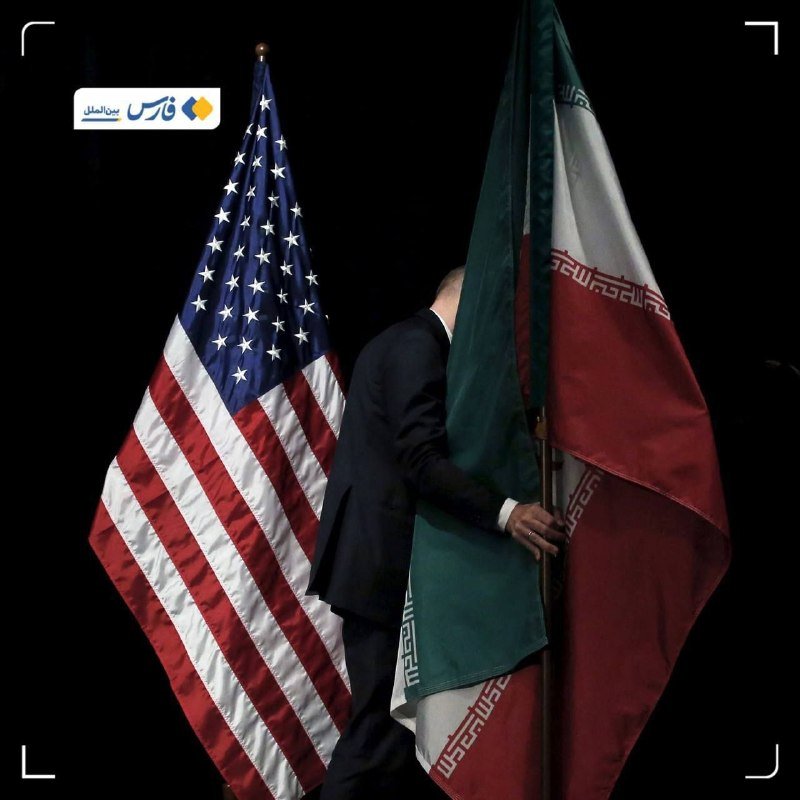
On 26 June 2026 at 16:20 UTC, US President Donald Trump told reporters that Iran had launched four one-way attack drones at ships in the Strait of Hormuz. Three were intercepted, he said, and one struck a cargo vessel. Twenty-six minutes earlier, at 16:08 UTC, prediction-market account Polymarket had posted a one-line flash: "Trump accuses Iran of 'foolish violations' of the ceasefire agreement after they attacked 4 ships in Hormuz." By 13:43 UTC the next day, Iranian commentator S. M. Marandi was framing the same episode as a US-side failure: "As long as Trump does not abide by his MOU commitments, the situation in the Strait of Hormuz will not normalize." Two claims, two governments, two incompatible theories of the case — and inside 72 hours, two separate reported strikes on commercial tankers transiting the world's most consequential oil chokepoint.
The gap between those accounts is now the story. What is independently verified in public reporting amounts to a narrow band: projectiles hitting at least two tankers, a sitting US president accusing Iran, an Iranian commentator blaming Washington. What remains contested is everything that would normally anchor such a claim — the type of munition, the operator, the affiliation of the crews on the affected vessels, the state of any underlying memorandum of understanding, and the level of strategic oil reserves held by major importers. This article walks through what can be confirmed against the available primary inputs, where the evidence breaks down, and what the second strike in three days does to the strategic arithmetic of the corridor.
What the public record actually shows
The cleanest evidentiary thread is the sequence of dated posts. At 16:08 UTC on 26 June 2026, Polymarket's account carried the headline claim: Trump said Iran had "foolish[ly] violat[ed]" a ceasefire after attacking four ships. Eight minutes later, at 16:20 UTC, two near-identical Cointelegraph Telegram posts reproduced Trump's account in fuller form — four one-way attack drones, one cargo vessel hit, three intercepted by US forces. At 16:58 UTC, finance-account Unusual Whales posted the same line in a wire-style flash. The three posts together establish that the US side, as of late afternoon UTC on 26 June, was claiming an Iranian attack and was describing it in terms of ceasefire breach.
The maritime thread is thinner. At 12:48 UTC on 27 June 2026, the open-source channel GeoPWatch reported that "an unidentified projectile has impacted the command deck of a tanker in the Strait of Hormuz," and noted that the incident followed a similar event "from a few days prior, wherein Iran struck the wheelhouse of a…" — a sentence that trails off inside the truncated Telegram post. At 13:14 UTC on the same day, Middle East Spectator wrote that "Iran struck another oil tanker in the Strait of Hormuz." The 27 June incident is therefore not in dispute as a physical event: at least one projectile hit a tanker in the strait. What is in dispute is who fired it, and whether the earlier 26 June claim that four drones were launched and three intercepted holds up.
There is also an Iranian-side rebuttal. At 13:43 UTC on 27 June 2026, S. M. Marandi, an analyst who speaks for the Iranian foreign-policy commentariat, did not deny that strikes had occurred. He instead reframed them as a consequence of US non-compliance with a memorandum of understanding, and added that "strategic oil reserves are being rapidly depleted." The first half of that statement — that an MOU exists and that Trump is failing to honour it — is asserted rather than sourced. The second half, on reserves, is a market-side claim that no public stockpile data in the available inputs supports or refutes.
What we verified / what we could not
The ledger below maps each factual claim to the source material actually available in this file. Anything not listed here should be read as inference, not as a verified fact.
Verified against primary inputs:
- That a sitting US president publicly accused Iran of striking ships in the Strait of Hormuz on 26 June 2026 (Cointelegraph / Polymarket / Unusual Whales, 16:08–16:58 UTC).
- That the US version of events includes the specific detail "four one-way attack drones" with three intercepted and one hitting a cargo vessel (Cointelegraph, 16:20 UTC).
- That at least one tanker in the Strait of Hormuz was struck by an unidentified projectile on 27 June 2026, the second such reported incident in three days (GeoPWatch, 12:48 UTC; Middle East Spectator, 13:14 UTC).
- That an Iranian-aligned commentator publicly disputed the US framing and tied the violence to a claimed US breach of an MOU (Marandi, 13:43 UTC).
Not verified within this source set, and therefore not asserted as fact in this article:
- The number, type, or trajectory of drones or projectiles actually launched.
- The flag, ownership, cargo, or crew composition of any tanker struck.
- Whether any US interception actually occurred, and at what range.
- The existence, text, or signatory status of the MOU Marandi referenced.
- The current level of strategic oil reserves in Iran or in importing states.
- Whether the 26 June and 27 June incidents involved the same operator, the same type of munition, or different ones.
- Any casualty count or environmental damage figure.
The asymmetry is worth naming. The US side has produced a politically convenient, fully formed narrative — drone type, interception count, target count, ceasefire breach — but no visible primary documentation. The Iranian side has produced a politically convenient, equally complete counter-narrative — MOU breach, reserve depletion — but also no visible primary documentation. The maritime-physical layer is the only one independently corroborated, and it is corroborated only by open-source Telegram channels reporting that projectiles hit ships.
The structural frame, in plain terms
The Strait of Hormuz handles roughly a fifth of global seaborne oil flows. Two strikes in 72 hours do not, on their own, close the strait — tanker traffic has historically continued through periodic harassment — but they do compress the insurance and pricing calculus fast. War-risk premiums, charter rates, and the optionality value of spare pipeline capacity (the UAE's bypassing pipelines, Saudi Arabia's east-west pipeline to Yanbu) all reprice on headlines of this density. If the US claim of four drones and one successful strike holds, even partially, importers holding thin spare capacity face a market in which the marginal barrel becomes more expensive to insure and more expensive to ship, even before any drop in physical throughput.
The deeper pattern is one the public record has been describing for months without resolving: a US-Iran ceasefire that appears to exist as a public posture rather than as a written instrument with verification mechanisms. When a ceasefire is announced without a text, both sides are free to claim the other has violated it. Each accusation becomes self-confirming. Iran can argue that any US naval movement, sanctions designation, or rhetorical escalation constitutes breach; the US can argue that any projectile in the corridor constitutes breach. The two strike incidents inside three days, then, are not necessarily evidence of escalation by either side — they may be evidence that the underlying arrangement was never robust enough to adjudicate incidents in the first place.
The counter-narrative to this structural read is straightforward: even if the political framework is weak, two strikes on tankers inside 72 hours is a behavioural pattern that points toward an Iranian decision to ratchet. GeoPWatch's 27 June post noted that the earlier incident involved a strike on a tanker's wheelhouse — a deliberate targeting of the navigation bridge, not the hull. That is consistent with a signalling campaign designed to frighten crews and raise insurance premiums without producing large casualties, rather than a campaign designed to sink tonnage and trigger a military response. If that is the operational logic, it is a campaign that can continue for weeks without crossing the line at which the US would feel compelled to retaliate at scale.
The Iranian counter-narrative, taken seriously
Marandi's framing deserves the same airtime a Western wire would give an Iranian foreign ministry briefing, because it is doing the same structural work. His claim is not that the strikes did not happen. It is that they are downstream of a US breach of an MOU, and that the West is therefore describing effects while concealing causes. This publication cannot verify the MOU he referenced. But the structural logic is real and is shared by analysts who do not speak for Tehran: any agreement between the US and Iran that lacks published terms, a monitoring mechanism, and an arbitration procedure is, in practice, an agreement that survives only as long as both sides find compliance convenient. When compliance becomes inconvenient, each side will describe its own unilateral action as a response to the other's breach.
What the Iranian-side framing adds that the US-side framing omits is the oil-reserve dimension. Marandi asserts that strategic oil reserves are being depleted rapidly. If true, this would tighten the political constraint on any Iranian leadership contemplating further escalation — a country with thinning reserves has a shorter runway for absorbing an external shock to its own exports. It would also tighten the constraint on the US and its Gulf allies, who would face higher prices sooner. The reserve figure is not in the available source set; it is a consequential unknown.
Where the evidence thins, and what to watch
Three things would materially change the picture if they surfaced. First, ship-tracking data — AIS gaps, course deviations, loitering patterns — for tankers transiting the strait on 26 and 27 June. Second, any imagery, radar track, or recovered wreckage identifying the projectile type in either incident. Third, any official Iranian readout acknowledging or denying responsibility for the 27 June strike, as distinct from commentary by Iranian-aligned analysts. None of these is in the current source set.
Until one or more of them appears, the responsible reading is the narrow one: at least one projectile hit a tanker in the Strait of Hormuz on 27 June 2026; this was the second such reported incident in three days; the US has accused Iran; an Iranian-aligned commentator has accused the US. The pattern is consistent with a low-intensity signalling campaign. The pattern is also consistent with a frame collapse, in which a ceasefire that was never a ceasefire is being tested by both sides at once. Both readings deserve to be held at the same time.
This article separates what the available primary inputs establish from what political actors on either side have claimed. The pipeline that produced this piece relied on Telegram-channel reporting and on statements attributed to public figures; no imagery, AIS data, or official Iranian readout was available at the time of writing.
Wire provenance
This editorial synthesis draws on the following public wire/social posts:
- https://t.me/Middle_East_Spectator
- https://t.me/GeoPWatch
- https://t.me/cointelegraph