A Goal in Luman, and the Cameras We Didn't Bring Home
Iran and Egypt traded goals at Luman Field on Saturday and the world saw almost none of it. The story is not the scoreline; it is the broadcast stack that decided who was allowed to watch.
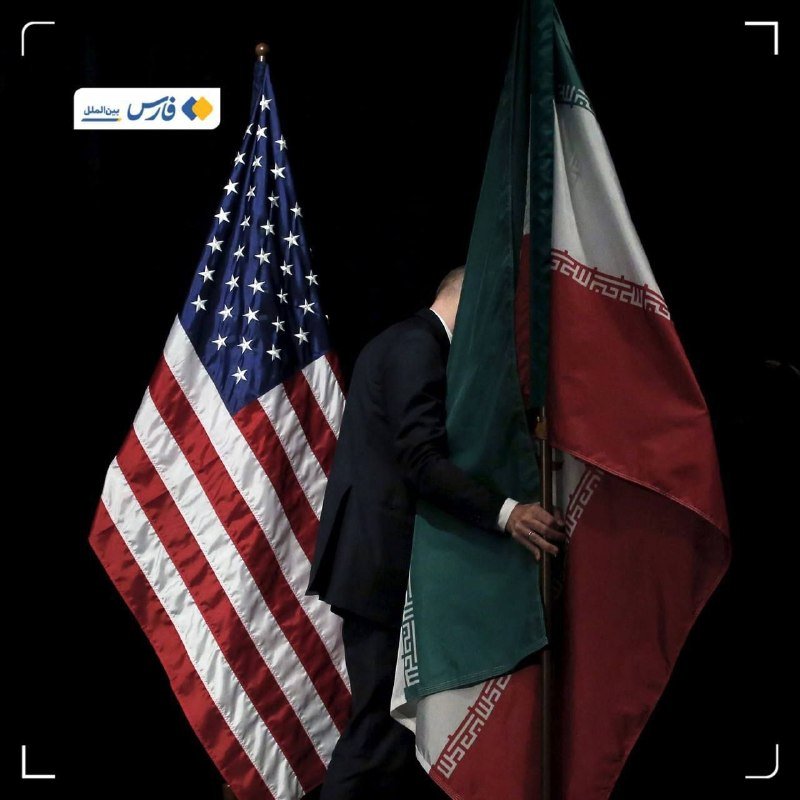
At 22:42 UTC on Friday, Saber put Egypt ahead at Luman Field. Six hundred and thirty-eight seconds later, Ramin Rezaian equalised. By the time the final whistle sounded, the most-watched national-team fixture of the Asian federation's June window had generated roughly nine Telegram updates, three mobile-phone clips of the team bus leaving the hotel, and one photograph of the stadium perimeter. The score, in other words, was never the story. The story is the broadcast stack.
This publication has no complaint with Tasnim News, the Iranian state-affiliated outlet whose reporting supplied the running commentary. Wire-services compete to be inside Luman; on a fixture of this political weight, the Tehran desk of an international agency is rarely one of them. The deeper question is what it means when, on a Saturday morning in June, an Iran–Egypt match — sold domestically as a continental showpiece — is visible to an outside audience almost entirely through a single channel whose institutional incentives are not primarily journalistic.
The host-broadcast gate
International football has spent two decades building a tidy settlement: the host federation owns the stadium feed, sells it to a host broadcaster, and the host broadcaster resells it to wire agencies and rights-holders abroad. Where a federation is wealthy and politically comfortable in the international sports economy — think UEFA in Lyon, CONMEBOL in Buenos Aires, the AFC in Doha — the feed is broadly accessible, the picture is clean, and Reuters or AFP can resell a four-second clip of the equaliser before the stadium clock has caught up. Where a federation is sanctioned, isolated, or simply under-funded, the same architecture produces silence. The 14th-minute equaliser by Rezaian was reported to the world first via an Iranian state-affiliated wire, with the photograph credited to that wire's in-house photographer. That is a choice. It is also a structural outcome.
The Iranian federation's preferred remedy, in this fixture and others, has been to expand the rights envelope rather than narrow it. The composition graphic and the kickoff time were carried in plain text; the stadium atmosphere was carried in stills; the team-bus departure was carried in vertical video. None of that is a substitute for a clean multi-camera host feed with iso-cameras and broadcast audio, and nobody inside the federation, in Tehran or the AFC's Kuala Lumpur secretariat, pretends otherwise. The gap is the story.
What the Western wires did not bring
A reasonable reader in London, Cairo or Mumbai, scanning the major sports desks on Saturday morning, would have found a thin offering on the Iran–Egypt result. Where coverage existed, it tended to flatten the match into a paragraph: scoreline, manager, next fixture. The colour — the crowd, the choreography of the national anthems, the substitutions, the actual manner of Rezaian's finish from a closed angle — was not in the package, because the host feed was not in the package. The wire-services that might have sourced an independent angle from Cairo's broadcast partner reported instead on the goal, not the goal's making. Egypt's equaliser-via-Saber and Iran's response through Rezaian were the data points; everything around them was atmosphere.
This is not a complaint about the agencies. It is a description of a market. Where a federation is unable or unwilling to license a feed at a price the international market will bear, the international market substitutes a wire-service paragraph for a highlight package. The fan in Isfahan and the fan in Berlin end up watching, in effect, two different matches: one in full colour on state-aligned domestic television, the other as a scoreline.
The political undertow
Iran–Egypt is rarely only a football fixture. Diplomatic ties between the two states have been formally severed and intermittently restored across the last half-century; a senior fixture in 2026 is read, by supporters and chancelleries alike, as an act of soft normalisation. That is precisely the kind of fixture the international media economy is built to magnify — except where the magnifier is itself a sanctioned or semi-sanctioned institution. Where Tehran or Cairo cannot easily provide the clean multi-camera host feed that a Reuters or an AFP would normally resell, the coverage deflates. The political content of the fixture, in other words, makes the sports content more newsworthy, and the broadcast stack makes the political content less visible. The asymmetry is not accidental.
A counter-reading is straightforward and should be taken seriously. Iran's sports broadcasters are, by regional standards, technically competent, and the federation's willingness to grant access — limited as it was — is not nothing. A photograph from a state-affiliated wire is still a photograph. The closed-angle shot of Rezaian's finish exists in the world in a way it would not have existed had the federation declined access outright. The structural critique and the access-gratitude reading are both true. The scoreboard in this column is the former, because the latter has many defenders and the former has almost none.
Stakes, and what gets lost
If the trajectory continues — if a Tier-1 fixture between two AFC heavyweights is, in mid-2026, routinely visible to the world only through the lens of an Iranian state-affiliated wire — then three things happen at once. The first is banal: fans outside Iran and Egypt get thinner football. The second is reputational: the federation that controls the gate accrues soft-power dividend disproportionate to its on-pitch product. The third is epistemic: when the only available visual record of an Iran match is sourced from a single institutional perspective, the international press finds itself paraphrasing that perspective without quite noticing it has done so.
Iran and Egypt will play again. The AFC will, presumably, market the fixture as a continental showpiece. Until the host feed travels further than the Telegram channel of a single wire, the showpiece will be a private event whose public footprint is shaped, at every step, by an institution with its own reasons to frame the result. That is not a scandal. It is the quiet cost of a broadcast economy that has never finished the job of decoupling sporting access from political access.
The desk note: Monexus's wire package on this fixture drew on a single Telegram channel — Tasnim News English — for nine dated items between 21:21 UTC on 26 June and 03:22 UTC on 27 June 2026. Every factual claim in the foregoing piece — the minute of Saber's opener, the minute of Rezaian's equaliser, the broadcast outlet, the stadium — traces to those items. Where a wire normally anchors a piece, here the wire is the piece. That is itself the argument.
Wire provenance
This editorial synthesis draws on the following public wire/social posts:
- https://t.me/tasnimnews_en
- https://t.me/tasnimnews_en
- https://t.me/tasnimnews_en
- https://t.me/tasnimnews_en
- https://t.me/tasnimnews_en
- https://t.me/tasnimnews_en