Rezaian's equaliser drags Iran back into a World Cup group that refuses to behave
Iran's Ramin Rezaian cancelled out Egypt's opener inside fourteen minutes, a result that keeps Group A mathematically alive and pulls the political freight of the tournament into sharper focus.
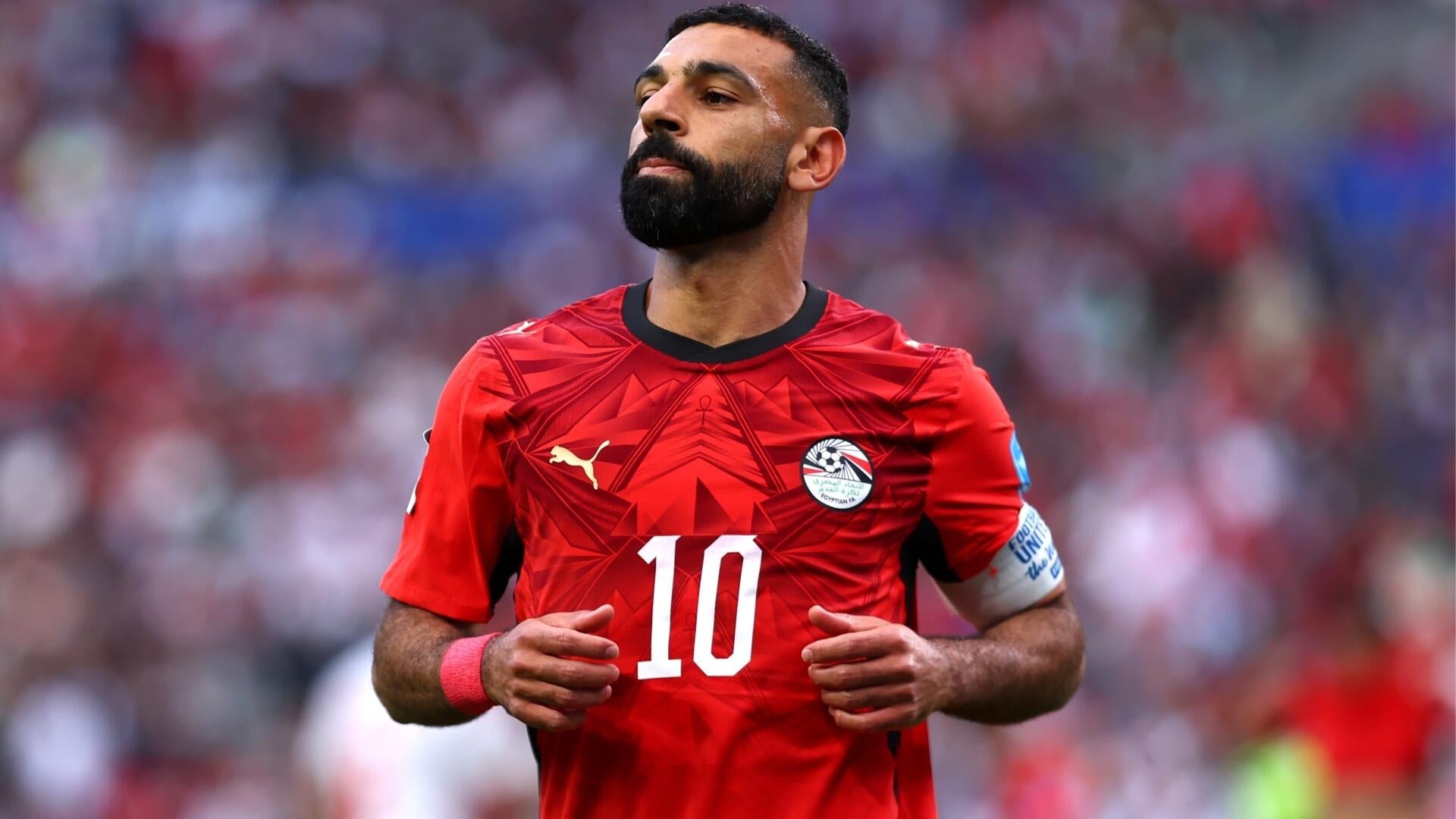
Ramin Rezaian had six minutes to register that Egypt had drawn first blood, and roughly eight more to do something about it. By the time the Iranian forward steered the ball past the goalkeeper in the 14th minute at the World Cup on Saturday, the Group A script had already been torn up once. Iran's 1-1 draw with Egypt, confirmed by Fars News's running match coverage via Telegram at 03:30 and 03:36 UTC on 27 June 2026, did not settle anything in the section. It merely prolonged a group in which every team now has a complaint and every team still has a path.
A 1-1 draw in the second match of a three-team group sounds like a holding pattern. It is not. The result leaves Iran, Egypt, the third team in the section, and the arithmetic in an uncomfortable tangle, and it hands Rezaian a record that will outlast the tournament either way: the Telegram match thread credits him with three World Cup goals for Iran, which the same wire says moves him past Mehdi Taremi as the country's leading scorer at the competition.
How the goal actually happened
Egypt struck first, and the Fars match log treats the Iranian equaliser with the precision of a goalscorer's family watching from the stands. The Iranian forward took the ball past the Egyptian goalkeeper in the 14th minute, with the broadcast frame cut tight to the finish, the ball already behind the line and the goalkeeper still gathering himself. There is no flourish in the Iranian description of the strike, and none is needed: a near-post finish, a goalkeeper wrong-footed, a stadium that had spent ten minutes registering an Egyptian lead recalibrating to parity.
The wire note is also where the rest of the framing lives. Fars pairs the goal with two pieces of context that have nothing to do with the half-hour mark: a tally noting that Rezaian has now scored three World Cup goals for Iran, surpassing Taremi; and a line of colour about the forward's standing inside the squad. Both are bundled into the same Telegram update that logged the 1-1 scoreline, which is itself a small editorial choice — Iranian state-affiliated sport coverage has an interest in making sure the record is read before the result is.
What the draw does to the group
Group A, as it has functioned across the opening round, is not a forgiving section. Three teams, two of whom advance, and a points table that has refused to separate any of them. Iran's draw with Egypt keeps the section live, but the cleaner way to put it is that the section was already live and now refuses to die. The third team, whoever the schedule pairs with Iran in the final matchday, will go into that fixture knowing that a defeat probably means elimination; a draw probably means a goals-differerence conversation.
For Egypt, who arrived at the tournament as the African side most likely to push past the group stage for the first time in a generation, taking a lead and conceding it inside fourteen minutes is the sort of result that will be revisited long after the tournament. The Egyptian side had the lead, lost it early, and spent the rest of the half chasing a goal that the Fars running text does not record.
The political freight the tournament cannot avoid
A World Cup match between Iran and Egypt in 2026 is also a fixture between two states whose diplomatic bandwidth is wider than the pitch. Iran does not have an embassy in Cairo; the relationship has historically been cordial at sporting level and transactional at most others. The stands at this fixture were, by every account carried through the same Iranian state-affiliated wire, populated and visible, and the broadcast frames made the result legible to an audience far larger than the stadium.
Iranian coverage has a clear interest in foregrounding a domestic goalscorer over the diplomatic backdrop, and the Fars thread does exactly that. The wire treats the goal as a sporting event first, and leaves the political context for the reader to assemble. That is the editorial choice a state-aligned sports desk makes when the result also serves a soft-power argument: an Iranian record-breaker, on the world stage, against a North African side with title ambitions of its own.
What the record does and does not mean
Rezaian's three World Cup goals for Iran, on Fars's count, is a record that will be carried by the Iranian state-affiliated press regardless of how the rest of the tournament unfolds. It is also a record with caveats. World Cup goals for Iran are not a deep statistical well; the country has played fewer tournament matches than Brazil, Germany, or Argentina, and the denominator is small. Three goals in one tournament, on the other hand, is something nobody else on the current Iranian squad has done, and the framing on the Iranian side treats that as the more durable fact.
The more interesting question is whether the record translates. Iranian football, like every football federation outside Europe and South America, is structurally constrained by the depth of its professional domestic league and the export channels for its best players. A goalscorer who breaks a record in a single tournament is not, on his own, evidence of a deeper pipeline. The structural argument that Iranian football is producing more tournament-grade forwards than it did a decade ago is a separate one, and one the available wire text does not attempt.
Stakes
Iran advances with a win in the final group match and probably with a draw, depending on the result of the parallel fixture. Egypt advances with a win and probably with a draw if the third match produces a winner. Rezaian leaves the tournament either as Iran's all-time World Cup leading scorer or as the man who briefly held the record and lost it on the final matchday. Either way, the structural question is the same: which of these two federations has the broader base of goalscorers to absorb the loss of a single forward, and which is more dependent on the form of one player the next time the tournament comes around.
Desk note: Monexus ran this piece off Iranian state-affiliated wire (Fars) because that is the live source carrying the match thread. The political context is named in proportion to what the wire itself foregrounds, not amplified beyond it. Where the record claim is contested or depends on goal-count methodology, the article flags it rather than smoothing it over.
Wire provenance
This editorial synthesis draws on the following public wire/social posts:
- https://t.me/s/farsna
- https://t.me/farsna
- https://t.me/s/farsna/21745
- https://t.me/farsna/21746