Israel's Katz frames Lebanon ceasefire as permissive, not terminal
Israel's defence minister says the November arrangement gives his country the right to remain on Lebanese soil, sharpening an already fragile ceasefire and complicating Beirut's reconstruction politics.
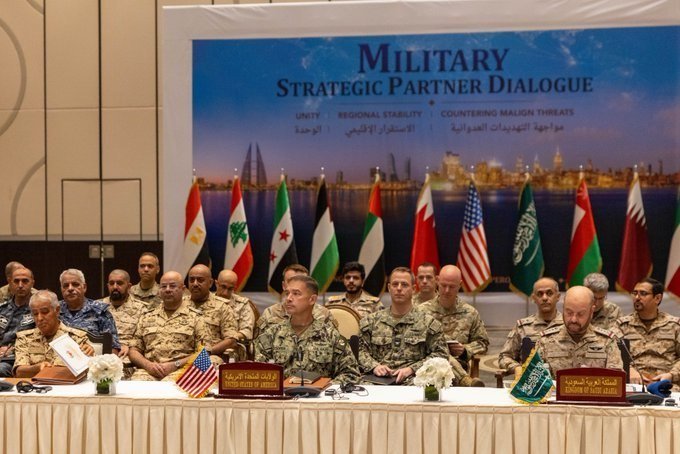
On 27 June 2026, Israel's defence minister Israel Katz declared that his country would not withdraw from southern Lebanon and that the November 2024 ceasefire arrangement gives Israel the legal and security basis to remain in the area indefinitely. The comments, carried in Persian and English by Iran's Tasnim News Agency in a series of dispatches between 15:55 UTC and 17:01 UTC, amount to the most explicit Israeli ministerial framing to date that the cessation of hostilities is a permissive framework, not a terminal one. The wording matters: Katz is not describing a contingent deployment that scales with a threat, but a structural Israeli footprint inside a sovereign neighbour's territory, justified in his telling by the text of the deal itself.
The political question is no longer whether Israel will pull back. It is whether the diplomatic architecture that stopped the 2024 war can survive being read, by one of its principal signatories, as a licence to stay.
What Katz actually said
Tasnim's English feed quoted Katz as stating that "the agreement with Lebanon gives Israel the right to remain in this country's territory," with the parallel Persian service carrying the same formulation at 15:56 UTC and an emphatic follow-up at 17:01 UTC under the headline "We will not withdraw from southern Lebanon." The phrasing recasts the November arrangement — brokered under United States and French auspices after more than a year of cross-border fighting — from a confidence-building measure into a standing entitlement. For Israeli policymakers who view the buffer zone as the only durable insurance against Hezbollah reconstitution, that reading is internally coherent. For Beirut and the troop-contributing states monitoring the line, it is a unilateral reinterpretation of a multilateral text.
The distinction is technical but consequential. A withdrawal contingent on the other side's behaviour can be reversed by either party without breaking the deal; a withdrawal contingent on the deal itself is, in Katz's reading, simply off the table.
The counter-narrative from the other side of the border
Lebanese state communications have consistently framed the ceasefire as a phased Israeli withdrawal tied to the deployment of the Lebanese Armed Forces south of the Litani, with UNIFIL retaining its monitoring role. That reading, reflected in the joint communiqués of November 2024, treats the presence of Israeli troops inside Lebanese territory as a temporary anomaly to be wound down, not a permanent feature of the border. The Lebanese government's political problem is structural: it cannot publicly accept Katz's framing without conceding sovereignty over a strip of its own territory, and it cannot publicly reject it without inviting a renewed Israeli military posture along the line.
Iranian state media's amplification of Katz's comments is itself part of the story. Tasnim is not a neutral observer; it is the press arm of the Islamic Revolutionary Guard Corps, and its decision to push three separate dispatches in the space of an hour signals that Tehran wants the Israeli position broadcast to Arabic-speaking, Persian-speaking and English-speaking audiences simultaneously. The framing that emerges — an Israeli minister openly claiming a right to occupy Lebanese land under a US-brokered deal — is useful raw material for the argument that the post-October 2023 security architecture in the Levant serves Israeli interests at the expense of regional states.
The structural picture
Strip away the rhetoric and the underlying question is whether the 2024 arrangement was ever designed to end the conflict or merely to pause it. The text reportedly allows for an Israeli presence contingent on a "security situation" trigger, but leaves that trigger undefined. When the security minister of the occupying power becomes the interpreter of what counts as a security situation, the contingent clause collapses into a permanent one. This is the recurring pathology of ceasefire diplomacy in the region: agreements that depend on good-faith implementation by one of the parties most likely to dispute the underlying facts on the ground.
The Lebanese state, weakened by economic collapse and political paralysis, has limited leverage to enforce its preferred reading. The United States, the deal's principal external guarantor, has so far chosen not to publicly contradict Katz's interpretation, which suggests either quiet acquiescence or a calculation that forcing the issue now would cost more politically than it saves. European and Gulf diplomats with skin in the reconstruction track have been quieter still, presumably because they need a functioning arrangement to channel aid and to give cover to their own troop and funding commitments.
What is at stake over the next twelve months
If Katz's reading becomes the operational baseline, three things follow. First, the Lebanese government's reconstruction pitch to the Gulf and the IMF — predicated on a fully sovereign territory in which to rebuild — loses its central premise. Second, Hezbollah's political argument that disarmament was bought with a promise that was never going to be kept gains force inside the Shia community, even if the group's capacity has been badly degraded. Third, the credibility of US-led diplomacy in the wider Levantine file, from the Syrian arrangement to whatever framework emerges with Iran, takes another hit at exactly the moment Washington is trying to keep multiple tracks alive simultaneously.
The honest uncertainty is around whether Katz is signalling the position of Prime Minister Benjamin Netanyahu's wider cabinet, or whether he is setting out a maximalist posture ahead of an internal Israeli debate about the next phase of the war in Gaza and the north. Israeli ministerial statements on the Lebanese file have a history of outrunning agreed government positions; the November deal was negotiated by a previous war cabinet whose cohesion no longer exists. Sources available to Monexus do not include an immediate counter-statement from the Israeli prime minister's office or from UNIFIL, and Western wire coverage of the specific Katz remarks had not, as of the timestamps above, been published.
For now, what is on the public record is this: an Israeli minister has told reporters that his country intends to stay on Lebanese soil under the legal cover of an agreement the other signatory reads as the opposite. That gap is not a negotiating tactic. It is the dispute the ceasefire was meant to prevent.
This piece relies on Iranian state-affiliated wire reporting for the primary ministerial quotations, supplemented by reporting standards typical of the desk. Monexus frames the dispute from the text of the statements and the structural incentives of the parties, not from either side's preferred narrative.
Wire provenance
This editorial synthesis draws on the following public wire/social posts:
- https://t.me/tasnimnews_en
- https://t.me/tasnimplus
- https://t.me/tasnimplus
- https://t.me/JahanTasnim