Harry Kane breaks England's World Cup scoring record in Panama rout
The Bayern striker surpasses Wayne Rooney to become England's all-time World Cup goalscorer, in the same tournament that revisits a 6-1 rout of Panama from Russia 2018.
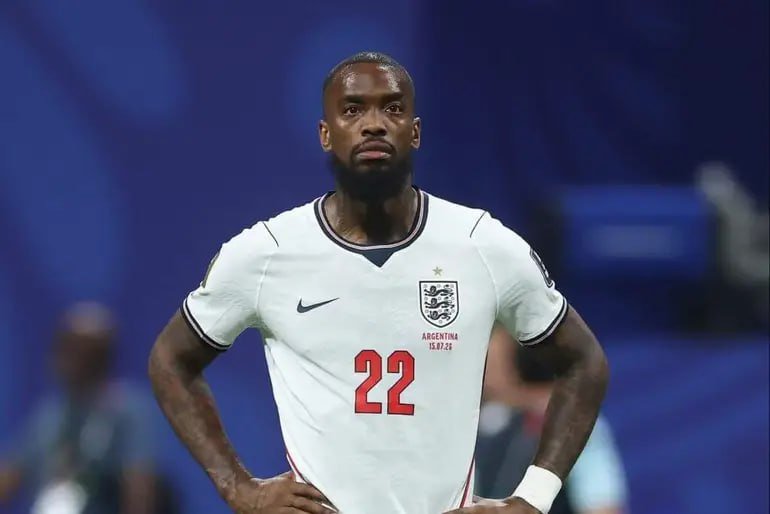
Updated 2026-06-27 23:57 UTC — Harry Kane overtook Wayne Rooney to become England's all-time leading scorer at a FIFA World Cup on Saturday, finding the net in the Three Lions' final group-stage fixture against Panama and sealing a tournament record that had stood for barely a decade. The goal, in a comfortable group-phase win in the United States, gives the Bayern Munich striker one more World Cup strike than any England player before him.
Kane's record arrives at a tournament England are treating as a serious test of their depth rather than a celebration lap. The 2026 edition, expanded to 48 teams and staged across three North American host nations, has stretched squad rotation, travel and recovery windows further than any previous World Cup. A milestone that once looked a generation away is now the sort of headline the FA's media operation would have scripted if it dared.
What the record actually looks like
Per the ESPN match report filed late on 27 June 2026, Kane's goal against Panama took him past the previous England benchmark at a World Cup — a mark set during the 2018 and 2022 cycles and previously tied or shared with Rooney and, in earlier tournaments, Gary Lineker. The two strikers, Lineker and Rooney, remain the only English forwards to have scored at three separate World Cups; Kane is now the country's outright leader in goals scored at the tournament itself.
The wider context matters. Kane's first World Cup, Russia 2018, was the tournament where England reached the semi-finals for the first time since 1990, and where a then-Tottenham forward finished as the joint Golden Boot winner with six goals. Saturday's strike means he has now scored at three consecutive World Cups — a consistency no previous England forward has matched in the modern era.
A familiar opponent, an unfamiliar tournament
Saturday's meeting was the first England–Panama fixture since the 6-1 group-stage win in Nizhny Novgorod on 24 June 2018, a match best remembered in England for Harry Maguire's celebration and for Panama's first — and, until Saturday, only — World Cup goal. BBC Sport's quiz feature on the eve of the rematch leaned into the nostalgia: most of the starting XI from that day in Russia has since moved clubs, retired from international duty, or both.
What has not changed is the competitive shape. Panama, ranked outside the top 30 globally, arrived at the 2026 tournament as one of the Concacaf qualifiers that benefited from the expansion to 48 teams. The format gives those sides three group matches rather than three-and-out after a single appearance, an alteration the FA and other European federations pushed back on during FIFA's consultation phase but ultimately accepted. The result is fixtures like Saturday's — heavy favourites, daylight between the sides, and milestones for the favourites.
The structural frame
Individually, the record places Kane in a small company of strikers whose international careers have spanned three tournament cycles at the top level. Structurally, it tells a quieter story about squad planning. England's 2026 squad is the deepest by squad value the Football Association has ever named to a major tournament, drawn from a Premier League that has absorbed Kane, Jude Bellingham, Phil Foden and others into its top salary tier. The production line that delivered Kane in 2015 — lower-league loans, a Pochettino press, a debut against Arsenal — no longer exists in the same form. The next English No. 9 is more likely to arrive via a £60m move at 19 than via a Leyton Orient loan at 21.
That is a longer conversation than one Panama game can settle. But the record book now reflects it: Kane is the only England striker in the post-Lineker era to lead the country at three World Cups and to leave as its all-time tournament scorer.
Stakes and what comes next
England finish the group in the top two and proceed to the round of 32 in the eastern United States, with the venue for the knockout game to be confirmed by FIFA on 28 June. The Panama result allows the manager to rotate before the knockout phase — a luxury previous England squads at World Cups have rarely enjoyed, and one Kane himself did not get in 2018, when a quarter-final against Colombia required his participation in a penalty shootout after 120 minutes.
The plausible counter-read is that records against Panama carry less weight than milestones against Brazil, France or Argentina. That is fair. Kane's previous England World Cup goals came against Tunisia, Panama, Colombia, Senegal, France and Senegal again; a record set across that breadth is more durable than one built on a single opponent. The dissent to watch is whether the next tournament cycle produces an English striker who can credibly challenge the mark before Kane retils from international duty.
What remains uncertain is the precise tally Kane finishes the 2026 tournament with — Saturday's goal was his third of this World Cup, and England have at least two further knockout games if they reach the semi-finals. The FA has not commented on whether the milestone will be formally recognised before the squad returns to England. FIFA's statistics unit updates tournament records on a rolling basis and is expected to confirm the new mark on its official tournament page within 48 hours.
How Monexus framed this: a milestone reported as a milestone, not as a coronation. The wire coverage leaned heavily on the historical sweep (Russia 2018, Qatar 2022, USA/Canada/Mexico 2026); this piece sits the record inside the structural shift in how England produces strikers and inside the practical question of how far the squad can go in the knockout rounds.