The Lebanese border is heating up again — and the question is whether this time is different
An Israeli drone strike on Nabatieh al-Fawqa and an advance on Kfar Shuba on 27 June 2026 expose how thin the line between routine cross-border violence and full re-engagement has become.
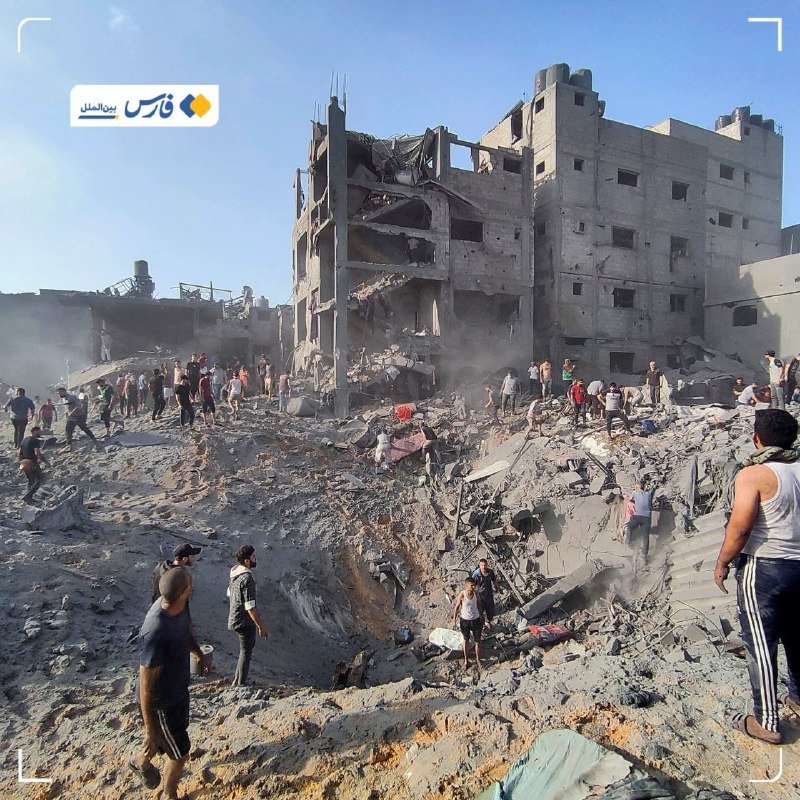
At 08:40 UTC on 27 June 2026, an Israeli ground force advanced toward the outskirts of Kfar Shuba, a village pressed against the Lebanese-Israeli frontier, under heavy machine-gun fire, according to local reports relayed by The Cradle Media. Roughly seventy minutes later, at 09:50 UTC, an Israeli drone struck Nabatieh al-Fawqa, deeper inside south Lebanon's Nabatieh district. Read in isolation, either item is a familiar signal on a familiar line — a frontier that has hummed with low-grade violence for decades. Read together, on the same morning, they sketch the outline of a deliberate tempo change, and they make plain how narrow the corridor between managed tension and renewed war has become.
What the morning actually contained
Two distinct, time-stamped actions, reported in sequence. The Cradle Media's 08:40 UTC bulletin described Israeli occupation forces pushing toward Kfar Shuba under machine-gun cover, following the detonation of an unspecified device — the telegram is truncated, but the sequencing implies a roadside or perimeter explosive encountered during the advance. The 09:50 UTC bulletin added a separate kinetic event further north: a drone strike on Nabatieh al-Fawqa, in the caza (district) of the same name that has historically sat at the centre of south Lebanon's military geography. The Cradle does not, in either bulletin, specify casualties, weapon type beyond "drone," or an Israeli military spokesperson confirmation; what it offers is the on-the-ground shape of a single morning, captured in two separate dispatches.
Why the standard reassurances are wearing thin
For the better part of a year, the working assumption in regional reporting has been that the Israel-Hezbollah front would stay calibrated — strikes and counter-strikes episodic, calibrated by back-channels, never tipping into the open war that both sides publicly disclaim. The framework has held, more or less, because each party has found managed violence cheaper than the alternative. Kfar Shuba and Nabatieh al-Fawqa sit precisely inside that logic: villages within artillery range of Israeli northern communities, populated, watched, and used as the connective tissue for a deterrence that never quite declares itself. The 27 June pair of incidents is notable not for novelty — neither village is new to the geography of this conflict — but for tempo: ground movement plus drone fire within ninety minutes, in daylight, against populated localities, in conditions where the back-channel pressure to de-escalate is at its lowest since the November 2024 arrangement.
The counter-read — why this may still be the old equilibrium
The strongest alternative reading is that nothing structural has shifted. Cross-border strikes and limited ground probes along the same seam have been reported in clusters for months; the 27 June pair can be folded into that pattern without violence to the data. Local sourcing via outlets sympathetic to the regional armed axis, of which The Cradle is one, tends to compress and emphasise incidents that an Israeli military readout might describe in less alarming terms, and the absence of an IDF spokesperson statement in the thread is itself a data point. The dominant framing — escalation — holds only if one assumes the tempo is shifting in a sustained way. On a single morning's evidence, that assumption is not yet earned. What is earned is the observation that the cost of misreading such a morning, in either direction, is now unusually high.
Stakes — what the next seventy-two hours decide
If the 27 June pattern is a blip, the regional equilibrium holds, the back-channels absorb the friction, and the south Lebanon file returns to its accustomed low-grade hum by early July. If it is the leading edge of a larger operation, the humanitarian and diplomatic arithmetic changes immediately: south Lebanon's displaced-population infrastructure, thinned by two previous rounds of conflict, would not absorb a serious ground campaign without a renewed displacement crisis that would register in Beirut, in the UN humanitarian system, and in the donor arithmetic that props up Lebanon's state. The Israeli domestic calculus — northern communities still inside range, evacuee politics unresolved — points in the same direction. The next seventy-two hours of wire traffic will resolve which of these two arcs the morning belongs to. As of this publication, the thread does not specify casualty figures, Israeli official comment, or Hezbollah-aligned response in detail; that gap is itself the story.
This piece reads the 27 June bulletins through the lens of tempo and geography rather than motive, on the principle that what is verifiable from a single morning's dispatches is the shape of an event, not yet its meaning. The desk will widen the source ledger as Israeli military, UNIFIL, and wire confirmations become available.
Wire provenance
This editorial synthesis draws on the following public wire/social posts:
- https://t.me/thecradlemedia
- https://t.me/TheCradleMedia
- https://t.me/thecradlemedia