Maher on the couch: a late-night host, a vice president, and a 2028 crack in the cable wall
On 25 June 2026, JD Vance walked onto the Real Time set and walked off with the host's softer-than-usual framing. Bill Maher admitted he could vote Republican in 2028 — and the clip is doing more damage than either man intended.
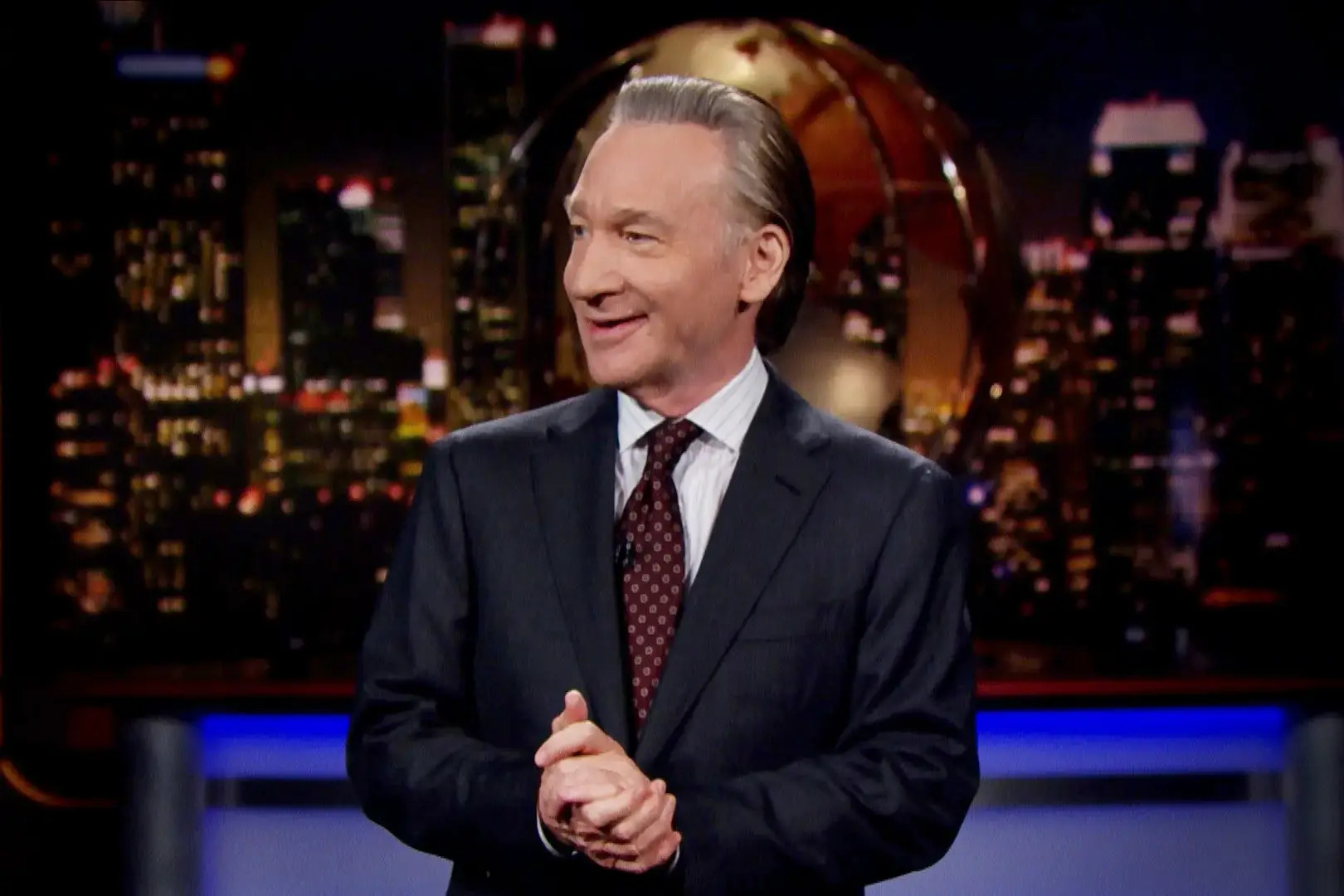
The sound bite is short enough to fit on a phone screen and long enough to chase the host around for the rest of the year. On the evening of 25 June 2026, at the Nixon Presidential Library and Museum in Yorba Linda, California, Vice President JD Vance sat down with Bill Maher for the season finale of HBO's Real Time with Bill Maher. By the time the taping wrapped, Maher — a man who has built a career on the proposition that the right has gone mad — was conceding on camera that he could plausibly vote Republican in 2028.
The exchange matters less for who wins the next presidential cycle than for what it reveals about the current shape of American public life: a late-night host whose brand is anti-Trump energy treating a Trump-administration standard-bearer as a reasonable dinner guest, and a sitting vice president who treats a cable booker as a useful piece of furniture. The clip is now doing the rounds on both sides of the political internet, and each side is editing it to flatter itself.
How Maher got played
Variety's account of the taping, filed in the early hours of 26 June, is unambiguous about the mechanics. Vance came armed with material drawn from Maher's own monologues — past jokes, past guests, past concessions about the limits of progressive governance — and used them against him in real time. Maher, by his own subsequent admission on the broadcast, had not seen some of the footage Vance was about to deploy. The host's preparation was thinner than his self-image suggested, and the vice president, who before joining the ticket had spent a decade arguing with journalists on cable panels, knew exactly what to do with that.
The moment that has travelled furthest is the one in which Maher concedes that he may vote Republican in 2028. The full context, as Variety reports it, is more ambiguous than the truncated clip: Maher framed it as a conditional — if a sane Republican were on the ballot against a Democratic nominee he found unacceptable. But on social media, conditionality does not survive compression. The line, stripped of its scaffolding, now functions as a permission slip for a particular kind of voter who has been waiting for one.
What Vance was actually after
The simplest read is also the most generous to Vance: a vice president with a Senate-vanilla instinct for television appearances, in the off-season, picking a fight on sympathetic terrain. The Nixon Library, an iconography of Republican respectability at its most defensible, sets the stage for Vance's recurring pitch — that the current administration is a continuation of the respectable centre-right rather than a break with it. Maher, willing to entertain that frame in real time, is useful corroboration.
The less generous read is that the White House has decided the 2028 environment will be fought on cultural terrain — late-night hosts, podcast circuits, streaming specials — rather than on the legacy broadcast stages that powered Trump's first campaigns. Vance has become the operator for that terrain: comfortable with the medium, fluent in the irony of the previous decade, willing to flatter a hostile host just enough to get the next minute of airtime. Maher's monologue missteps were not an accident. They were inventory.
A third possibility is that the White House simply wanted a clip that would travel in suburban centres of the kind that decided 2024 — a clip showing a coastal liberal admitting the next Republican ticket could win his vote, and showing the vice president as the plausible carrier of that ticket. On the evidence of the past week, the operation succeeded. Whether it converts to actual votes in 2028 is a separate question, and one the source material does not yet support answering.
The structural frame
What the episode exposes, beyond the horse-race mechanics, is a deeper shift in how American political authority is mediated. The twentieth-century arrangement — politicians on network news, comedians on network late night, with the two ecosystems barely intersecting — has been replaced by a single, flattened attention economy in which a vice president can use a comedian's own archive against him and walk away with the host's endorsement. The filter is no longer editorial; the filter is algorithmic, and the algorithm rewards the clip, not the context.
Inside that arrangement, the role of the legacy cable liberal is increasingly uncomfortable. Maher's project — sceptical of Trump, sceptical of wokeness, persuaded that the centre is the only safe harbour — depends on the existence of a centre that is currently being defined, in real time, by the more agile operator in the room. Vance did not need to win the argument. He needed to win the cut. He did.
Stakes
For the White House, the upside is a permission slip from an unlikely voice, and a clip that will keep circulating through the summer. The downside is the precedent it sets: treating a hostile venue as a stage rather than a battlefield, and absorbing some of the host's framing in exchange for airtime. The line between persuasion and capture is thin, and the vice president spent most of the hour on the wrong side of it.
For Maher, the cost is more durable. The conditional becomes a quote. The quote becomes a meme. The meme becomes a credential for the next Republican who walks onto his set and asks him to defend his own line. He has, perhaps inadvertently, made future episodes of Real Time easier targets for the same operation.
For viewers on both sides, the most useful read is the plain one: when a politician's preparation outpaces a comedian's, the conversation is no longer a conversation. It is a transaction. The clip that survives is the only thing that matters; the hour that produced it is already gone.
The longer story of whether this kind of staged intimacy on cable actually moves voters — as opposed to voters who are already moving — is one the available reporting cannot yet settle. What the Variety account makes plain is that, on the night, Vance arrived with a plan, Maher did not, and the difference was visible to anyone watching with the sound on.
Desk note: Monexus treats the Maher–Vance exchange as a media-politics artifact rather than a horse-race bulletin. The wire frame emphasises the dramatic reversal; we are emphasising the medium in which the reversal happened, and what its mechanics suggest about the next cycle's terrain.