Strikes in the South: What a Single Drone Hit in Nabatieh Reveals About Lebanon's Slow-Burn War
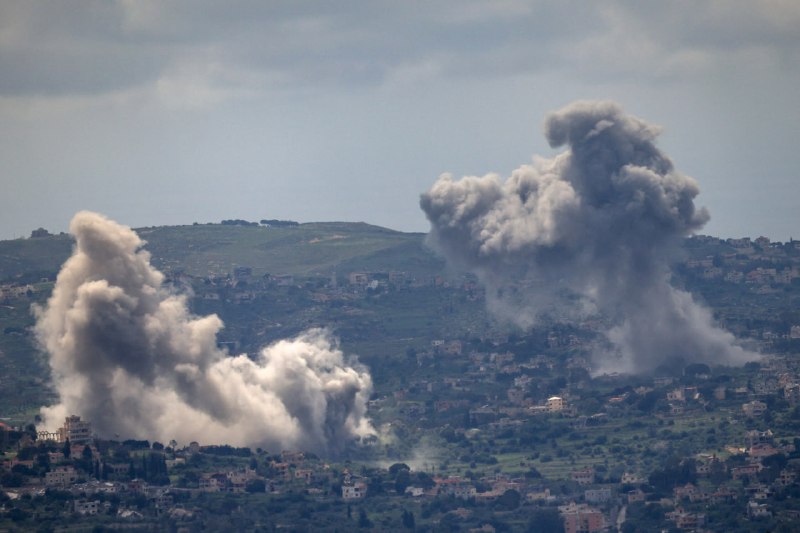
An Israeli drone struck the Nabatieh area of southern Lebanon on 27 June 2026 — the latest in a pattern of strikes that has quietly reset the rules of engagement along the Litani. What the incident exposes is less the strike itself than the steady drift toward a more permanent confrontation.
Lead
At 09:50 UTC on Saturday 27 June 2026, an Israeli drone struck the Nabatieh al-Fawqa area in southern Lebanon's Nabatieh Governorate, according to Lebanon's state news agency and regional outlets monitoring the incident. The strike, which hit a town long associated with Hezbollah's political and military infrastructure, was reported within minutes by the Beirut-based outlet Middle East Eye and carried by The Cradle's Telegram channel with the same breaking-news tag. No casualty figures had been published in the immediate aftermath; Lebanese state media and pan-Arab desks converged on the location rather than on the toll. The episode, taken in isolation, looks like a single strike on a single town. Read across the past several months, it reads as something closer to a doctrine.
Nut graf
The June 27 strike sits inside a quiet but consequential shift: Israel has been conducting near-daily air action in southern Lebanon since the November 2024 ceasefire collapsed under its own weight, and Lebanon's state apparatus has been increasingly unable — or unwilling — to assert a competing account of what happens inside its own territory. The drones have not paused; the mediating governments have. The pattern matters more than any single payload, because it sets the tempo for the next round of negotiations and the next round of retaliation.
The strike and its reporting trail
The first signal of the 27 June operation came at 09:50 UTC, when The Cradle's official Telegram channel posted a one-line breaking bulletin identifying Nabatieh al-Fawqa — a hillside town just north of the Litani River — as the target. Middle East Eye's live blog, updated shortly after, attributed the report to Lebanon's state news agency, which is the National News Agency (NNA). The geographic specificity — Nabatieh al-Fawqa, not Nabatieh city below it — was consistent across both desks, a small but useful detail in a border region where place-name confusion is endemic.
The reporting trail matters for what it does not contain. The thread that surfaced the incident on 27 June did not include an Israeli military spokesperson readout, did not include a Hezbollah statement, and did not include an independent on-the-ground verification from a wire service. By 11:00 UTC, more than an hour after the strike, the public record on the event consisted of a single Lebanese state-agency report carried by two Beirut-anchored regional outlets. That is the entire ledger.
The implication is not that the strike did not happen — the convergence of Lebanese state media and a Beirut-based outlet with long-standing correspondents in the south is reasonable corroboration. The implication is that for a near-daily air operation, the documentation regime has thinned to the point where a single Lebanese state-agency report, amplified by two outlets, is sufficient to constitute the day's record. Whether that represents efficiency or atrophy is one of the questions this incident quietly raises.
What southern Lebanon looks like in mid-2026
Nabatieh Governorate is not a generic border district. It is one of the four governorates that make up the area Israel occupied in 2000 and from which Hezbollah fought a 33-day war in 2006. The Litani River — the line the United Nations resolution that ended that war called on Hezbollah to move north of — bisects the district. South of the Litani is the operational space where, in principle, no armed group other than the Lebanese state and UNIFIL is supposed to deploy.
In practice, the November 2024 ceasefire collapsed within weeks. Israeli drones returned to Nabatieh, Bint Jbeil, Maroun al-Ras, and the Tyre suburbs first; by early 2025, fixed-wing strikes had been added to the drone tempo. Lebanon's caretaker government in Beirut, working under a presidential vacuum that persisted into 2026, has issued periodic condemnations but has not asserted an airspace control capacity. UNIFIL, whose mandate was renewed in 2025 with a thinner troop ceiling and a narrower rules-of-engagement envelope, has recorded incidents rather than prevented them.
That is the operating environment into which 27 June's strike landed. A single drone hit in a single town is, on the ledger of recent months, unremarkable. What is remarkable — and what the strike quietly confirmed — is that "unremarkable" has become the baseline. The air operation no longer pauses for headlines, no longer announces itself with the careful framing of a one-off retaliation. It runs.
Counter-frames: what each side says the strike means
The Israeli framing, where it has surfaced in recent months, treats the southern Lebanon air operation as a continuation of the doctrine articulated after 7 October 2023: that any node plausibly tied to Hezbollah's reconstitution north of the Litani is a legitimate target, and that the absence of a functioning Lebanese state monopoly on arms in the south means Israel must supply the deterrence function itself. From that frame, a drone hit on Nabatieh al-Fawqa is not an escalation; it is the maintenance of a posture.
Lebanese state media, including the NNA report that anchored the 27 June coverage, treats each strike as a violation of sovereignty and of the residual terms of the 2024 arrangement. The Lebanese frame emphasises the absence of an Israeli-declared casus belli for individual strikes, the absence of meaningful Lebanese-state consent to the air operation, and the cumulative effect on civilian life in a district that has lived under near-continuous air pressure for over eighteen months.
Hezbollah's public posture — to the extent it is discernible on the day of a strike — has been calibrated: retaliatory when the Israeli strike hits a populated site or kills a named cadre; quieter when the target is treated as a weapons-storage or logistics node. The 27 June reporting does not yet identify which category the Nabatieh al-Fawqa hit falls into. That ambiguity is itself part of the pattern: strikes land, the framing follows, and the response is decided afterwards.
The two frames — Israeli deterrence logic, Lebanese sovereignty violation — are not symmetric in evidentiary weight. One is a state acting through its declared security forces inside an operational doctrine; the other is a state that has not been able to enforce a counter-doctrine inside its own territory for the better part of two years. The reporting on 27 June reflects that asymmetry more than it resolves it.
The structural picture: a slow drift, not a crisis
The pattern on display in Nabatieh on 27 June is the structural story of 2026's Middle East file: not a single dramatic escalation but a steady, low-visibility drift toward a more permanent confrontation, justified on both sides by the failures of the previous ceasefire. Israel's air operation is calibrated below the threshold that would force a wider diplomatic rupture; Hezbollah's reconstitution north of the Litani is calibrated below the threshold that would force an Israeli ground operation. The result is a steady-state tension that produces incidents like Nabatieh al-Fawqa without producing the conditions for a ceasefire that would prevent them.
This is the kind of slow structural drift that rarely makes the lead of a wire bulletin but accumulates weight over months. By the time a major escalation does occur — and the reporting suggests one remains possible in the second half of 2026 — the air tempo of June will already have set the political ceiling on what a renewed ceasefire can achieve. Nabatieh al-Fawqa is not a story about a single drone. It is a story about the tempo at which the next round of negotiations will be conducted.
Stakes: who wins and who loses if the tempo continues
If the near-daily air tempo continues through the second half of 2026, the most concrete losers are the civilian residents of southern Lebanon's four governorates, who have lived under that tempo since late 2024 with diminishing international attention. The Lebanese state's standing as the nominal sovereign authority in the area erodes further with each strike it records but cannot prevent. UNIFIL's residual credibility erodes with each incident it notes but cannot deter.
The strategic winners, on the Israeli framing, are the operational objectives themselves: Hezbollah's ability to project force into northern Israel is constrained; the deterrent message that any reconstitution north of the Litani will be met is delivered daily rather than episodically. The cost is the steady erosion of whatever residual diplomatic cover the air operation enjoys — particularly with the European states whose political support for Israel's broader posture rests on the assumption that the southern Lebanon file is being managed rather than expanded.
The structural risk is that the tempo normalises. Once a near-daily drone presence in Nabatieh is treated as routine by the press, by the Lebanese state, and by the mediators, the political space for an actual halt narrows. The June 27 strike is one more data point in that normalisation — small in itself, large in what it represents.
What remains uncertain
Three things are not yet legible in the public record on the 27 June strike. First, the identity of the target: Hezbollah cadre, weapons depot, observation post, or something else. The reporting identifies the location precisely and the target category not at all. Second, the casualty figure: the early dispatches carry the location but no toll, which in past strikes has meant either low single digits or a delayed count once hospitals report. Third, the Israeli framing of the specific strike: no Israeli military spokesperson readout had been published in the immediate aftermath, leaving the operation's classification — retaliation, preventive action, or counter-rocket response — unstated. These three gaps are the routine gaps in the documentation regime that has settled over southern Lebanon in 2026, and they are the gaps any honest reading of the incident has to acknowledge.
Desk note
The wire cycle on 27 June 2026 converged on a single Lebanese state-agency report, amplified by two Beirut-anchored regional outlets. Monexus carried the location and the reporting trail; it did not infer a casualty figure or a target category that the sources did not support, and it framed the strike as a data point in a longer pattern rather than as a standalone event.
Wire provenance
This editorial synthesis draws on the following public wire/social posts:
- https://t.me/thecradlemedia
- https://t.me/TheCradleMedia