OpenAI's GPT-5.6 launch collides with copyright suit and a federal request for early access
Three threads converged within hours: a model release, a 400-publisher copyright suit, and a US request for privileged access — and they expose how frontier AI governance is being improvised in public.
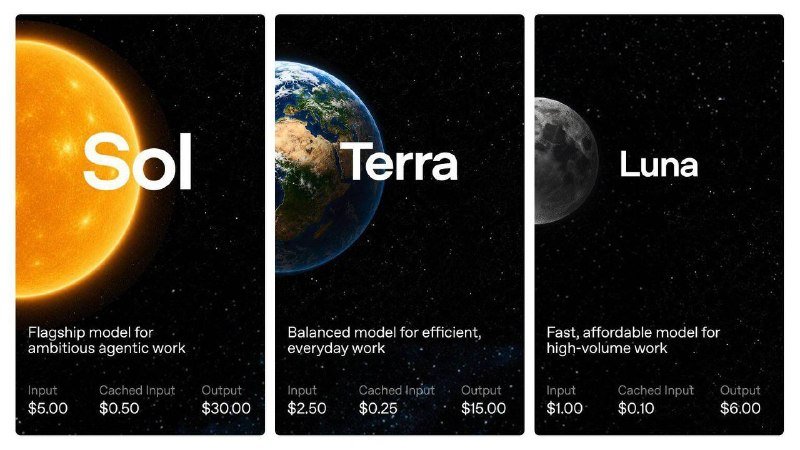
OpenAI publicly previewed GPT-5.6 on the afternoon of 26 June 2026, a release that, within hours, was overtaken by two separate collisions: a copyright suit brought by roughly 400 US local-newspaper owners against OpenAI and its largest backer Microsoft, and a US government request for early, restricted access to the new frontier model before public rollout. Reported separately, the three threads together sketch a frontier-AI market that is now being regulated less by statute than by litigation, procurement and quiet bilateral negotiation.
The picture that emerges is of an industry whose commercial flywheel — partners capitalising model labs, labs paying those partners in compute and revenue share — is colliding with the legal scaffolding that has governed text and image reuse for three centuries. The question is no longer whether frontier AI will be constrained. It is by whom, on what timeline, and at whose expense.
A launch bracketed by legal and political pressure
OpenAI's preview post, published on the company's site at 18:15 UTC on 26 June 2026, frames GPT-5.6 as an iteration rather than a generational leap — the company emphasises incremental improvements in reasoning and tool use rather than any single benchmark breakthrough. By 18:57 UTC the same evening, Reuters and other wires had circulated a separate piece of news: a coalition representing owners of around 400 local newspapers in the United States had filed suit against OpenAI and Microsoft, alleging mass copyright infringement tied to the training and outputs of large language models. By 01:00 UTC on 27 June, Reuters was carrying a third headline — that OpenAI had deferred the broader public rollout of GPT-5.6 after US authorities requested early access to the new frontier system.
That sequencing matters. The model did not fail on the merits of its preview; it ran into a courtroom and a procurement channel almost simultaneously. The launch was, in effect, framed before it could be evaluated on technical grounds alone.
The copyright suit and the licensing question
The plaintiffs — described in wire reporting as owners of 400 local newspapers nationwide — argue that OpenAI and Microsoft built commercial products on top of copyrighted news content without licence or compensation. The action joins a thickening queue: news organisations, authors, image-licensors and a string of class plaintiffs have all, in the past two years, sought relief against AI defendants for alleged reproduction, derivative-work creation and unlicensed ingestion of training corpora.
The defendants have a recognisable counter-position: large language models are trained on lawfully accessed text; their outputs are not substantially similar to any single source; the use is transformative; and any liability should be calibrated against the public benefit of the technology. OpenAI has, separately, struck licensing deals with several large publishers — a tacit acknowledgement that, even where the legal argument is defensible, the commercial and political price of refusing a licence may be higher than paying for one. The unresolved question is whether hundreds of small-market publishers can extract the same terms, or whether the licensing market that emerges will be one in which only the largest counterparties write contracts and the rest absorb the loss.
For Microsoft, the suit also drags in the platform economics. Microsoft's reported commercial arrangement with OpenAI — in which it is the largest single investor and primary cloud provider — is increasingly the centre of gravity for arguments that the two firms should be treated as a single commercial actor for liability purposes. If a court adopts that framing, the implications extend well beyond news content: enterprise customers building on Microsoft's Azure-OpenAI stack would be inheriting that joint-and-several exposure.
Frontier access and the procurement channel
The federal request for early access is the less developed of the two storylines, and the one with the longer fuse. Wire reporting indicates that OpenAI has deferred the broader public rollout of GPT-5.6 while discussions proceed on giving US authorities privileged access to the system before it is generally available. The mechanism is familiar from other domains: restricted technical evaluations, red-teaming access, and pre-deployment review.
The counter-position is more politically charged than the copyright one. Critics on both the right and left of US politics have argued that granting the government early, exclusive access to a frontier model — without an independent, audited channel — risks two distortions: a soft form of regulatory capture, in which the regulator shapes up on the vendor's stack; and a strategic-dependency problem, in which federal workflows become designed around a single supplier's interface and are difficult to migrate later. Defenders counter that no serious national-security review of a frontier model can be conducted blind, and that delayed public release is a normal feature of safety review across industries from aviation to pharmaceuticals.
The structural point is that frontier-AI governance is being built, in real time, through bilateral deals between a handful of model labs and a handful of state customers, rather than through legislation. Congress has not passed a comprehensive AI statute. The Federal Trade Commission and the Department of Justice act through existing antitrust and consumer-protection authorities. State attorneys general file under state law. The resulting picture is not chaotic by accident; it is the predictable outcome of allowing a capital-intensive, fast-moving sector to outrun the legislative calendar.
Stakes and what to watch
Three trajectories are now plausible. In the first, the newspaper suit settles into a licensing template — a per-token or per-article royalty, an opt-in catalogue, or a collective-rights body that intermediates payments — and that template becomes the default for smaller publishers. In the second, the suit drags through discovery, with internal OpenAI and Microsoft documents on training-data sourcing entering the public record in ways that reshape both litigation and political debate. In the third, the two storylines braid: federal early-access arrangements become leverage points at which the government conditions cooperation on the company's posture in pending commercial litigation.
The losers in each case are partly overlapping. Small-market news publishers, already depleted by a decade of platform-driven attention loss, face an adversary with deeper legal budgets than they can match individually; their coalition structure is, in part, an attempt to even the score. Independent developers building on top of OpenAI's API face an unstable surface: features previewed on a launch page can be delayed or re-scoped at any moment if a federal request lands. Enterprise customers face the slower-burn risk that the legal status of model outputs will, for years, remain partially unresolved.
The numbers that anchor this story are modest: roughly 400 plaintiffs, one deferred rollout, three headlines inside seven hours. The structural pattern they describe is larger: frontier AI is being governed by the speed of its lawsuits and the patience of its procurement customers, with legislation trailing behind both. That pattern will hold until one of three things changes — a definitive court ruling, a binding federal statute, or a release-cycle scandal severe enough to force the political system to act.
What remains uncertain
The reporting available as of publication does not name the specific court in which the newspaper suit was filed, the precise size of the damages sought, or the named plaintiffs beyond the aggregate figure of roughly 400 outlets. The federal request for early access is described at a high level, with no public confirmation of which agency initiated the request, what conditions are being discussed, or what timeline is contemplated. The technical specifications of GPT-5.6 are preview-page-level rather than independently benchmarked. These gaps are not unusual for a fast-moving story; they are the reason this publication will revisit the file as filings become public and as the rollout question is resolved.
— Monexus framing note: wire reporting on 26–27 June treated the launch, the suit and the federal access request as three separate items. Monexus treats them as one file — a single week's evidence that frontier-AI governance is being improvised in public, by litigation and procurement, while statutory regulation lags.
Wire provenance
This editorial synthesis draws on the following public wire/social posts:
- http://reut.rs/3R1cX05
- http://reut.rs/3R1cX05