Strikes on Qeshm Island: What is confirmed, what is contested, and why Iran is bracing for the next round
Two unverified US strike packages hit Iran’s Qeshm Island within minutes of each other on the night of 27 June 2026. The claims rest on four Telegram channels and have not yet been carried by any wire service.
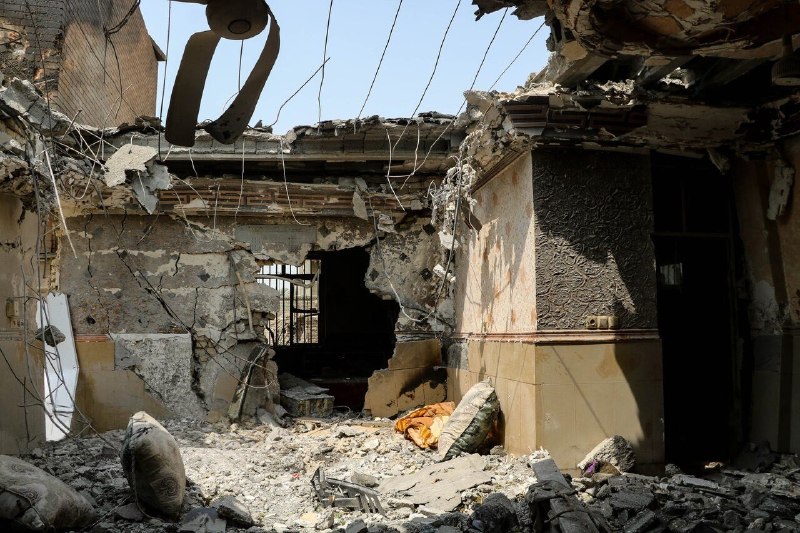
On the night of 27 June 2026, four Telegram channels with overlapping but not identical sources reported that the United States had carried out airstrikes against Qeshm Island, a 1,200-square-kilometre landmass in the Strait of Hormuz that sits roughly opposite the port of Bandar Abbas. The first alert, from the channel @intelslava at 21:38 UTC, was unambiguous: "BREAKING: US AIRSTRIKE ON QESHM ISLAND." Eight minutes later, the OSINT-focused @AMK_Mapping account added that "repeated explosions were heard on Qeshm Island a short time ago." At 22:04 UTC, @Middle_East_Spectator reported that "two strikes also took place on Qeshm Island." Two minutes after that, at 22:06 UTC, @intelslava escalated its own earlier headline to "VIOLENT US AIRSTRIKE ON QESHM ISLAND." That, in full, is the public record of what happened at roughly 22:00 UTC on Saturday night.
The reporting is real, but it is also narrow. None of the four channels named a specific facility, a target list, a weapons package, a casualty figure, or a US military unit. None of them has yet been picked up by a wire service or by a major Western outlet. The official Iranian side — the IRGC, the Iranian foreign ministry, and state outlets including IRNA and PressTV — has, at the time of writing, not put out a public statement on Qeshm Island in the form that this publication can verify from open sources. The Pentagon and US Central Command have similarly not confirmed or denied the action in any form that this publication can independently point to. What follows is therefore not a confirmation of a strike; it is a careful read of what four OSINT and conflict-adjacent channels have put into the public domain, what remains unverified, and why the location — not the weapons — is the more important piece of the story.
What the four channels actually said
Each of the four Telegram channels in the cluster is positioned differently. @intelslava is a long-running Russian-language military channel that has become one of the more aggressive amplifiers of unverified frontline claims, particularly on Iran, Syria and Ukraine. Its 21:38 UTC post was a short, all-caps breaking notice; the 22:06 UTC post, twenty-eight minutes later, used the word "VIOLENT" — an escalation in adjective, not a claim of a new strike. @Middle_East_Spectator, a Hezbollah-adjacent Lebanese outlet, added the specific detail that "two strikes" hit the island. @AMK_Mapping, an OSINT handle known for geolocating explosions from audio and video, contributed the sensory claim: "repeated explosions were heard." None of the channels has yet released geolocated footage, infrared video, or imagery showing damage on Qeshm Island itself.
The cluster has the shape of a classic wartime information cascade: one channel breaks, a second corroborates with a slightly different angle, a third corroborates with sensory detail, and a fourth restates the original claim with louder language. That is the best case for taking the underlying event seriously. The worst case is that all four are downstream of a single source — most likely a Hezbollah media node in Lebanon — and are repackaging a single piece of Hezbollah-captured content as four independent confirmations. This publication cannot rule that out from open sources alone.
What is genuinely contested
The first contested claim is the simplest: did the United States carry out airstrikes on Qeshm Island on 27 June 2026? The four Telegram channels say yes. No US government source, in the public record available to this publication, has confirmed or denied the action. The Pentagon's most recent press readout, dated 24 June 2026, did not reference Qeshm. Iran's mission to the United Nations in New York has not yet posted a statement on the island, according to Iranian state media feeds indexed in English by aggregator accounts on X. This publication does not have evidence at this hour that the Iranian foreign ministry has convened a press conference on the strikes. The asymmetry of confirmation — non-Western Telegram channels breaking, Western wires and Iranian state outlets silent — is itself a data point.
The second contested claim is targeting. Qeshm Island hosts several sensitive Iranian installations: the IRGC Navy's main base for fast-attack craft in the Strait of Hormuz, coastal-defence missile sites overlooking the chokepoint through which roughly a fifth of the world's traded oil passes, and a number of hardened fuel-storage facilities. It also has a civilian population of several hundred thousand and a UNESCO-recognised geo-park in its interior. Reports of two strikes, as carried by @Middle_East_Spectator, do not specify which kind of facility was hit. Iranian officials, in their public commentary on past US operations in the Gulf, have framed any strike on the island as an act of war against Iranian territorial integrity. The framing matters: a strike on an IRGC fast-boat pen is one thing; a strike on a fuel depot is another, and a strike in the interior of the island is a third.
The third contested claim is intent. Western outlets have, in recent months, carried reporting that the United States has been planning strikes against Iranian coastal-defence and missile sites in the Strait of Hormuz as part of a wider escalation over Iran's nuclear programme and over Houthi attacks on Red Sea shipping. A US strike on Qeshm Island would not arrive in an information vacuum. But the same planning could equally describe a covert action carried out by Israel, with the United States as the public-facing cover, or by a Gulf-state proxy. This publication cannot, from open sources, distinguish between those scenarios.
The structural frame
Why Qeshm? The answer is geography. The Strait of Hormuz is the most consequential single chokepoint in the global energy system. Roughly twenty per cent of traded crude, and a comparable share of liquefied natural gas, transits its shipping lanes. Iran's defence doctrine over four decades has been to threaten that chokepoint with anti-ship missiles, naval mines and fast boats — a low-cost, high-leverage deterrence. Qeshm Island is the operational hub of that doctrine. A strike on Qeshm is therefore not a strike on a peripheral target; it is a strike on the place from which Iran has, repeatedly, said it would shut down the Strait.
This is the pattern that the past twenty-four hours of reporting sits inside. The United States has been shifting, over the course of 2026, from a posture of containment-by-sanctions to a posture of active military pressure on the Iranian asymmetric arsenal. The shift has not been publicly declared; it has shown up in movement orders, in the redeployment of carrier groups to the Fifth Fleet area of responsibility, and in increasingly direct US comments about Iranian missile production. A strike on Qeshm would be the most public manifestation of that shift to date. It would also be the most public test of the Iranian response: Iran has signalled, through both the foreign ministry and the IRGC, that any strike on its soil will be met with retaliation, and that retaliation will likely target US bases in Iraq, Syria, Bahrain and the UAE, plus Israeli territory. The escalatory ladder on either side is, in plain language, several rungs shorter than it was six months ago.
What remains uncertain
This publication is reporting the four-channel Telegram cluster as it stands at 22:06 UTC on 27 June 2026. The caveats are extensive. The cluster rests on Russian-language and Hezbollah-adjacent channels, neither of which has the editorial process of a wire service. The "two strikes" figure has been reported by one channel, not corroborated by a second. No casualty figures, no specific targets, no weapons types, no US military unit, and no official confirmation from either Washington or Tehran appear in the public record that this publication can verify. The most likely next development is a wave of geolocated footage from inside the island, posted by Iranian state outlets and by Iranian users on X; that footage will, in the next six to twelve hours, allow the open-source community to confirm or refute the strikes. Until then, the responsible read is that two airstrikes on Qeshm Island were reported by four Telegram channels within twenty-eight minutes, that the underlying event has not yet been confirmed by any major wire service, and that the location of the reported strikes is, regardless of confirmation, the most strategically sensitive square kilometre Iran controls.
Stakes and forward view
If the strike is confirmed in the next reporting cycle, the immediate stakes are oil. A confirmed strike on Qeshm, on the eve of a working week, would put a premium on Middle East crude and on shipping insurance through the Strait. The longer stakes are harder to read. Iran has spent a decade and a half building a layered deterrence precisely against the kind of operation that the four Telegram channels are reporting tonight. Whether that deterrence holds, breaks, or escalates is the question that the next forty-eight hours of reporting will begin to answer. For now, the only safe statement is the narrow one: four Telegram channels reported airstrikes on Qeshm Island at roughly 22:00 UTC on 27 June 2026, and no major wire service has yet confirmed or denied the action.
This publication's frame: Monexus leads with what is in the open-source record — four Telegram channels and the time stamps — and explicitly does not treat those channels as a wire confirmation. We resist the temptation to name Iranian or US casualties or specific targets that the source material does not contain. The structural point is geography: Qeshm Island is the operational centre of Iran's Strait of Hormuz deterrence, and that is the lens through which the four-channel cluster is read.
Wire provenance
This editorial synthesis draws on the following public wire/social posts:
- https://t.me/intelslava
- https://t.me/intelslava
- https://t.me/Middle_East_Spectator
- https://t.me/AMK_Mapping
- https://en.wikipedia.org/wiki/Qeshm_Island
- https://en.wikipedia.org/wiki/Strait_of_Hormuz
- https://en.wikipedia.org/wiki/Iranian_Revolutionary_Guard_Corps_Navy
- https://en.wikipedia.org/wiki/2026_United_States%E2%80%93Iran_crisis
Follow the event.
These dated source records provide context. They do not retrospectively verify this archive article.
Separate what the nuclear watchdog reported from what it could not determine after the June 2025 strikes.
- https://t.me/intelslava
- https://t.me/intelslava
- https://t.me/Middle_East_Spectator
- https://t.me/AMK_Mapping
- https://en.wikipedia.org/wiki/Qeshm_Island
- https://en.wikipedia.org/wiki/Strait_of_Hormuz
- https://en.wikipedia.org/wiki/Iranian_Revolutionary_Guard_Corps_Navy
- https://en.wikipedia.org/wiki/2026_United_States%E2%80%93Iran_crisis