Sirik hit again: what a second night of explosions in Hormozgan tells us about the US–Iran escalation ladder
Explosions were reported in Sirik for the second consecutive night as US airstrikes struck southern Iran — a pattern that puts the world's most important oil chokepoint back at the centre of the escalation debate.
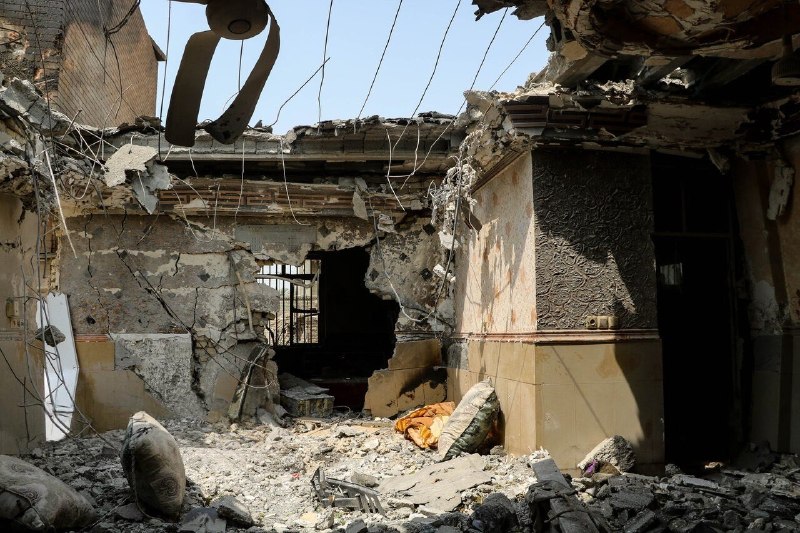
Sirik, a small port town on Iran's southern coast in Hormozgan Province, was hit by multiple explosions for the second night running on 27 June 2026. Telegram channels tracking the strikes reported the blasts shortly after 21:25 UTC, with at least three independent feeds — including BellumActa News, BRICS News and the RN Intel channel — placing the activity inside Sirik itself. Within minutes, the same feeds were reporting US airstrikes against targets in and around the town.
The sequence matters less for its novelty than for its location. Sirik sits roughly 120 kilometres west of Bandar Abbas, the provincial capital that hosts much of Iran's naval infrastructure in the Persian Gulf, and within easy reach of the Strait of Hormuz — the chokepoint through which approximately a fifth of the world's seaborne oil normally passes. A second night of strikes against a coastal target this close to the strait shifts the conversation from retaliation to geography. Whatever the immediate provocation, the choice of venue is doing its own signalling.
What the wires are reporting
Reporting at the time of writing is fragmentary and overwhelmingly drawn from Telegram channels that aggregate open-source intelligence, eyewitness video and Iranian regional outlets. BellumActa News reported multiple explosions in Sirik on the evening of 27 June 2026, framing them as the second consecutive night of activity in the district. BRICS News, a channel that aggregates regional reporting from across the BRICS+ media space, ran a flash alert at 21:29 UTC citing explosions heard in the town. The RN Intel channel escalated the claim at 21:32 UTC, asserting US airstrikes against Sirik.
None of the three feeds carries the evidentiary apparatus of a wire service: there is no named Pentagon spokesperson, no Iranian Foreign Ministry statement, no before-and-after satellite imagery attached to the alerts. Iranian state media had not, as of the time of writing, published a formal casualty or damage assessment. Western wires had not, at the time the alerts were posted, carried the strikes on their front pages. The sourcing chain is short, fast, and unverifiable outside of the footage itself.
That caveat is worth holding onto, because the same channels that broke the alert are also the venues in which competing narratives about responsibility are already being fought out. Whether the strikes are a US operation, an Israeli action relayed through US assets, a Mossard-style false-flag staged by Tehran for domestic consumption, or something else again is, at this hour, a matter of framing rather than confirmation.
What the location tells us
Even setting aside who fired, the target selection is doing political work. Hormozgan Province contains the Bandar Abbas naval base — headquarters of the Iranian Navy's southern fleet, including the submarines and fast-attack craft that doctrine says would seal the strait in a crisis — as well as the bulk of Iran's missile batteries oriented toward Gulf shipping. Sirik itself sits on a coastal plain a short drive inland from the Strait, in terrain that has hosted Iranian anti-ship missile units and IRGC Navy facilities for years.
A sustained strike campaign against targets in this province is not a symbolic gesture. It is the kind of operation one runs only if the operational planner has accepted that Iran will eventually retaliate by attempting to close the strait, and has decided that degrading Iran's ability to do so is worth the diplomatic cost. That cost is not abstract. Roughly twenty per cent of the world's oil moves through Hormozgan's coastal waters on any given day. Even a partial closure — or even a sustained perception of risk — moves the oil price by enough to reset inflation expectations in every oil-importing economy on earth.
In other words, the strikes are not happening in spite of Hormozgan's geography. They are happening because of it.
The escalation ladder
The logic of escalation in the Gulf is well-rehearsed, and it runs in both directions. Iran's available responses range from the deniable — IRGC Navy fast boats harassing commercial shipping, mine-laying in shallow water, drone swarms against Gulf state infrastructure — to the unambiguous, including direct strikes on Israeli territory or US bases in Iraq, Syria, Bahrain and Qatar. Each rung carries its own political cost: the deniable options preserve Iranian deniability but invite patient retaliation; the unambiguous options rally domestic Iranian opinion but risk the kind of full-spectrum response that pushes insurance markets through their previous crisis peaks.
What changes with two consecutive nights of strikes on Hormozgan Province is the implied answer to the question Tehran has been asking since 7 October 2023. That question — whether Israel and the United States are willing to attack Iranian territory directly, repeatedly, and accept the retaliation that follows — has now received a more emphatic answer than any single strike could supply. A second night of activity inside Sirik reads as the opening of a campaign rather than the conclusion of an incident.
The escalation ladder has other rungs above this one, and they are familiar: an attempt to close the strait, strikes on desalination plants or civilian infrastructure inside Iran, US or Israeli strikes on the Iranian mainland energy grid, and the eventual question of regime targeting. Each rung has historically been treated as politically prohibitive. The point of striking Sirik twice in succession is, in part, to move the prohibitive line.
Why the sourcing is so thin — and why that matters
Reporting on the Iran file has, for the better part of two decades, run through a small number of chokepoints: a handful of Western wire correspondents accredited in Tehran, the IRGC's own media apparatus, the Israeli press's defence beat, and the open-source investigators who work from commercial satellite imagery and ship-tracking data. Outside of these channels, the field fills quickly with Telegram aggregators, regional Telegram channels claiming insider status, and analysts whose sourcing is closer to vibes than to verifiable material.
The current burst of reporting is a textbook example. Three Telegram channels, none of them primary, carried the Sirik alert in the space of seven minutes. RN Intel went furthest, asserting US strikes; BRICS News reported only the explosions; BellumActa News reported the explosions and provided the geographic anchor in Hormozgan Province. Each feed leans on the others, on footage from the ground, and on Iranian regional outlets that have their own reasons to characterise the strikes. The provenance is real, but it is shallow.
This matters because the framing battle begins almost immediately. If the strikes are carried by Western wires as a measured response to an Iranian provocation — a missile test, a proxy attack on Gulf shipping, an enrichment breach — the political baseline inside the United States, Europe and the Gulf monarchies absorbs the news within hours. If the same strikes are carried by Iranian, Russian and Chinese state media as an unprovoked attack on Iranian sovereignty, the diplomatic baseline inside the BRICS+ bloc absorbs a different version of the same event. Both versions may eventually settle on the same facts; at this hour, they are still being built.
The structural frame
The Hormozgan file is no longer a subplot of the Iran file. It is the spine. Whatever the proximate trigger for the strikes — and the absence of a single named trigger is itself part of the story — the operational reality is that the United States has accepted, at least for this campaign, a posture in which Iranian coastal territory is a legitimate target on consecutive nights. That posture is incompatible with a negotiation track that was already limping. It is also incompatible with the Gulf states' preference for managed ambiguity.
The structural pattern looks familiar. A period of shadow conflict — proxy strikes, cyber operations, tanker seizures, deniable sabotage — gives way to overt action once one side concludes that the cost of ambiguity has grown larger than the cost of being seen. The 2019 strike on Qasem Soleimani is the obvious precedent. The 2020 strike on the IRGC missile base at Katu, following the downing of a US drone, is another. Both cases share a feature: the overt action was preceded by a long period in which the policy establishment in Washington had decided, privately, that the previous ceiling no longer held.
Two consecutive nights of strikes on Sirik suggest the same recalibration is underway. The proximate trigger may yet emerge — a specific Iranian action that crossed an unnamed red line — but the pattern suggests that the red line was already drawn, and the trigger simply gave the operation its cover.
What is not yet known
Several pieces of the picture remain missing, and reporting on what is missing is more useful than reporting on what is not yet verified.
First, the casualty figure. Iranian state media had not, at the time of writing, published a casualty count for Sirik on either night. Without a figure, the strikes remain an abstraction; with one, they become a domestic political event inside Iran with predictable regime-management consequences.
Second, the target set. The Telegram alerts identify Sirik as the location, but do not specify whether the strikes hit the town's port infrastructure, an IRGC facility in the surrounding hills, an anti-ship missile battery, or some combination. Open-source investigators typically take twelve to twenty-four hours to confirm a target set from commercial satellite passes; until that work is done, the operational significance of the strikes remains a matter of inference.
Third, the Iranian response. Tehran's doctrine in past episodes has been to wait out the first strike, calibrate the retaliation, and respond in a venue of its choosing rather than the venue chosen for it. The lag between the first and second night's strikes compresses the room for that kind of patient sequencing. If a third night of activity follows, the question of Iranian response becomes a question of hours rather than days.
Fourth, the diplomatic choreography. The United Nations Security Council, the IAEA, the OIC, the Gulf Cooperation Council and the European Union have all, in past episodes, used the first forty-eight hours after an Iranian escalation to publish competing reads of the same event. The shape those reads take — condemnation versus regret versus calls for restraint — will set the political baseline for the next round.
The stakes
The straight-line stakes are oil, insurance and shipping. Roughly a fifth of global seaborne crude moves through Hormozgan's waters. Even a ten per cent increase in war-risk premia, applied to a tanker of two million barrels, is enough to add several dollars to the per-barrel cost. A partial closure would multiply that figure by an order of magnitude. The Strait of Hormuz is the place where Iranian security doctrine meets global energy arithmetic, and there is no clean place for either side to back down once that meeting has been forced.
The deeper stakes are diplomatic. Two consecutive nights of strikes reset the inside-the-Beltway conversation about whether the United States is at war with Iran, in spite of no formal declaration. They reset the European conversation about sanctions enforcement and IAEA inspections. They reset the Chinese and Russian conversation about the dollar-priced oil architecture that the strait quietly underwrites. Each of those conversations will, in the coming days, produce its own response — and each response will, in turn, narrow the space for de-escalation.
The pattern of two consecutive nights at Sirik does not, on its own, settle the question of where this is going. It does, however, settle the question of where it is not going: back to the previous equilibrium. That equilibrium — managed tension, periodic escalation, periodic de-escalation, the Strait kept nominally open — was already strained by the events of 2024 and 2025. The strikes of 26 and 27 June 2026 suggest that one of the parties to that equilibrium has decided that the strain is no longer worth carrying.
The next twenty-four hours will tell whether that decision was a tactical choice made by a single command, or a strategic shift made at the top of a government. The reporting will tell whether the Telegram alerts that broke the news at 21:25 UTC on 27 June 2026 were describing the opening of a campaign or the second move of an exchange that has already been underway.
This piece draws entirely on open Telegram reporting in the absence of corroborating wire coverage. Where Iranian state media, Western wires, or independent OSINT analysis becomes available, the framing above will be revised accordingly.
Wire provenance
This editorial synthesis draws on the following public wire/social posts:
- https://t.me/bellumactanews
- https://t.me/bricsnews
- https://t.me/rnintel
Follow the event.
These dated source records provide context. They do not retrospectively verify this archive article.
Separate what the nuclear watchdog reported from what it could not determine after the June 2025 strikes.