The Strait of Hormuz, Again
A fresh round of US strikes on Iranian missile and radar sites along the Strait of Hormuz, followed by Tehran's denunciation of a "blatant violation" of the regional peace arrangement, has reopened the question of who actually controls the world's most consequential energy chokepoint.
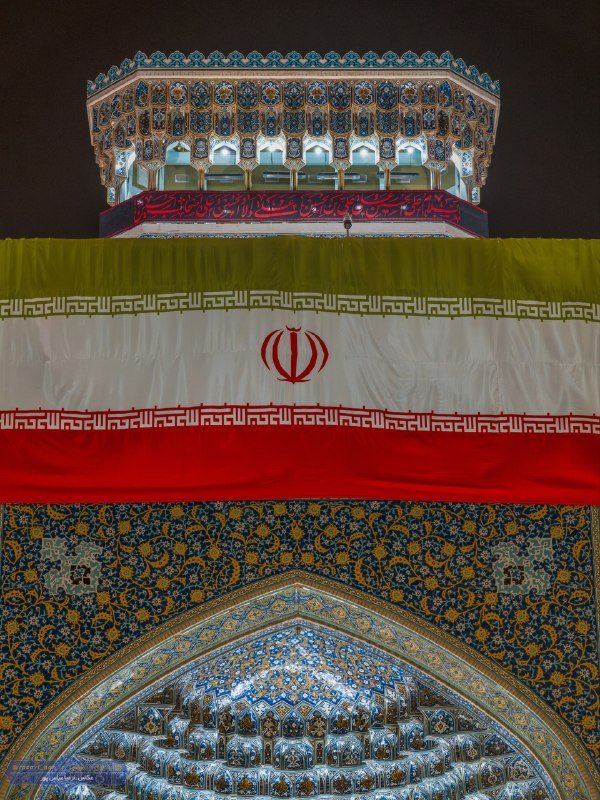
On Saturday morning, US Central Command released footage of Friday's airstrikes on Iranian missile and drone storage facilities and coastal radar installations near the Strait of Hormuz — a 21-mile-wide channel through which roughly a fifth of the world's traded oil normally passes. By 09:29 UTC on 27 June 2026, Iranian officials had denounced the operation as a "blatant violation" of the peace deal that had paused regional hostilities. By 09:30 UTC, the head of national security in Iran's parliament had warned that any violation of Tehran's shipping instructions through the strait would be "met decisively." The chokepoint that the world had been told was settled, in other words, is not.
What makes the moment worth pausing on is not the strike itself — airstrikes between the United States and Iran have been a periodic feature of the relationship for decades — but the speed with which the legal and political frame collapsed. A "peace deal" that is publicly described as binding by one party, and publicly described as violated by the other, on the same Saturday morning, is a peace deal in name only. The question for shipping insurers, Gulf energy ministers, and every government dependent on the Hormuz corridor is not whether the framework failed, but how much of the failure was already priced in.
What actually happened
The immediate sequence is straightforward enough. CENTCOM released footage on Saturday showing US strikes against "Iranian missile and drone storage facilities and coastal radar sites" near the Strait of Hormuz, according to a Telegram post by War Frontier Witness timestamped 09:18 UTC on 27 June 2026. The Islamic Revolutionary Guard Corps, cited in the same Telegram thread, framed the strikes as an attack on Iranian territory and a breach of the de-escalation arrangement that had previously held. Iranian parliamentary national-security leadership responded within the hour with an explicit warning that Iranian shipping instructions through the strait would be enforced.
The detail that the wire coverage has so far treated as background is actually the headline: the strikes targeted coastal radar. Coastal radar is the nervous system of maritime chokepoint defence. Knocking it out does not close the strait, but it degrades the ability of any single naval force — including Iran's — to monitor who is moving through it. That is a strategically ambiguous outcome. It weakens Tehran's surveillance of the corridor at the same moment that Tehran is publicly reasserting its authority over it. The two messages are not reconcilable, which is itself the news.
The counter-narrative, told fairly
Iran's read on the sequence, as relayed through Middle East Eye's live blog on 27 June, is that the United States has now escalated twice under cover of a peace framework — first by conducting the strikes, and second by characterising them as defensive. From Tehran's vantage, the logic is consistent: a deal that permits one side to dismantle the other's coastal early-warning capability while the deal is nominally in force is not a deal at all. There is a version of this argument that holds up on the historical record. US-Iran de-escalations since the 1980s have repeatedly collapsed not because of a single dramatic rupture but because of an accumulation of limited, defensible-looking actions — sanctions tweaks, seizures of tankers, strikes on proxy logistics — that each side interpreted in incompatible ways.
That said, Iran's claim of a "blatant violation" depends on a generous reading of what the peace framework actually prohibited. The original arrangement, as referenced in Iranian state-aligned framing, constrained direct strikes on Iranian soil; the United States has consistently held that strikes on facilities used to threaten Gulf shipping sit inside a different legal category. The disagreement is not over what happened. It is over what category of action the strikes belong to. That is a dispute that cannot be resolved by communiqués.
The structural frame, in plain language
Strip the rhetoric away and the underlying contest is over control of a corridor that the global economy cannot route around. Roughly a fifth of seaborne crude transits Hormuz. There is no overland pipeline of equivalent capacity on the Saudi, Emirati, or Qatari side that would let Gulf exporters simply bypass the strait in the event of a sustained closure. That asymmetry is what gives Iran's parliamentary warning its weight, and what gives CENTCOM's coastal-radar targeting its meaning. Whoever controls the surveillance and denial systems around the chokepoint effectively sets the risk premium on global energy for as long as the contest lasts.
The pattern here is familiar from other recent episodes. A regional framework is announced. Both sides claim credit for de-escalation. Limited military action resumes under one party's interpretation of the framework's permissions. The other party denounces a violation. Insurance markets, freight rates, and Gulf sovereign-bond spreads move before diplomats do. The framework survives in communiqués long after it has ceased to operate as a constraint on behaviour. The Strait of Hormuz has now joined the South China Sea, the Black Sea grain corridor, and the Red Sea as a maritime space where the official diplomatic map and the operational map have diverged.
Stakes and what to watch
The short-term stakes are concentrated in three places. First, the tanker-insurance market, which reprices Hormuz risk on roughly a 24-hour cycle; a sustained reassertion of Iranian shipping instructions would push war-risk premiums up fast. Second, Gulf energy diplomacy, where Saudi Arabia, the UAE, and Oman have an interest in the corridor remaining open under any flag, including the American one; expect quiet pressure from Riyadh and Abu Dhabi on both Washington and Tehran in the coming days. Third, the diplomatic cover for the broader peace framework, which is now visibly thinner than it was 48 hours ago. If the strikes are followed by Iranian-coordinated disruption of commercial traffic — even partial, even deniable — the framing of "violation" will harden on both sides and the path back to negotiation will narrow.
What the available sources do not yet establish is the operational effect of the radar strikes on Iran's actual surveillance capability, the specific terms of the shipping instructions Iran says it will enforce, or whether any third-party government has so far endorsed either side's characterisation of the peace deal. Until those details firm up, the honest read is that the framework has been damaged but not formally discarded — and that a damaged framework is often more dangerous than an abandoned one, because both sides continue to invoke it while acting as if it does not bind them.
How Monexus framed this: the wire so far has treated the strikes and the Iranian denunciation as two separate beats. Monexus treats them as one event — the collapse of a frame — because the operational and the diplomatic moves only make sense read together.
Wire provenance
This editorial synthesis draws on the following public wire/social posts:
- https://t.me/wfwitness
Follow the event.
These dated source records provide context. They do not retrospectively verify this archive article.
Separate what the nuclear watchdog reported from what it could not determine after the June 2025 strikes.